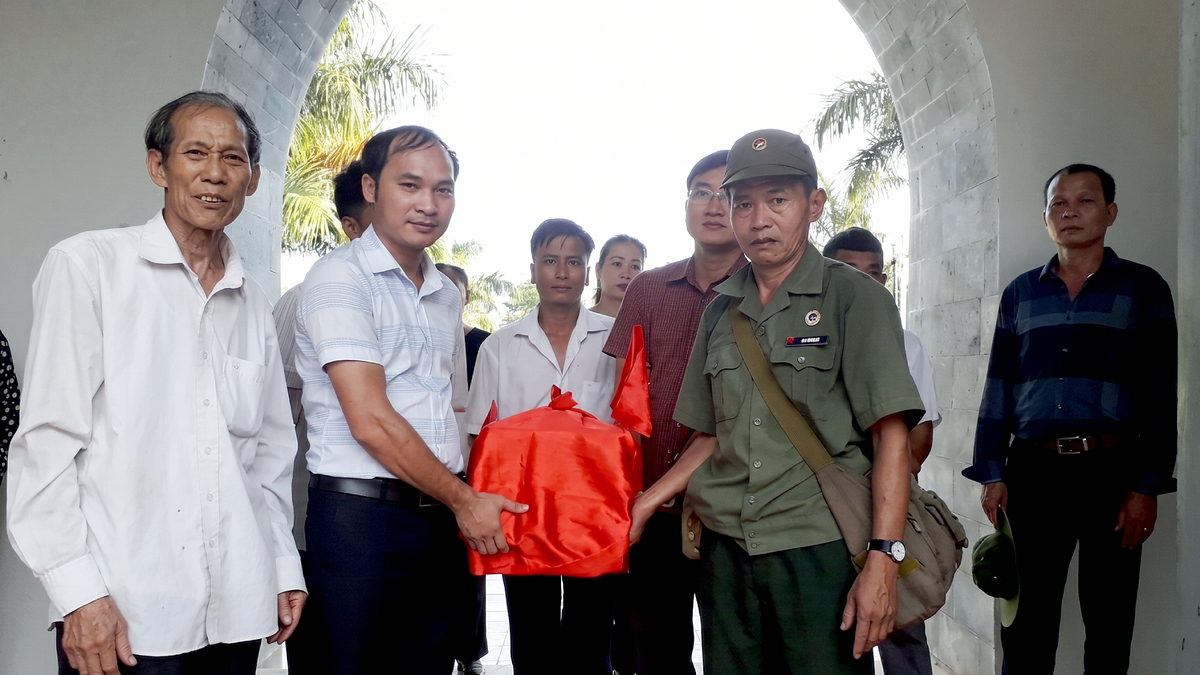
Three Generations' Devotion Leads to 'Returned' Soldier Thanks to DNA
In Tuyen Quang, Vietnam, the remains of fallen soldier Tran Hai Quang, missing for over 52 years, were identified through DNA testing from a grave with an incorrectly inscribed tombstone. The three-generation family's persistent search finally bore fruit.
In Binh Ca commune, Tuyen Quang province, the remains of fallen soldier Tran Hai Quang, missing for over 52 years, have finally returned to his homeland thanks to DNA identification. This remarkable discovery is the culmination of a three-generation family's unwavering search. Born in 1948, Tran Hai Quang enlisted in September 1966. He was killed in action in the early morning of October 25, 1967, during an assault on the Phu Vieng base in Laos' Luang Prabang province. He was buried alongside three comrades. However, his remains were interred at the Tong Khao Cemetery in Dien Bien province, but the tombstone bore the incorrect name "Tran Quy Quang," making identification a decades-long challenge for his family. "Whenever the family gathers, the conversation always turns to my elder brother," shared Kim Hoa, Quang's granddaughter. "My mother cries every time, mourning her brother who died so young." After the country's reunification, his parents' search for Quang's burial site was passed down through their children and grandchildren. His 75-year-old sister, Tran Thi Hien, recounted that the pain of her brother's death never faded. In 1998, the family publicized their search on the Army Television program "Seeking Comrades." Weeks later, a former comrade from Quang's company informed them that his remains had been repatriated from Laos to the Tong Khao Cemetery in Dien Bien. Upon visiting Dien Bien, the family scrutinized the tombstones but could not find Quang's name. During three separate visits, they lingered at a grave inscribed "Tran Quy Quang," harboring suspicion but lacking definitive proof. In 2019, as Hien battled a recurrence of cancer, the family intensified their efforts. However, their lack of knowledge regarding grave identification procedures and DNA testing protocols led to further setbacks. Kim Hoa then stumbled upon an article about former soldier Cao Viet Duc in Bac Giang, who had dedicated years to helping families locate fallen soldiers. She reached out to him for assistance. Following Duc's guidance, the family meticulously gathered documents and liaised with relevant authorities. By late 2019, Duc collaborated with the Dien Bien Provincial Department of Labor, War Invalids and Social Affairs to pinpoint potential graves. Samples were collected from grave number 1774 (inscribed "Tran Quy Quang") and grave number 1691 (inscribed "Quang"). Initially, Hien's DNA sample was taken, but it was unusable due to her cancer treatment. Consequently, her younger sister, Tran Thi Ngat, provided a new sample. In August 2019, the DNA test results confirmed that the remains at grave number 1774 matched Ngat's DNA. After 52 years of being buried under an incorrectly inscribed tombstone, Tran Hai Quang's identity was finally established. On September 5, 2019, Quang's remains were ceremoniously returned to his hometown. Hien, who had eagerly awaited her brother's return, escaped her hospital bed to witness the reunion. Five months later, she passed away peacefully, her lifelong wish fulfilled. This reunion was made possible through the dedicated efforts of many, including former soldier Duc, former comrade Le Quang Khanh, and various state agencies. Tran Hai Quang, who left for the battlefield at 18, returned home nearly 60 years later, forever 19, draped in the national flag. Source: VnExpress
多角的分析
本件は直接的な経済活動とは無関係だが、ベトナムにおける社会福祉制度、特に戦没者遺骨の特定・埋葬に関する公的支援のあり方、およびその運用効率が示唆される。DNA鑑定技術の導入は、過去の未解決案件の解決に貢献する可能性があり、関連する公的機関(国防省、労働・傷病兵・社会問題省、法医学研究所など)の予算配分や技術投資の重要性を示唆している。また、民間支援組織(元兵士ドゥック氏のような個人や団体)の活動は、公的支援の補完的役割を果たしており、社会全体の協力体制の構築が、こうした困難な課題解決に不可欠であることを示している。
本件は直接的な投資機会とは無関係である。しかし、ベトナムにおける社会インフラ、特に公的記録管理、遺族支援、および科学技術(DNA鑑定など)への投資の重要性を示す事例と言える。将来的に、このような社会インフラへの投資が、国民の生活の質向上や社会の安定に寄与し、間接的に投資環境の改善につながる可能性はある。
本件は、ベトナム社会における家族の絆と、戦没者への敬意の深さを浮き彫りにしている。3世代にわたる家族の粘り強い捜索は、個人の悲願を超え、社会全体で共有されるべき歴史的記憶と遺族への配慮の重要性を示唆している。また、民間ボランティア(元兵士カオ・ヴィエト・ドゥック氏)の活動は、社会における連帯感と互助精神の表れであり、公的機関の支援と連携することで、より大きな成果を生み出す可能性を示している。誤記された墓碑銘という「些細な」ミスが、52年という長期間にわたる家族の苦悩を生んだ事実は、公的記録の正確性と管理体制の重要性を改めて問いかけている。
本件は、多くのベトナム市民が抱える、戦争で失われた家族との再会への長年の願いと、その困難さを象徴している。特に、地方に住む一般市民が、公的な手続きや専門知識なしに、長年、遺骨の特定に苦労してきた現実を示している。DNA鑑定という現代技術の活用が、長年の悲願を叶える「奇跡」をもたらしたことは、多くの市民にとって希望となるだろう。一方で、このような事例が他にも数多く存在する可能性を示唆しており、政府による遺骨特定支援体制の拡充が求められている。
背景・歴史的文脈
ベトナム戦争(1955年~1975年)において、多くの兵士が国外(特にラオスやカンボジア)で戦死し、その遺骨の多くは未特定・未帰還のままである。戦後、ベトナム政府は遺骨の収集・特定事業を進めてきたが、当時の混乱や記録の不備、国外での埋葬といった要因から、多くの遺骨が未だに特定されていない。遺族は長年にわたり、個人的な努力や公的機関への働きかけを通じて、行方不明の家族の遺骨を探し続けている。近年、DNA鑑定技術の進歩により、これまで不可能だった遺骨の特定が可能になりつつあり、こうした「奇跡」が生まれている。本件は、ベトナムにおける戦没者追悼と遺族支援の歴史的背景、そして現代技術がもたらす解決策の一例を示している。
原文ソース
VnExpress