India's Safeguard Duty Slashes Nepal's Iron and Steel Exports by Two-Thirds
Nepal's iron and steel exports to India have plummeted following the imposition of safeguard duties by India, sparking concerns over declining export earnings and potential job losses. Nepali manufacturers argue the duties are unjustified for their country, classified as a least developed nation.
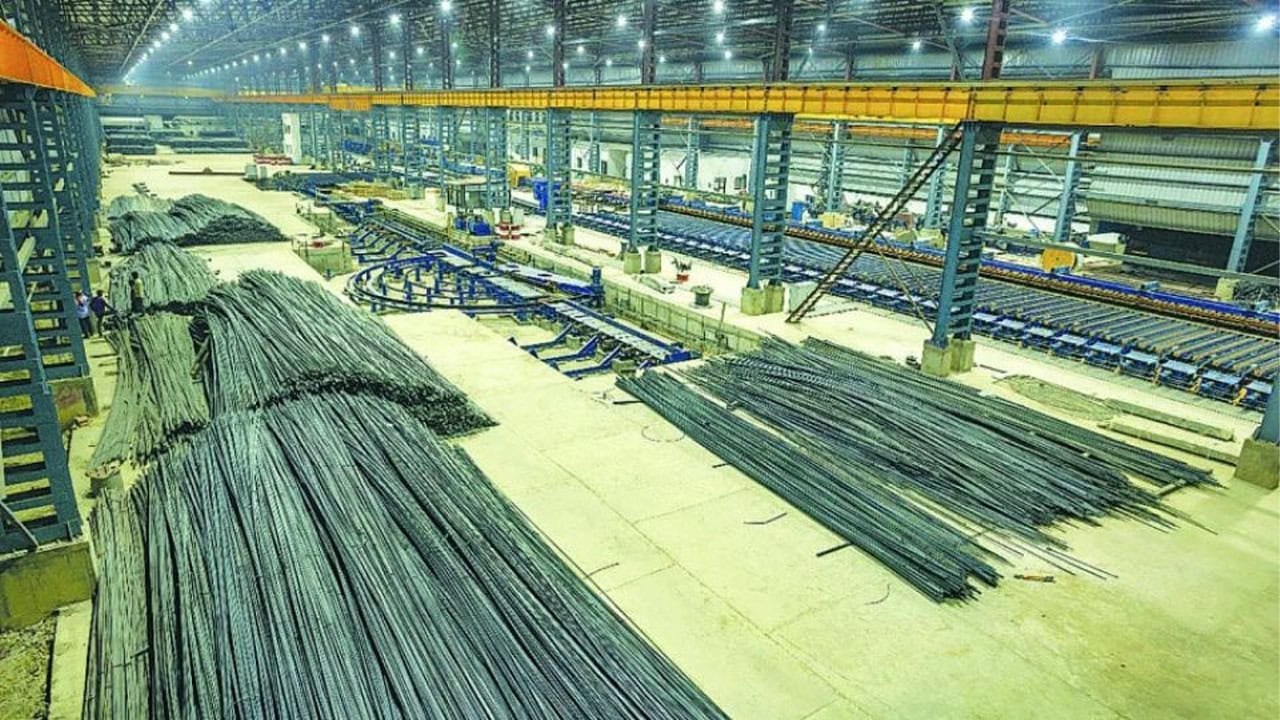
KATHMANDU – Nepal’s iron and steel exports to India have plunged sharply following the neighbouring country’s imposition of safeguard duties, raising concerns over declining export earnings, potential job losses and the prospect of further setbacks as New Delhi considers additional import restrictions. During the first 11 months of the last fiscal year, Nepal earned Rs15.42 billion from iron and steel exports to India. In the corresponding period of the current fiscal year, exports fell by 68.67 percent to Rs4.83 billion. The country has lost Rs10.59 billion in export earnings in less than a year due to India’s new trade policy. The sharp decline has also raised concerns over lower government revenue and employment losses in the sector. The risks may not be over yet. Industry insiders say Nepal’s iron and steel exports could face another blow as India weighs further measures to curb steel imports, particularly products manufactured using Chinese raw materials. In December last year, India imposed a three-year safeguard duty ranging from 11 percent to 12 percent on selected steel products to curb cheap imports. The levy stands at 12 percent in the first year, 11.5 percent in the second year and 11 percent in the third year. The measure applies to imports from China, Vietnam and Nepal. Specialty steel products, including stainless steel, are exempt. According to Reuters, India, the world’s second-largest crude steel producer, approved the three-year safeguard duty after the Directorate General of Trade Remedies, under the federal trade ministry, recommended the measure in its final findings. Before introducing the safeguard duty in December, India had imposed a temporary 12 percent tariff for 200 days in April. Nepali manufacturers argue that applying the safeguard duty to Nepal is unjustified, as the country remains a least developed country (LDC) with high economic and environmental vulnerabilities. They say the tariff has significantly disrupted production and exports. Nepal’s steel exports have traditionally been dominated by zinc sheets, with India serving as the principal export market. According to the UNDP report titled Assessment of Brick, Cement, and Steel Sectors in Nepal, Nepal’s annual demand for iron and steel is around 1.2 million tonnes, and domestic manufacturers are currently capable of meeting that demand. Industry experts estimate that demand for iron and steel is growing by around 20 percent annually. Annual demand for rebars alone is about 500,000 tonnes, with domestic manufacturers meeting nearly 80 percent of that requirement. Nepal has around 83 registered iron and steel factories, including 54 thermo-mechanically treated (TMT) bar manufacturing plants. Department of Customs data show that Nepal exports around 145,932 tonnes of iron and steel products worth Rs16.35 billion to India annually. According to manufacturers, exports mainly consist of flat-rolled iron and non-alloy steel products wider than 600 mm and between 1 mm and 3 mm in thickness. These cold-reduced steel coils are widely used in the manufacture of automobile panels, electrical appliances, furniture and general fabrication. Nepal also exports rolled iron and steel products coated with aluminium-zinc alloys, plastic-coated iron and steel sheets, and stainless steel tableware, kitchenware and household articles. Reuters recently reported that India will review steel imports in August before deciding whether additional measures are needed to curb shipments, particularly those originating from China. No decision has yet been made on whether the government will impose anti-dumping duties or adopt other trade measures. The prospect of tighter restrictions has alarmed Nepali manufacturers. “India is preparing for an annual review of the safeguard duty imposed on iron and steel products. The review will take place in October or November. This is the right time for the Nepal government to request the Indian government to lift the duty imposed on Nepali iron and steel products,” said Sunil Manot, chief finance officer of Hulas Steel Industries, one of Nepal’s largest steel manufacturers. “We are preparing to write to the Ministry of Industry suggesting possible ways to resolve the issue.” Manot said India has also stopped issuing Bureau of Indian Standards (BIS) certificates to Nepali manufacturers. “We applied to renew our BIS certificate, but we were informed that our application has been put on hold,” he said. Hulas Steel exports Galvalume (GL) and pre-painted Galvalume (PPGL) products to India. The company produces around 10,000 tonnes of GL and PPGL every month and says it has the capacity to export up to 20 percent of its production. Galvalume is a type of steel sheet coated with an aluminium-zinc-silocon alloy. Devendra Sahu, general manager of Panchakanya Group, another major manufacturer that produces stainless steel water tanks among other products, said the company resumed exports only three months ago after a nine-month suspension. “India’s Steel Import Monitoring System (SIMS) required BIS certification for both raw materials and finished products. We could not obtain the BIS certificate, so our exports came to a halt,” Sahu said, adding that India does not have a BIS standard for stainless steel water tanks. The company imports steel from Taiwan to manufacture the tanks. Sahu said exports resumed after SIMS introduced the ‘Saral SIMS’ system, which allows Indian importers to bring in stainless steel water tanks in consignments of 20 to 25 tonnes. “Our water tanks weigh less than one tonne each, making exports possible under the new arrangement,” he said. According to Sahu, apart from India’s 6 percent Goods and Services Tax (GST), no additional duty is imposed on the company’s exported water tanks. Panchakanya Group manufactures around 25,000 stainless steel water tanks annually, of which 10 to 12 percent are exported to India. The company operates manufacturing plants in Bhairahawa, Rupandehi, and Thankot, Kathmandu, with most of the Bhairahawa plant’s production destined for the Indian market. Trade experts say Nepal’s Ministry of Industry has failed to address trade barriers affecting domestic manufacturers and exporters. Former commerce secretary and trade expert Rabi Shankar Sainju said the government needs to engage proactively with India whenever such trade disputes arise. “Trade-related issues are inevitable and need to be resolved through government-to-government dialogue," Sainju said. "It is our weakness that we fail to negotiate strongly with India. Whether it is tea exports or the BIS certification issue, Nepal has repeatedly missed opportunities to raise these concerns during high-level visits to India. As a result, such trade problems continue to recur.“ Industry officials say sustained diplomatic engagement will be crucial if Nepal hopes to secure relief from the trade restrictions and prevent further losses in one of its ke
多角的分析
インドによる保護関税の導入は、ネパール経済にとって深刻な打撃となっている。鉄鋼輸出の激減は、外貨獲得の機会を奪い、貿易収支を悪化させる。また、輸出依存度の高い産業においては、関連産業への波及効果も懸念され、国内生産能力の低下やサプライチェーンの寸断を招く可能性がある。政府歳入の減少は、公共サービスの提供能力にも影響を与えかねない。
インドの保護主義的な貿易政策は、ネパールへの投資リスクを高める要因となる。特に、インド市場への輸出を主軸とする産業への投資は、予期せぬ関税や規制変更によって収益性が大きく変動する可能性を孕む。投資家は、市場アクセスの安定性や、輸出先の多様化戦略の有無を重視するようになるだろう。これは、新規投資の抑制や、既存投資からの撤退を促す可能性もある。
鉄鋼産業における輸出の激減は、直接的な雇用喪失につながる。特に、地方に立地する工場では、地域経済への依存度が高いため、失業者の増加は地域社会に深刻な影響を与える。また、国内での代替需要の創出が難しい場合、労働者の生活基盤が揺らぎ、社会不安が増大するリスクがある。政府は、失業者への支援策や、新たな産業への労働力転換支援を強化する必要に迫られる。
インドの保護関税は、ネパール国民の生活にも間接的な影響を与える。輸出収入の減少は、国家経済全体の停滞を招き、物価の上昇や雇用機会の減少につながる可能性がある。特に、鉄鋼関連産業に従事する労働者とその家族は、直接的な経済的困難に直面する。また、国内産業の競争力低下は、将来的な経済成長への希望を削ぐ要因ともなりうる。
背景・歴史的文脈
ネパールとインドは、歴史的、地理的に緊密な関係にあるが、経済面ではインドへの依存度が高い。特に、鉄鋼製品はネパールにとって主要な輸出品目の一つであり、インド市場がその大部分を占めている。過去にも、ネパールはインドからの輸入関税や非関税障壁に苦しんできた経緯がある。2023年12月にインドが導入した保護関税は、インド国内の鉄鋼産業保護を目的とした措置だが、ネパールのようなLDC(後発開発途上国)に対して適用されたことは、ネパール側から強い反発を招いている。
原文ソース
Phnom Penh Post