General articles are free for 24 hours after publish.
Vietnam Holds Heartwarming Mid-Autumn Festival Program for Children
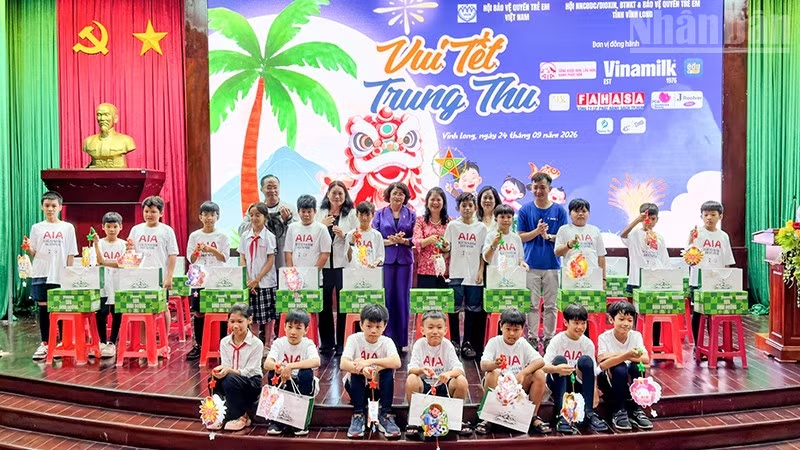
A Mid-Autumn Festival program was held in Vinh Long province, Vietnam, for children facing difficult circumstances. The event aimed to provide warmth, love, and a joyful experience for these children.
A Mid-Autumn Festival (Tet Trung Thu) celebration program for children facing difficult circumstances was held in Vinh Long province, southern Vietnam. On the morning of September 24, the Association for Victims of Agent Orange/Dioxin, Persons with Disabilities, and Protection of Children's Rights of Vinh Long province, in coordination with the Vietnam Association for the Protection of Children's Rights, organized the program titled "Vui Tet Trung thu - 2026" (Enjoying Mid-Autumn Festival - 2026). The event aimed to provide hundreds of disadvantaged children with a warm and loving Mid-Autumn Festival. Numerous cultural and artistic activities were organized during the program, where children enjoyed singing, dancing, and traditional games. Support and donations from the community were also gathered, providing gifts and meals for the children. Such events are continuously held in many regions across Vietnam, particularly to support children from economically disadvantaged families, as well as those in rural and border areas. This is part of the social welfare policies prioritized by the Communist Party of Vietnam, demonstrating its commitment to improving the overall well-being of the population. In Vietnam, the Mid-Autumn Festival is a traditional holiday where families gather, children eat mooncakes, and lanterns are lit. However, due to economic disparities and uneven regional development, not all children can equally enjoy this holiday. Therefore, support activities by the government and related organizations play a crucial role in promoting the healthy development and social integration of children.
Original source
Nhan Dan