General articles are free for 24 hours after publish.
Melon Delta's Traditional Fishing: Eel Trapping in U Minh Ha Forest
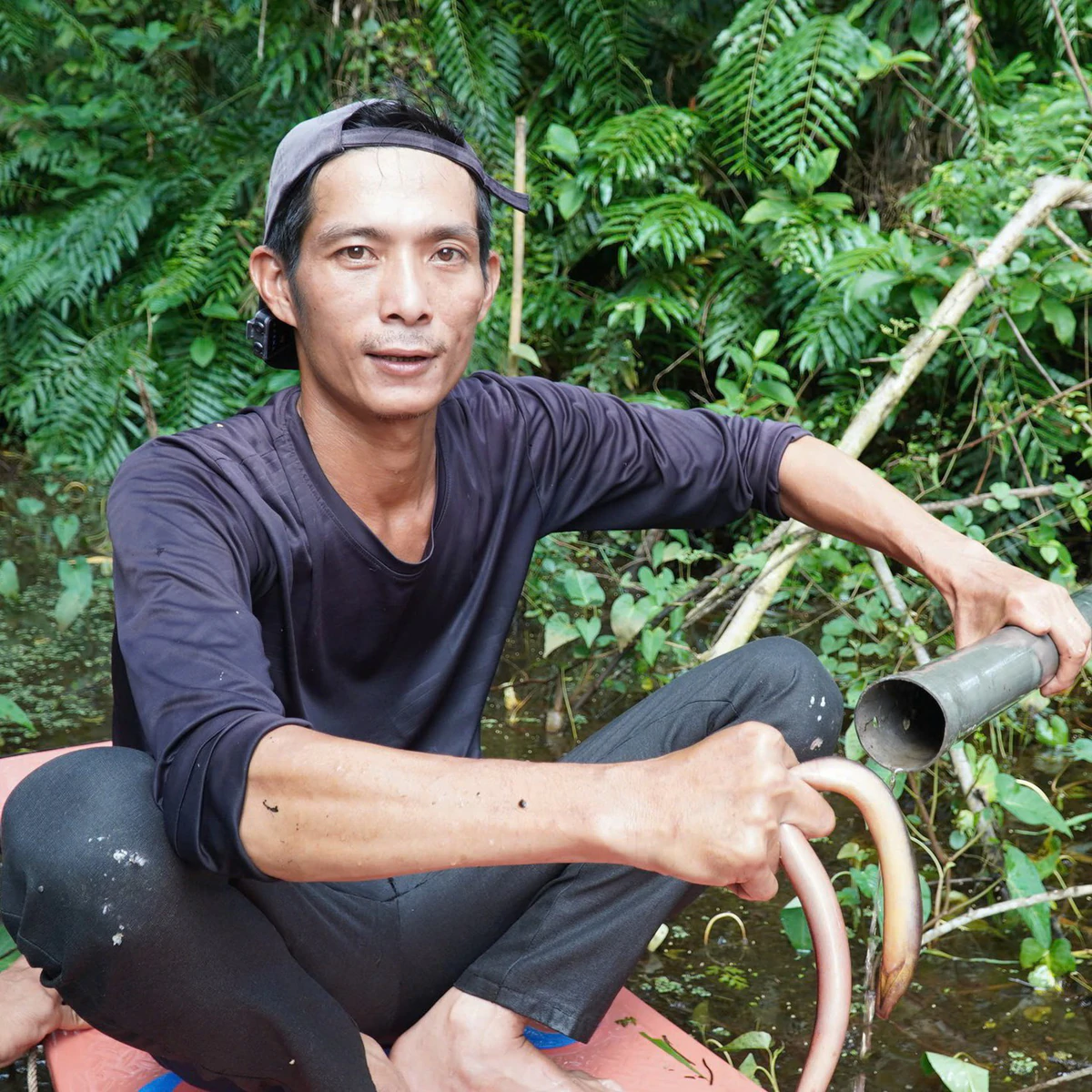
In Vietnam's U Minh Ha forest, Ca Mau province, eel trappers are entering their peak season amidst the rainy months. This traditional fishing method is deeply intertwined with the local economy and culture.
In the U Minh Ha forest of Ca Mau province, southern Vietnam, the traditional eel trapping season is in full swing with the arrival of the rainy months. Amidst the dense mangrove forests, channels of reddish-brown acidic water crisscross the landscape. Here, local fishermen have long practiced their trade using "trúm lươn," a unique eel trapping method. The "trúm lươn" are cylindrical traps made of bamboo and wood, designed to catch eels by exploiting their natural behavior of seeking prey like small fish as they move through the waterways. This fishing method requires no special technology or large-scale equipment and is practiced in harmony with the natural environment, making it a sustainable livelihood for the region. The U Minh Ha forest is a vital ecosystem in the Mekong Delta, boasting a rich diversity of flora and fauna. The traditional fishing practices in this wetland not only provide food but also form the foundation of the local community's life and culture. However, in recent years, environmental changes and development pressures have begun to impact the wetland's ecosystem, potentially posing challenges to the continuation of traditional fishing. The Vietnamese government is promoting sustainable development and environmental protection in the Mekong Delta, with the preservation of traditional fisheries and local culture being key policy priorities. The eel trapping in U Minh Ha can be seen as a symbol of Vietnam's rich natural heritage and the lives of people who coexist with it.
Original source
The Saigon Times