General articles are free for 24 hours after publish.
China's Vocational Schools Swamped Amid University Graduate Job Woes
As job prospects dim for university graduates in China, vocational schools are seeing a surge in applications. A shortage of skilled technicians in manufacturing and robotics is a key driver, with the government also prioritizing vocational education.
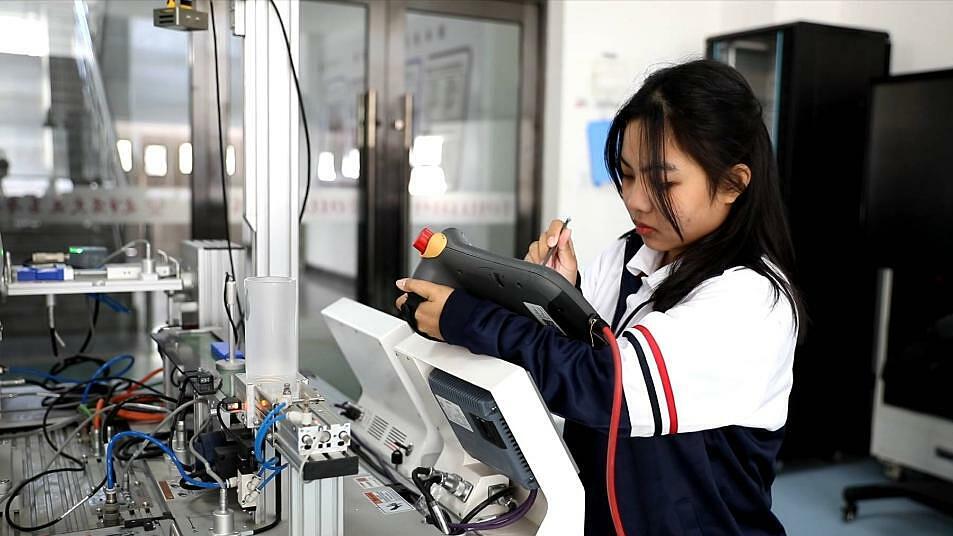
As job prospects dim for university graduates in China, vocational schools are seeing a surge in applications, with parents and students scrambling for spots. This trend is particularly pronounced in fields like robotics and industrial manufacturing, where skilled technicians are in high demand. Early one summer morning, long queues of parents formed outside Xương Bình Vocational School in the capital, Beijing, vying for admission slots for their children. Some had arrived the previous day and waited through the night. "If my child studies industrial robotics, they will be highly sought after by businesses and are promised employment even before graduation," shared a parent of a 15-year-old with China Daily. By early afternoon, the school had to issue a notice suspending admissions due to reaching its quota, significantly earlier than planned. This phenomenon is not limited to Beijing. Vocational high schools and colleges, especially in industrial hubs like Shandong and Guangdong provinces, are reporting a sharp increase in applications, far exceeding available spots. The shift stems from the realities of the labor market. China's higher education system produces a record number of graduates annually, leading to fierce competition for positions in technology, finance, and administration. Many young degree holders find themselves unemployed or underemployed. Meanwhile, with the push for advanced manufacturing, robotics, and artificial intelligence, China's labor market faces a severe shortage of skilled technicians. Demand for master's degree holders has reportedly decreased from 20% in 2024 to 17% in 2025, while demand for graduates from vocational programs has risen from 8.5% to 11%. In fact, vocational school graduates had a superior rate of receiving job offers compared to all other groups in 2024, according to Sixth Tone. Wang Heye, founder of vocational education consultancy Liangyou Education in Beijing, notes a societal shift in perception towards skills-based education. Previously, vocational training was often seen as a "last resort" for less academically inclined students. Now, an increasing number of families view it as a practical and promising path to career success. This turning point is fueled by the boom in new industries, broad employment prospects, opportunities for further study, and strong government backing. China's overall plan for educational development from 2026-2030 prioritizes building a modern vocational education system. The nation aims to establish approximately 60 high-quality vocational colleges and 160 key industry training clusters linked to major industrial supply chains. The plan also mentions the goal of creating 100 school-enterprise alliances and 20 national-level industry-specific communities. The government is committed to supporting the establishment of more practice centers and upgrading training equipment. According to the Ministry of Education, China currently has nearly 8,400 vocational education institutions, including about 6,700 vocational secondary schools, 1,500 vocational colleges, and 90 applied universities (vocational universities). The total number of students enrolled in these institutions is 29.37 million.
Original source
VnExpress