Vietnam Military Medical Academy to Strengthen Resources and Invest in Equipment for Better Healthcare and Education
Health
2026年7月8日
5
Nhan Dan
Relations
🇻🇳Vietnam🇨🇳China

Vietnam Military Medical Academy to Strengthen Resources and Invest in Equipment for Better Healthcare and Education

AI サマリー

The Vietnam Military Medical Academy has decided to prioritize strengthening resources and investing in advanced equipment to improve the quality of healthcare and education for the second half of 2026. This initiative aims to enhance medical services for the military and the public, and modernize the academy.

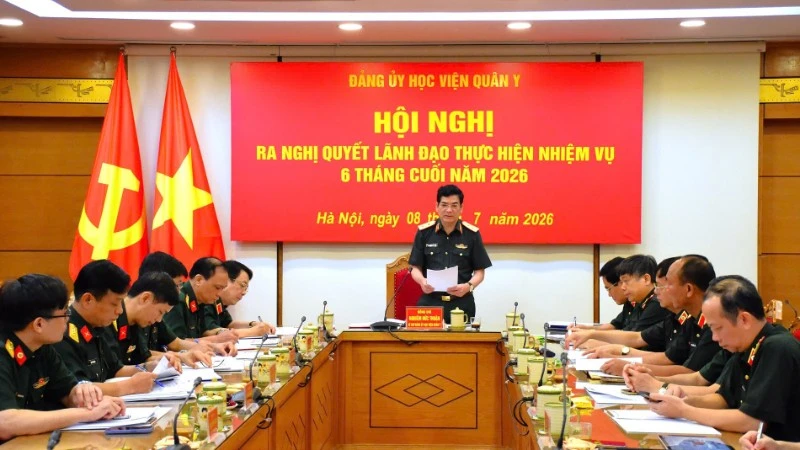
The Party Committee of the Vietnam Military Medical Academy held a conference in Hanoi to direct the implementation of tasks for the second half of 2026. The meeting decided to prioritize strengthening resources and investing in modern medical equipment to enhance the quality of healthcare and education. The conference was attended by Lieutenant General, Associate Professor, Dr. Nghiem Duc Thuan, Secretary of the Academy's Party Committee and Political Commissar; Lieutenant General, Professor, Dr. Tran Viet Tien, Deputy Secretary of the Party Committee and Director of the Academy; representatives from the Central Military Commission's working group; members of the Academy's Standing Party Committee and Party Committee; and leaders from functional departments. Lieutenant General Tran Viet Tien conveyed the Central Military Commission's conclusions on leading the implementation of military and defense tasks for the second half of 2026. Lieutenant General Nghiem Duc Thuan reported on the task implementation in the first half of 2026, emphasizing that many tasks were completed according to plan or exceeded expectations. Notably, the implementation of the 2025-2026 academic year's training plan and the plan for fundamental and comprehensive reform of education within the academy were highlighted. Furthermore, hospitals and research institutes strictly adhered to resolutions and directives from the Party and the Central Military Commission regarding medical services, contributing to the improvement of healthcare quality for both military personnel and the public, which also supports training objectives. The Academy's Party Committee focused on implementing the Central and Central Military Commission's policies on science and technology; leading political and ideological education; the "Determined to Win Emulation Movement" in 2026 and high-point emulation periods; maintaining strict adherence to regularization and discipline; ensuring logistics, technical, financial, and equipment support for all tasks; and upholding Party organizational principles, working regulations, and leadership regulations for key areas. Additionally, the strict implementation of resolutions, directives, conclusions, and regulations from the Party Central Committee, the Central Military Commission, and the Academy's Party Committee was emphasized. Specific mention was made of the directives from General Secretary To Lam (Secretary of the Central Committee, Secretary of the Central Military Commission) on "two steadfastnesses, two drives, two preventions" and the "five firmnesses," as well as the strict implementation of resolutions, directives, regulations, and plans for inspection, supervision, and disciplinary action within the Party. The conference conducted a comprehensive assessment of the Party Committee's leadership work, analyzing and sharing notable achievements. Proposals for the second half of 2026 were also discussed and put forward. Key directions, tasks, and solutions for the second half of 2026 include: continuing to innovate and improve the quality of education and training; strengthening resources and investing in equipment to enhance the quality of medical examination and treatment; promoting scientific and technological research, innovation, and digital transformation, with a focus on developing strategic technological products; ensuring the timely, safe, and high-quality completion of basic construction projects; ensuring robust logistical and financial support for all tasks; accelerating breakthrough initiatives to create strong and synchronized changes across all aspects of work; and building a revolutionary, regular, and modern academy that meets the healthcare needs of the military and the public. Source: Nhan Dan

多角的分析

経済的影響

ベトナム軍医学院への設備投資は、国内の医療インフラ拡充と技術革新への投資という broader な経済政策の一部と見られる。特に、戦略的技術製品の研究開発に注力する点は、ベトナムが製造業だけでなく、ハイテク分野での自給自足と競争力強化を目指していることを示唆する。これは、長期的な経済成長と産業構造の高度化に寄与する可能性がある。

投資家心理

このニュースは直接的な投資機会を示すものではないが、ベトナムの医療分野における技術導入とインフラ整備への関心の高まりを示唆している。将来的に、医療機器メーカーや関連技術サービスを提供する企業にとって、ベトナム市場への参入や事業拡大の機会となる可能性がある。ただし、軍事関連機関への直接的な投資は一般投資家には開かれていない。

社会的影響

軍医学院の医療・教育の質向上は、軍関係者だけでなく、一般市民への医療サービス向上にも繋がる可能性がある。特に、地方部や医療資源が限られている地域において、高度な医療技術や治療法の普及は、健康格差の是正に貢献しうる。また、最新設備への投資は、医療従事者のスキルアップにも繋がり、国民全体の医療リテラシー向上にも寄与すると考えられる。

市民の声

軍医学院の医療レベル向上は、軍人やその家族にとって直接的な恩恵となる。さらに、ベトナムは軍医学院の医療サービスを国民にも開放しているため、一般市民もより高度な医療を受けられる機会が増えることが期待される。しかし、地方部では依然として医療アクセスに課題があり、こうした先進的な医療が全国的に均等に恩恵をもたらすには、さらなるインフラ整備と人材育成が必要となるだろう。

背景・歴史的文脈

ベトナムは、社会主義共和国であり、共産党による一党体制を敷いている。軍隊は党の指導下にあり、軍事力強化と国民の健康維持は国家の重要な柱である。軍医学院は、軍人への医療提供だけでなく、国民への医療サービスも担っており、その能力向上は国家の安全保障と社会福祉の両面に関わる。近年、ベトナムは経済成長を遂げる一方で、中国との関係や南シナ海問題など、地政学的な課題にも直面しており、国防力強化の重要性は増している。今回の決定は、こうした国内・国際情勢を踏まえ、医療分野における自給自足能力の向上と、国民へのサービス提供能力の強化を目指すものと考えられる。

原文ソース

Nhan Dan

原文を読む