General articles are free for 24 hours after publish.
Cambodia Hosts International Conference on Cyber Fraud; UNODC Reports Criminals Exploiting New Tech for Money Laundering
At an international conference in Phnom Penh, Cambodia, a UNODC representative highlighted how criminals are leveraging digital currencies and virtual asset service providers to enhance money laundering infrastructure. The UNODC estimates annual losses from cyber fraud in Southeast Asia to be as high as $114 billion.
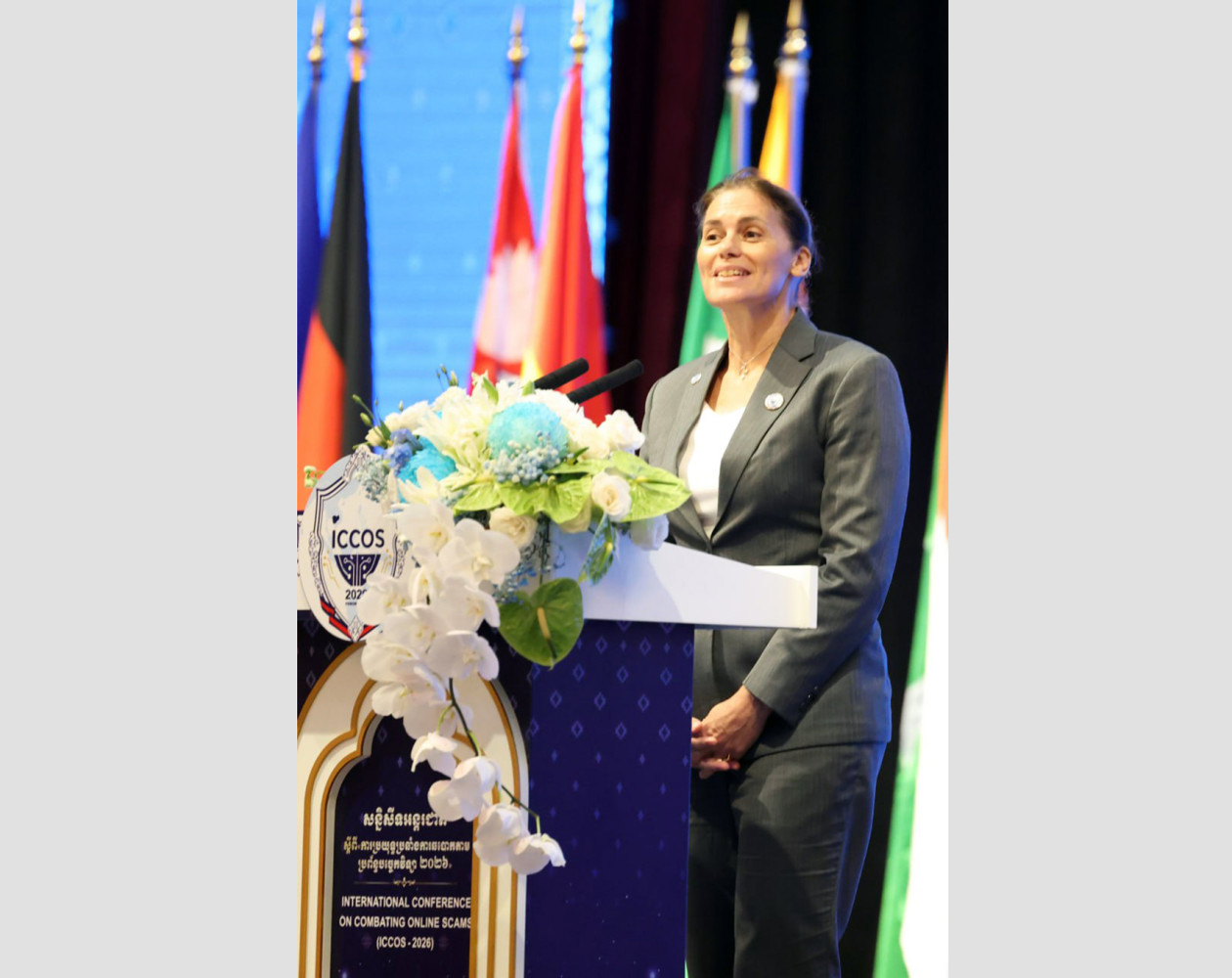
Phnom Penh, Cambodia – September 23, 2026 – Criminals are increasingly leveraging new technologies for their benefit, as the fraud industry in Southeast Asia undergoes fundamental and rapid transformation. Criminal syndicates are utilizing digital currencies and virtual asset service providers to enhance existing money laundering infrastructure in the region, according to Delphine Schantz, the UNODC Regional Representative for Southeast Asia. Schantz made these remarks at the opening of an international conference in Phnom Penh on combating technological fraud, themed "Together Towards Severing the Chains and Ending Technological Fraud." Schantz elaborated that the fraud industry in Southeast Asia is experiencing a significant paradigm shift, with their operational models resembling a "corporate franchise." This structure integrates specialized departments for money laundering, human trafficking, migrant smuggling, and data harvesting into a unified network built on common services. "This makes it increasingly difficult for law enforcement to disentangle victims from perpetrators and provide adequate medical, psychological, and logistical support to victims, while also ensuring that dismantled components do not regroup elsewhere," she stated. The rapid adoption of technology is a key driver, with criminals consistently exploiting new innovations. While crime has always adapted to evade law enforcement, the current distinction lies in the speed and complexity of these changes. "Technology is now more accessible, lowering the barrier to entry for criminal groups, which are shifting towards new types of crime. Digital currencies and virtual asset service providers have amplified the existing money laundering infrastructure in the region, and increasingly, organized crime groups are not only benefiting from new technologies but are actively developing them," Schantz added. The internet has created an environment conducive to this growth, with Southeast Asia at the forefront of rapid digitalization. However, even here, criminals are outpacing many other sectors. "We see this in the growing global scale of fraudulent hubs, but we also see it in the rapid expansion of other internet-based crimes, such as illegal online gambling," Schantz noted. Schantz regarded the conference as a testament to Cambodia's commitment to international cooperation and to the shared priority of all countries and partners gathered: a more effective response to online fraud and cybercrime. "Online fraud and scams are crimes that affect people everywhere and all segments of society. Individuals can lose small amounts of money due to less reputable e-commerce scams, or they can lose their life savings due to romance scams. It also impacts economic activity and people's trust in institutions," she concluded. According to a UNODC report, losses from technological fraud in the Southeast Asia and Pacific region are estimated to be as high as $114 billion annually. Source: AKP Khmer
Original source
AKP Khmer