Vietnam Harnesses AI to Revolutionize Agricultural Product Quality Assessment
A new AI-powered quality assessment system for agricultural products has been developed in Vietnam. It aims to improve quality control and reduce post-harvest losses, particularly for key exports like mangoes and dragon fruits, enhancing the competitiveness of Vietnamese produce internationally.
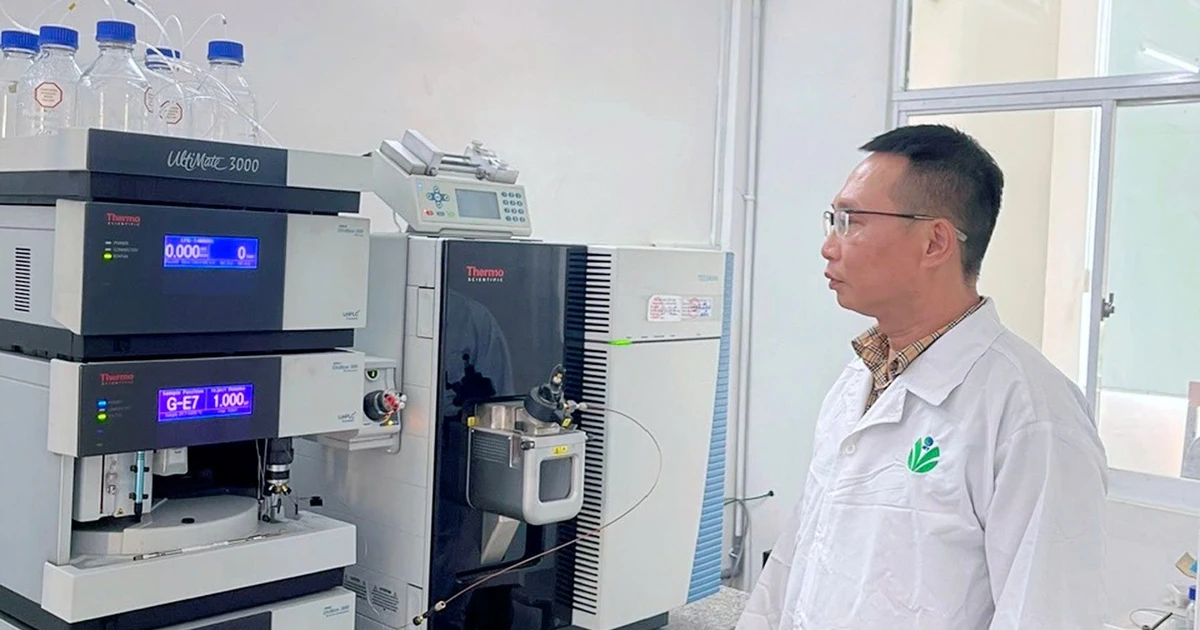
A research team from the Center for High Technology Innovation (Vietnam Academy of Science and Technology) has successfully developed an AI-powered quality assessment system for agricultural products. This technology specifically aims to enhance quality control and reduce post-harvest losses for key exports like mangoes and dragon fruits. Vietnam faces significant challenges in ensuring the quality and safety of its agricultural products, particularly its main fruit exports. Post-harvest losses for mangoes and dragon fruits currently range from 20% to 30%, causing substantial damage to farmers and impacting international competitiveness. Furthermore, the demand for controlling chemical residues and heavy metals in exported produce is increasingly stringent. Traditional quality assessment methods, relying heavily on practical experience combined with physicochemical and microbial analyses, are often time-consuming, costly, and can damage product samples. In response to these issues, Dr. Bui Quang Minh and his colleagues have led the initiative "Research on the Application of Artificial Intelligence in Assessing the Quality of Agricultural Products." This project involved collecting a database of approximately 10,000 images detailing the shape, size, and nutritional content of mangoes and dragon fruits. They analyzed the quality of these fruits using chemical methods integrated with image analysis to find correlations between quality and visual characteristics. The team also built a database of the physicochemical properties of mangoes and dragon fruits and developed an AI software system for their quality assessment. Key growing regions such as Dong Thap province, Can Tho city, Long An province, and Dong Nai province were selected for this research. According to Dr. Bui Quang Minh, the project lead, applying AI in agricultural product assessment is no longer confined to laboratory settings. The technology is built upon deep learning models combined with image processing techniques to detect, classify, and evaluate the quality of agricultural products. Successful implementation of this AI technology will help minimize losses and contribute to enhancing the productivity, quality, and international reputation of Vietnamese agricultural products. Moreover, the AI technology integrates hyperspectral imaging (HSI) techniques with complex machine learning models. This allows for the analysis of the spectral composition of agricultural products, enabling accurate estimation of nutrient content, moisture, and internal quality without destructive sample analysis, thereby shortening laboratory analysis times. The conversion from RGB images to hyperspectral images via HSI is also more cost-effective and faster, providing real-time quality results in the field. To ensure product traceability and transparency of quality information from harvest to consumer, AI is integrated into the agricultural value chain through combination with blockchain technology. Additionally, AI applications allow for quality monitoring at each stage, improving the efficiency of warehousing, transportation, and distribution. Predictive algorithms based on environmental data, such as temperature, humidity, soil pH, and crop growth indices, also assist farmers in determining optimal harvest times, reducing post-harvest losses, and increasing profits. During the project, the research team successfully built a dataset comprising 14,411 images of mangoes and dragon fruits of varying quality. This serves as a crucial raw data source for training, testing, and operating the AI model for agricultural product quality assessment. Furthermore, the project developed the "Fruit Monitor/Fruit AI" software, capable of recognizing, assessing, and alerting on the quality of these agricultural products with over 90% accuracy. The software system also allows for the management of user data, farms, storage facilities, cameras, AI models, and training history. A process for applying the AI system in assessing the quality of these fruits has been established, involving steps such as image collection and preprocessing, data labeling, chemical component analysis of mangoes and dragon fruits at different quality levels, AI model construction, training, and deployment on web and mobile platforms. However, the application of AI for agricultural product quality assessment requires robust storage and cloud computing infrastructure to handle large volumes of data from sensors and images, along with stable internet bandwidth for transmission to analysis centers. The initial investment costs for specialized cameras, HSI sensors, and AI software remain high, posing a barrier for small-scale farmers. Training personnel to operate, maintain, and develop AI technology in rural areas is essential but currently limited. Government and international organizations need to ensure legal frameworks for data security, privacy, and unified quality standards. The project has published three SCIE international papers and two national papers, and has trained one Master's student. The Vietnam Academy of Science and Technology's acceptance council has recognized the "Research on the Application of Artificial Intelligence in Assessing the Quality of Agricultural Products" project as having significant scientific and practical value, contributing to improved agricultural product quality assessment and promoting AI adoption in agriculture. Source: Nhan Dan
多角的分析
AIによる農産物品質評価システムの導入は、ベトナムの農業セクターにおける生産性向上と損失削減に直接貢献する。特に輸出農産物の品質基準向上は、国際市場での競争力を高め、外貨獲得能力を強化する。従来の非効率な評価プロセスを刷新し、データ駆動型のアプローチを推進することで、サプライチェーン全体の効率化とコスト削減が期待できる。これは、ベトナム経済の持続的な成長を支える重要な一歩となる。
このAI技術は、ベトナムの農業分野への投資機会を示唆している。AIを活用した品質管理システムは、農産物の付加価値を高め、輸出市場での信頼性を向上させるため、投資家にとって魅力的な要素となる。特に、食品加工業、輸出業者、および関連テクノロジー企業への投資は、将来的な成長が見込まれる。ただし、初期投資コストやインフラ整備の課題は、投資判断におけるリスク要因として考慮する必要がある。
AIによる農産物品質評価は、農家の収入安定化と生活水準向上に寄与する可能性がある。収穫後損失の削減は、農家の経済的負担を軽減し、より高品質な農産物の生産を奨励する。しかし、AI技術へのアクセスや利用に関する知識格差、および初期投資コストは、小規模農家にとって依然として大きな課題である。これらの課題に対処するためには、政府や関連機関による技術普及支援や、低コストで利用可能なソリューションの開発が不可欠である。
AIによる品質評価は、消費者がより安全で高品質な農産物を手に入れる機会を増やす。特に輸出基準を満たす農産物は、国内市場にも供給されることで、食の安全に対する信頼を高める。一方で、AI技術の導入に伴うインフラ整備や人材育成の遅れは、地方と都市部、あるいは大農家と小規模農家との間で、情報や技術へのアクセスにおける格差を生む可能性がある。これは、市民全体の利益を最大化する上で、考慮すべき点である。
背景・歴史的文脈
ベトナムは、農業を経済の基幹産業の一つとして位置づけているが、長らく収穫後損失や品質管理の課題を抱えてきた。特に、輸出農産物に対する国際的な品質要求の高まりは、技術革新の必要性を浮き彫りにしている。2010年代以降、ベトナム政府は「工業化・近代化」政策を推進し、農業分野への科学技術導入を奨励してきた。AI技術の発展は、こうした背景の中で、従来の経験則に頼った品質評価から、データに基づいた客観的で効率的な評価への転換を可能にするものとして期待されている。
原文ソース
Nhan Dan