General articles are free for 24 hours after publish.
Pertamina Tightens Supervision on Illicit Gas Stations to Prevent Subsidy Misuse
Indonesia's state-owned oil company, Pertamina, is intensifying supervision and enforcement against gas stations violating rules, amid projections that the subsidized fuel 'Pertalite' may exceed its quota. Violators face tiered sanctions.
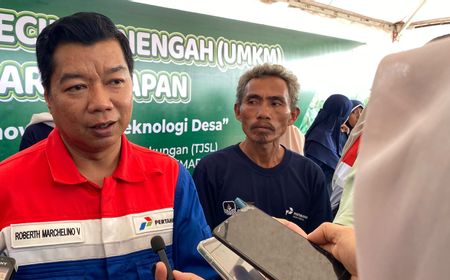
PT Pertamina Patra Niaga, Indonesia's state-owned oil company, is set to strengthen its supervision and enforcement against public fuel filling stations (SPBU) that violate regulations. This move comes amid projections that the distribution of the subsidized fuel type 'Pertalite' might exceed its quota. Robert MV Dumatubun, Corporate Secretary of Pertamina Patra Niaga, stated that these enforcement measures are ongoing efforts to ensure that energy subsidies are precisely targeted to those who genuinely need them. The company's approach involves supervision, enforcement, and guidance. "The action taken by Pertamina is one of the first forms is a form of supervision, the second is a form of enforcement, and the third is a form of guidance," Robert told the media when met in Cilacap, Thursday, September 10. Regarding supervision and discipline, Dumatubun explained that Pertamina will take firm action against irresponsible parties attempting to exploit distribution gaps. This initiative also serves as a reminder for all stakeholders to jointly protect the rights of vulnerable communities. For the guidance stage, Pertamina imposes tiered sanctions on distribution institutions or SPBUs proven to have violated rules. These sanctions range from written reprimands, reduction or suspension of fuel supply, to Business Termination (PHU). However, Pertamina assures that the closure of rogue SPBUs will not disrupt energy availability for the community. As a precautionary measure, Pertamina implements a Cooperation Operation (KSO) scheme, allowing sanctioned gas stations to continue operations under the company's direct supervision. This ensures that communities do not face distribution shortages and, in fact, leads to improvements in distribution agencies, said Roberth.
Original source
VOI English