General articles are free for 24 hours after publish.
Indonesia Revives Plan for World Mangrove Center Amidst Vast Forest Holdings
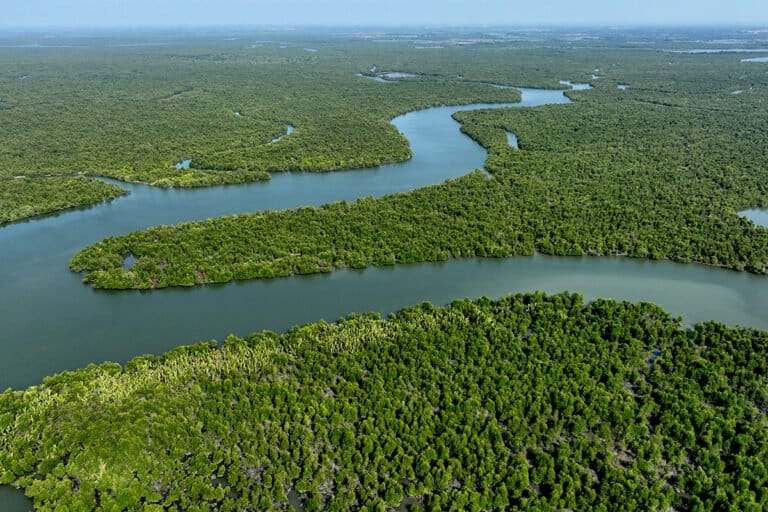
Indonesia is reviving plans to establish a World Mangrove Center (WMC), a global hub for mangrove conservation and restoration, leveraging its vast 3.4 million-hectare mangrove forests. The initiative aims to bolster Indonesia's leadership in coastal ecosystem protection and climate change mitigation.
Indonesia is once again advancing plans to establish a World Mangrove Center (WMC), envisioned as a global hub for mangrove conservation and restoration. This initiative is considered strategic given Indonesia's significant holdings of approximately 3.4 million hectares of mangrove forests, representing nearly a quarter of the world's total. This substantial resource positions Indonesia as a key player in coastal ecosystem protection. Mangroves are more than just coastal trees; they are vital ecosystems that mitigate abrasion and storm surges, sequester blue carbon, provide habitats for diverse species, and support the livelihoods of coastal communities. Dyan Murtiningsih, Director General of Watershed Management and Forest Rehabilitation at the Ministry of Environment and Forestry, highlighted that mangrove management encompasses three interconnected dimensions: ecological, socio-economic, and global climate. However, these ecosystems face pressures from land-use change, pollution, the climate crisis, and varying institutional capacities across regions. "No single country, ministry, or organization can solve this issue alone," Murtiningsih stated. The journey towards establishing the WMC began with a mangrove conference in Bali in 2017. Indonesia subsequently brought the idea to the United Nations, leading to Resolution No. 12 in 2019 at UNEA-4 in Nairobi, Kenya. This resolution serves as a guide for countries, particularly those with significant mangrove areas, in managing their ecosystems. Putera Parthama, Chairman of the National Watershed Forum, explained that the WMC is not intended to be a large institution with grand office complexes. Instead, it will function as a network node connecting governments, researchers, businesses, organizations, and communities from various nations. Its activities will include joint research, exchange of best practices, capacity building, and the development of blue carbon measurement and verification standards. Funding sustainability is identified as a crucial factor, with forestry expert Agus Justianto proposing blended finance schemes that combine public budgets with private investment.
Original source
Mongabay Indonesia