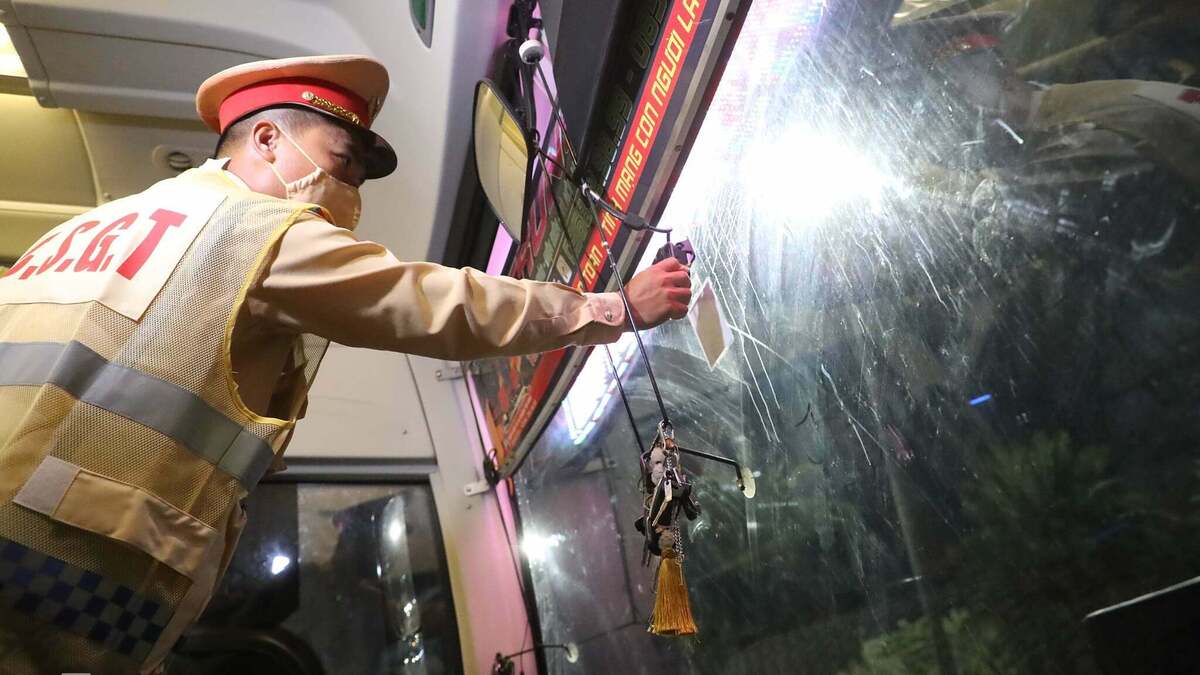
Proposal to Install Cameras Recording Taxi Passengers for Enhanced Security
Economy
2026年7月29日
5
VnExpress

General articles are free for 24 hours after publish.

Proposal to Install Cameras Recording Taxi Passengers for Enhanced Security

Share
AI Summary

A proposal is emerging in Vietnam to mandate or encourage the installation of cameras recording passengers in passenger vehicles with fewer than 8 seats, including taxis. This aims to support the resolution of issues such as fare disputes, harassment, and theft.

A proposal is being considered in Vietnam to mandate or encourage the installation of cameras that record passengers in passenger vehicles with fewer than 8 seats, including taxis. This initiative aims to aid in resolving issues such as fare disputes, harassment, and theft. The proposal was outlined in a comprehensive report on the collection, reception, and clarification of opinions regarding a draft decree on the installation of vehicle tracking devices and recording devices for drivers and passenger compartments in road transport vehicles. According to the draft decree, the Ministry of Public Security, the lead agency, proposes requiring vehicles for internal transport and passenger transport with fewer than 8 seats to install driver image recording devices. Specifically, vehicles for passenger transport with 8 or more seats will be required to additionally install passenger compartment image recording devices. Data from these devices will be transmitted in real-time to the servers of the service provider and subsequently to the servers of the Traffic Police Department. A prominent taxi company owner stated that passenger transport vehicles with fewer than 8 seats have a very high transaction frequency. Most journeys involve unfamiliar individuals, typically with only one or two passengers. This model, the company noted, potentially poses numerous risks to both drivers and passengers, including fare disputes, harassment, theft, accidents, and incidents requiring responsibility verification. The lack of visual data, they argue, complicates the resolution of complaints, violation processing, and investigation support. The company also mentioned that the cost of installing and operating cameras has significantly decreased, leading some entities to proactively implement them. However, the implementation has been inconsistent due to the absence of a legal framework, particularly concerning customer consent for recording and audio capture in transport operations. The company pointed out that the current draft only mandates driver image recording devices for vehicles with fewer than 8 seats, without guidance on recording passengers. Since most existing devices have a wide-angle view covering the entire cabin, including passengers, the absence of specific regulations permitting the capture of interior images would create difficulties in complying with personal data protection regulations. Based on this reality, the company proposed adding a regulation to encourage vehicles for passenger transport with fewer than 8 seats to install driver image recording devices capable of capturing the entire cabin, including passengers. The installation should be completed before the mandatory implementation date stipulated in the decree. The Ministry of Public Security, in response to this feedback, indicated that it has revised the draft decree to stipulate that organizations and individuals with adequate infrastructure and financial capacity may install devices to record drivers and passenger compartments and transmit data to servers. Disagreement on Data Transmission Methods Regarding the provision to transmit all image data to the Traffic Police Department's servers in real-time, the company expressed concerns about potential system overload and increased costs. They proposed that data be processed on the device in real-time to alert drivers, with only violation information, including 10 seconds before and after the event, transmitted to the server. Routine data could be transmitted weekly. Conversely, the Ministry of Public Security intends to maintain the real-time data transmission requirement. The ministry explained that the data transmitted to the service provider's and Traffic Police Department's servers are related to violations of public order and safety regulations, serving management and operational purposes. According to the draft, from January 1, 2028, vehicles for passenger transport with fewer than 8 seats (excluding the driver's seat), goods transport vehicles (excluding tractor units), and internal transport vehicles must install driver image recording cameras. From January 1, 2029, passenger transport vehicles with more than 29 seats will be required to install passenger compartment cameras. Vehicles with 8 to 29 seats will comply from January 1, 2030. These monitoring devices must be equipped with functions to automatically detect driver violations such as not wearing a seatbelt, letting go of the steering wheel with both hands, driving with feet, using a mobile phone, speeding, driving beyond regulated hours, or showing signs of distraction, drowsiness, or smoking in the vehicle, to provide immediate alerts to the driver. Source: VnExpress

0

Original source

VnExpress

原文を読む