Hanoi's 100-Year Urban Plan: Hopes and Anxieties of Residents
Society
2026年7月7日
5
VnExpress

Hanoi's 100-Year Urban Plan: Hopes and Anxieties of Residents

AI サマリー

Hanoi's 100-year urban planning exhibition has drawn large crowds of citizens, with particular interest in transportation improvements and potential relocation. Hopes are high for expanded metro networks, but delays in detailed planning are also raising concerns about real estate transactions.

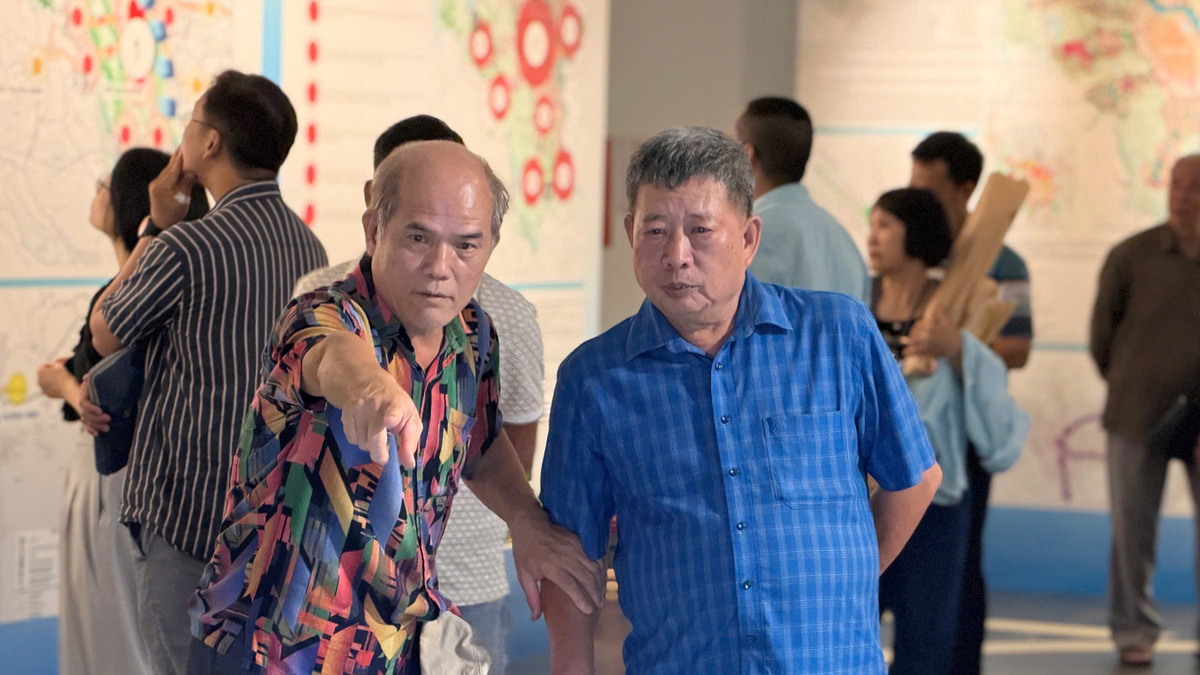
A large-scale exhibition showcasing Hanoi's urban planning vision for the next 100 years has opened in Vietnam's capital, attracting significant public interest. The plan aims to accommodate the projected population growth, which is expected to reach 15 million by 2035 and up to 19 million by 2065. The exhibition's most popular section features overall maps and diagrams detailing plans for infrastructure, transportation networks, green spaces, and water bodies. The proposed urban railway network, comprising 18 metro lines totaling 979 km, has particularly captured the attention of residents. This network is envisioned to integrate with existing rail systems and serve as a hub connecting Hanoi with its satellite cities and surrounding regions. Anh Quyết, who commutes from Hoài Đức district to the city center, spends two and a half hours daily on a 36 km round trip. He expressed strong hopes that the completion of the metro network will significantly reduce his commute time, citing the convenience of the existing Cát Linh-Hà Đông metro line used by some of his colleagues. He mentioned that if the underground section of the Nhổn-Hà Nội metro line is completed, he could potentially travel from his home to Nhổn station, take the train to Văn Miếu station, and then walk to his office. His father, Mr. Quỳnh, who is 86 years old, is also attending the exhibition, hoping for future benefits for his grandchildren, even if he won't see the full realization of the 100-year plan himself. He hopes for the timely completion of transportation routes, especially the urban railway, to facilitate convenient travel for residents from suburban areas to the historic Old Quarter without concerns about weather or traffic congestion. Dr. Arch. Ngô Trung Hải, Vice Chairman of the Vietnam Urban Planning and Development Association, praised Hanoi's initiative in simultaneously commencing work on five metro lines with a total length of over 300 km, calling it a milestone after nearly two decades of pursuit. He believes the completed metro system will be a crucial driver for the development of satellite urban areas, which have been stagnant due to a lack of transport infrastructure connectivity. However, concerns have also been raised regarding the delay in the detailed announcement of the quy hoạch. Đỗ Cao Trường, a 65-year-old resident of Vĩnh Hưng district, wishes to see detailed quy hoạch maps to understand how his home might be affected. He hopes for the prompt release of detailed plans, as properties within quy hoạch zones face difficulties in transactions, such as buying or selling houses and residential land. Mr. Hà, a companion of Mr. Trường, is also eagerly awaiting official detailed quy hoạch information from the specialized agencies. He currently consults information on social media and real estate websites. He suggested that having explanations or guided tours at the exhibition would make it easier for the public to understand, as the general overview is somewhat confusing. Despite being nearly 70, he hopes the city will be built beautifully as depicted in the drawings. According to the Hanoi Department of Planning and Architecture, the master plan outlines general development directions, with specific details for each area to be presented in subsequent "khu vực quy hoạch" (zonal quy hoạch) and "chi tiết quy hoạch" (detailed quy hoạch). A quy hoạch information search system is scheduled for public release in November 2026. Until then, residents can refer to a trial version or formally request information from the municipal People's Committees or the Department for official information, especially for transactions or legal procedures. Dr. Arch. Ngô Trung Hải commented that while the layouts, vision, and large projects for Hanoi's strong development and new appearance are positive, caution is needed when implementing them aggressively in areas where residents have stable lives, to avoid causing anxiety about their future. He also stressed the importance of respecting history rather than disregarding it during development. "To turn the quy hoạch into reality, the most crucial question currently is: where will the financial resources come from?" he posed. Experts suggest that feasibility requires adherence to development principles, along with sufficiently strong mechanisms to shorten implementation times. This implies Hanoi may need to accept more decisive capital mobilization solutions. Historically, many countries developing large-scale infrastructure have accepted significant initial investments and even long-term loans. Without robust capital mobilization mechanisms, implementing numerous large-scale projects as outlined in the quy hoạch will be challenging. If financial resources are a necessary condition, a suitable urban governance apparatus is the sufficient condition for the 100-year quy hoạch to materialize. According to Mr. Hải, the city should study models like "city within a city" or urban administrative units of sufficient scale, endowed with clear authority to proactively manage spatial development, invest in infrastructure, and mobilize resources. In addition to building new urban areas, priority should be given to...

多角的分析

経済的影響

ハノイの100年 quy hoạchは、インフラ投資、特に地下鉄網の拡充を柱としており、これは経済成長の強力な牽引役となる。大規模なインフラ投資は、建設業界や関連産業に直接的な雇用を生み出すだけでなく、物流コストの削減や企業活動の活性化を通じて、長期的には都市全体の生産性向上に寄与する。しかし、 quy hoạchの実現には巨額の財源が必要であり、その調達方法(公的資金、民間投資、国際融資など)が経済への影響を左右する。特に、財源確保が遅延すれば、 quy hoạchの遅延だけでなく、インフレ圧力や公的債務の増加といったリスクも生じうる。

投資家心理

投資家にとって、ハノイの100年 quy hoạchは、不動産、インフラ、建設セクターへの潜在的な投資機会を示す。特に、地下鉄網の拡充は、沿線の不動産価値の上昇や、それに伴う商業施設の開発などを期待させる。しかし、 quy hoạchの詳細が遅れている現状は、投資判断における不確実性を高めている。 quy hoạch区域に含まれる土地の取引が困難になる可能性や、 quy hoạchの実施に伴う立ち退きや補償問題は、不動産投資のリスク要因となりうる。また、 quy hoạchの実現には巨額の資金が必要であり、その調達方法によっては、金利の上昇や市場の変動リスクも考慮する必要がある。

社会的影響

quy hoạchの進展は、ハノイ市民の日常生活に直接的な影響を与える。Anh Quyếtさんのように、地下鉄網の完成による通勤時間の短縮は、生活の質の向上に繋がる。一方で、Đỗ Cao Trườngさんのように、自宅が quy hoạch区域に含まれるかどうかの不確実性は、大きな不安材料となっている。 quy hoạchの詳細が不明確なままでは、不動産取引が停滞し、住民の財産権や生活設計に影響を及ぼす可能性がある。また、 quy hoạchの実施に伴う立ち退きや移転は、地域コミュニティの分断や、生活基盤の変化といった社会的な課題を生じさせることも考えられる。

市民の声

Anh Quyếtさんのように、 quy hoạchによって日々の通勤が楽になることを期待する市民がいる一方で、Đỗ Cao Trườngさんのように、自宅や土地が quy hoạchによってどのように影響を受けるか、詳細が分からないことに不安を感じている市民も多い。特に、 quy hoạchの詳細が遅れることで、不動産取引が滞り、生活設計に影響が出ることを懸念する声は大きい。また、 quy hoạchの実現には巨額の資金が必要となるが、その財源がどのように確保され、市民生活にどのような影響を与えるのか、透明性のある情報公開が求められている。

背景・歴史的文脈

ハノイの都市 quy hoạchは、ベトナムの経済改革(Đổi Mới)以降の急速な都市化と人口増加に対応するため、長年にわたり進められてきた。特に、2000年代初頭から、交通渋滞の緩和と都市機能の向上を目指し、地下鉄網の建設が計画されてきた。しかし、資金調達の難しさや、計画の複雑さから、多くのプロジェクトが遅延してきた経緯がある。今回の100年 quy hoạchは、こうした過去の経験を踏まえ、より包括的かつ長期的な視点での都市開発を目指すものだが、詳細 quy hoạchの遅れは、過去の教訓が十分に活かされていない可能性も示唆している。

原文ソース

VnExpress

原文を読む