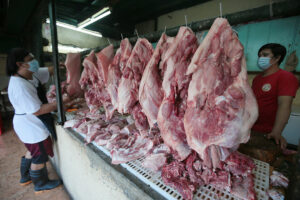
Key Food Prices Decline Month-on-Month in Philippines in June
Key food commodity prices in the Philippines saw a month-on-month decline during the June 15-17 period, according to the Philippine Statistics Authority (PSA), potentially signaling a reprieve from inflationary pressures.
This article requires PRO
This article is outside the free access window or is a special report. PRO unlocks it and the full archive.
Related articles
- DA Urges Marcos to Extend P50/Kilo Imported Rice Price Cap for 60 Days
The Philippine Department of Agriculture is recommending a 60-day extension of the P50 per kilo price cap on imported rice to stabilize supply and curb inflation ahead of the main harvest season.
- Marcos Jr. Mulls Extending P50/Kilo Price Cap on Imported Rice
The Philippine Presidential Palace is considering extending the P50 per kilo price cap on imported rice for at least another month, factoring in the approaching September harvest season and inflation concerns.
- Marcos Jr. Weighs Extending P50 Imported Rice Price Cap
Malacañang announced that President Ferdinand Marcos Jr. has not yet decided on extending the P50 per kilo price ceiling for imported rice. The National Price Coordinating Council (NPCC) has recommended an extension, but the President is still reviewing the proposal, considering factors like the September harvest season.
- Philippine inflation likely between 6.0-7.0% in June: BSP
The Philippine central bank estimates that the annual inflation rate in June likely fell within the range of 6.0% to 7.0%, driven by lower prices of key food items but offset by higher electricity rates. The BSP will remain vigilant and guided by incoming data.