Anti-Terrorism Act repeal sought as 256 victimized in 6 years
Society
2026年7月4日
4
Philstar Nation

Anti-Terrorism Act repeal sought as 256 victimized in 6 years

AI サマリー

Human rights group Karapatan stated that 256 individuals have been victimized by the Anti-Terrorism Act since its enactment in 2020. The group is renewing its call for the repeal of the law and the Terrorism Financing Prevention and Suppression Act of 2012.

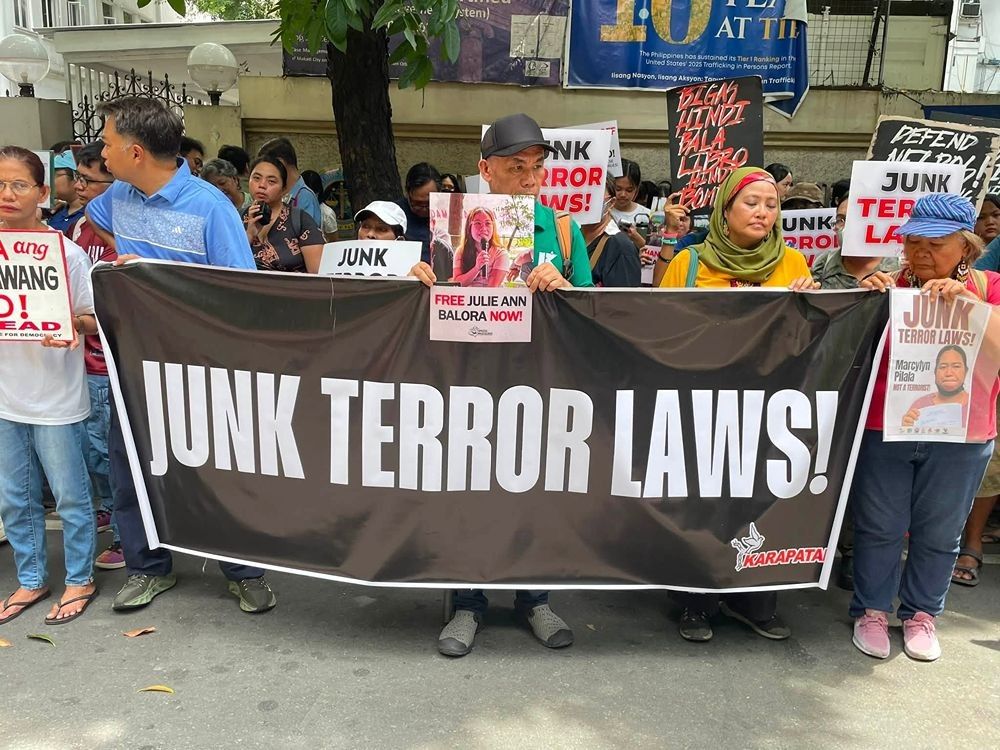
MANILA, Philippines — Human rights group Karapatan said that the Anti-Terrorism Act, which was signed into law exactly six years ago on Friday, July 3, has victimized 256 individuals over the years of its implementation. Karapatan and other progressive groups called on the government anew to repeal the law during a protest in front of the Department of Justice on Friday. They also demanded that the Terrorism Financing Prevention and Suppression Act of 2012, which is a separate measure that criminalizes the provision of funds or support to “terrorist organizations,” be junked. The groups said the government “weaponizes these twin laws” to target and silence critics and ordinary citizens. The Anti-Terrorism Act was signed into law in 2020 by former president Rodrigo Duterte, who is now detained in the International Criminal Court in The Hague, Netherlands for alleged crimes against humanity of murder cases. Karapatan claimed they recorded a total of 222 individuals who were falsely charged with violations of Anti-Terrorism Act or Terrorism Financing Act, in which 25 of them are currently detained. The Anti-Terrorism Council, meanwhile, designated 37 individuals as terrorists. Two of them, peasant organizer Norman Ortiz and his friend Lee Sudarion, were desaparecidos or victims of enforced disappearance. “Instead of addressing the roots of social unrest, the government has chosen to expand the machinery of repression through laws that criminalize those who organize, speak out, and defend the people's rights,” Karapatan’s statement read. The group also noted the cases of community journalist Frenchie Mae Cumpio and lay worker Marielle Domequil, who they said were falsely convicted of violations of anti-terror laws. Cumpio and Domequil were two of the five activists who were arrested in February 2020 collectively known as Tacloban 5. They were convicted of terrorism financing in January before a Tacloban Court, and were allegedly linked to communist armed groups. They are currently facing 12 years and five months to 18 years and eight months of imprisonment. Their terrorism financing case stemmed from the P557,360-funds that the authorities recovered during their arrest. State forces alleged that the two served as the finance officers of the Eastern Visayas Regional Party Committee (EVRPC), the regional arm of the Communist Party of the Philippines (CPP) in Eastern Visayas, and that the funds seized from them would be provided to armed group New People’s Army. However, the Court of Appeals had already ruled out the accusations against Cumpio and Domequil in October 2025, saying there was no factual and legal basis to confiscate the funds. The court also said authorities have “no proof” that the two were involved in any suspicious activity involving money. Cumpio and Domequil were also missing in any list designating them as terrorists. Before their arrest, Cumpio served as executive director of the alternative news outlet Eastern Vista under the Altermidya Network, while Marielle Domequ

多角的分析

経済的影響

テロ対策法やテロ資金供与防止法は、国内の経済活動、特に人権擁護や社会活動を行う団体への資金の流れを厳しく監視・制限する可能性がある。これにより、NGOや市民社会組織(CSO)への国際的な資金援助が滞り、社会開発プロジェクトや支援活動に影響が出かねない。また、法執行の不透明性や恣意的な運用は、国内外からの投資家心理を悪化させ、フィリピン経済への信頼を損なうリスクも考えられる。

投資家心理

テロ対策法の適用範囲の広さと、過去の事例における恣意的な運用の可能性は、投資家にとって大きな懸念材料となる。特に、人権活動家やジャーナリストが標的となりうるという事実は、法の執行が政治的意図に左右されるリスクを示唆している。このような状況は、フィリピンにおけるビジネス環境の予測可能性を低下させ、特に人権や透明性を重視する欧米企業からの投資を躊躇させる可能性がある。長期的な視点では、法の安定性と公正な運用が、フィリピンの経済成長と国際競争力に不可欠である。

社会的影響

テロ対策法は、政府に批判的な言論や活動を抑圧する「武器」として利用されているという人権団体の主張は、フィリピン社会における表現の自由と結社の自由に対する深刻な懸念を示している。特に、ジャーナリストや社会活動家が不当な訴追や有罪判決を受ける事例は、市民社会の活動空間を狭め、社会正義の実現に向けた声を封じ込める恐れがある。タクロバンのジャーナリストと信徒ワーカーの事例は、地域レベルでの活動でさえ、国家権力による監視と弾圧の対象となりうることを示唆しており、市民の不安を増大させている。

市民の声

テロ対策法による被害者とされる256人という数字は、フィリピン市民、特に社会活動家、ジャーナリスト、そして政府の政策に疑問を呈する人々にとって、法の執行がどのように日常生活に影響を与えうるかを示す具体的な証拠となる。不当な訴追や長期の拘留は、個人の人生だけでなく、その家族にも多大な苦痛を与える。さらに、法への恐れから、人々が声を上げたり、社会問題に関与したりすることを躊躇するようになれば、民主的な社会の健全な発展が阻害される。これは、市民一人ひとりの権利と自由が、国家の安全保障という名の下に、いかに脆弱になりうるかという問題を提起している。

背景・歴史的文脈

フィリピンにおけるテロ対策法(2020年施行)は、2007年のテロ対策法に代わるもので、より広範な定義と厳しい罰則を特徴とする。同法は、テロ行為を「人々に恐怖を与えること、または政府の活動を妨害すること」と定義し、広範な解釈の余地を残している。施行以来、人権団体は、同法が反体制派や社会活動家を標的とするために利用されていると批判してきた。2012年のテロ資金供与防止法も、テロ組織への資金提供を厳しく罰するものであり、これら二つの法律が連携して運用されることで、政府批判者を封じ込めるための法的枠組みが強化されていると指摘されている。過去には、ジャーナリストや人権活動家が、テロ関連法違反で逮捕・訴追される事例が複数報告されており、国際社会からも懸念の声が上がっている。

原文ソース

Philstar Nation

原文を読む