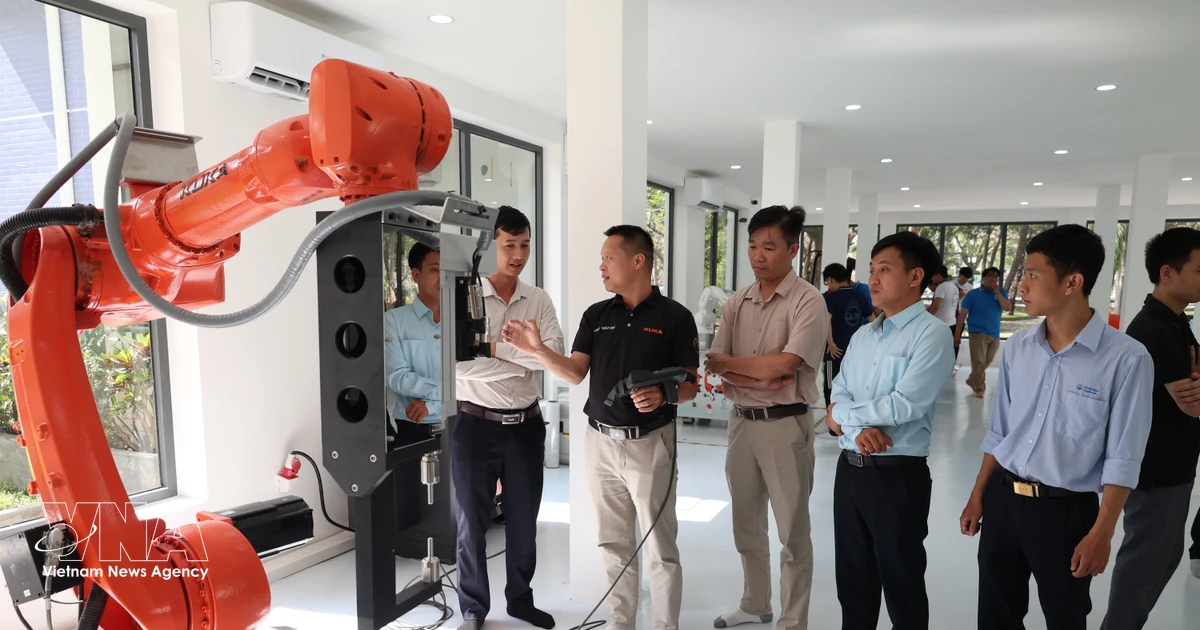
Vietnam Advances AI Ecosystem Following 18 Months of Resolution 57 Implementation
Technology
2026年7月6日
5
VietnamPlus English
Relations
🇻🇳Vietnam🇨🇳China

Vietnam Advances AI Ecosystem Following 18 Months of Resolution 57 Implementation

AI サマリー

Vietnam is strengthening international resource, technology, and investment linkages to foster its AI ecosystem and long-term growth strategy. Domestic tech giants are leading the charge, with the government focusing on regulatory reform and innovation. Nurturing talent and mastering technology are key future challenges.

General Secretary and President To Lam has urged AI experts to assist Vietnam in connecting with international resources, technology enterprises, investment funds, research institutions, and leading global experts. The objective is to develop human resources, technology businesses, and innovation capacity, aiming to achieve important initial milestones in strategic technology development within this year, following the 18-month implementation of Politburo Resolution No. 57. Major domestic technology groups, including VNPT, Viettel, FPT, and CMC Corporation, are playing a leading role in shaping the country's AI ecosystem. SK Innovation and SK Telecom have also signed Memoranda of Understanding (MoUs) with Nghe An province and the National Innovation Centre of Vietnam to advance AI ecosystem development and support the nation's long-term growth strategy. Vietnam has progressively streamlined its regulatory framework to clear institutional bottlenecks and has put in place mechanisms designed to spur innovation and technology adoption. The country's approach has pivoted from a resource-heavy strategy to one focused on practical results, with stricter monitoring of projects' progress. This regulatory effort is crucial for fostering a conducive environment for technological advancement. Prime Minister Le Minh Hung emphasized that the national digital architecture framework should provide a unified, shared, and interoperable architecture for the entire political system, connecting government systems with citizens and businesses. Ministers are directly responsible for the implementation of assigned tasks and must ensure the quality and progress of database development. Vietnam has called for enhanced cooperation and the establishment of common regional frameworks for emerging strategic technologies such as artificial intelligence (AI), big data, space technology, and cybersecurity. The goal is to create a secure digital business environment and improve ASEAN's overall competitiveness. The country's semiconductor ecosystem currently comprises around 60 chip design companies, approximately 7,000 chip design engineers, and 166 universities offering semiconductor-related training programs. Initial registrations indicate a demand for the prototyping of about 30,000 chips. Vietnam's challenge is not merely to train more engineers or scientists but to cultivate a generation capable of mastering, improving, and eventually creating core technologies. Assoc. Prof., Dr. Nguyen Thanh Phuong of the University of L’Aquila suggests developing a "borderless national intellectual network" to enable Vietnamese professionals living abroad to contribute as visiting professors, strategic advisers, research leaders, or co-directors of key laboratories. This model aims to tap into global expertise without requiring permanent relocation. According to Assoc. Prof. Dr. Tran Le Hung from Gustave Eiffel University, many countries have invested heavily in cutting-edge technologies but faced constraints not from capital or human resources, but from regulatory bottlenecks, policy issues, and implementation mechanisms. This highlights the importance of effective governance and policy in technological development. In agriculture, improved crop varieties have increased yields by 8–15%, depending on the crop, while enhancing farmers' incomes and supporting the sector's restructuring. This indicates the successful application of technology in traditional sectors. Vietnam should shift from merely using technology to truly mastering AI, semiconductors, clean energy, and advanced materials. The nation needs to transition from a resource-driven economy to one fired by innovation, knowledge, and talent, and move away from cheap labor as its primary competitive advantage towards real technological competitiveness that lifts the country into higher-value global supply chains. Copyright, VietnamPlus, Vietnam News Agency (VNA)

多角的分析

経済的影響

ベトナムはAIエコシステム構築を通じて、従来の資源・労働力依存型経済から、イノベーションと知識集約型経済への転換を目指しています。これは、高付加価値サプライチェーンへの参入を加速させ、長期的な経済成長の持続可能性を高めるための戦略です。特に、国内大手IT企業の積極的な投資と、政府による規制緩和・インフラ整備は、外国からの直接投資(FDI)を呼び込み、技術移転を促進する上で重要な役割を果たすと考えられます。しかし、技術習得と創造能力を持つ人材育成の遅れは、この移行のペースを鈍化させるリスク要因となります。

投資家心理

ベトナムのAIエコシステムへの注力は、テクノロジー分野への投資機会を拡大させる兆しです。国内大手IT企業への投資や、AI関連スタートアップへのベンチャーキャピタル(VC)からの資金流入が期待されます。政府による規制緩和やインフラ整備は、投資環境の改善に寄与しますが、人材育成の課題や、技術習得・創造能力の不足は、投資リターンの不確実性を高める要因となり得ます。長期的な視点では、AI技術の応用が農業や製造業などの基幹産業の生産性向上に繋がる可能性があり、関連分野への投資も有望視されます。

社会的影響

AIエコシステムの発展は、ベトナム社会に多岐にわたる影響を与えます。まず、高度なITスキルを持つ人材への需要が高まり、教育システムや職業訓練の変革が求められます。一方で、AIによる自動化は一部の職種で雇用を代替する可能性があり、社会的なセーフティネットの整備が重要となります。また、デジタルインフラの整備は、地方と都市部の情報格差を縮小する可能性がありますが、同時にデジタルデバイドの拡大も懸念されます。ホーチミン市でのデジタルビジネス指数(DBI)を活用した優良企業選定は、イノベーションを促進する一方で、選定基準の透明性や公平性が問われる可能性があります。

市民の声

ベトナム国民にとって、AIエコシステムの発展は、より高度で専門的な職業への機会拡大を意味する可能性があります。特に若年層は、新しい技術を習得し、将来性のある分野でキャリアを築くチャンスに恵まれるかもしれません。しかし、AIによる自動化が進むにつれて、一部の既存の職種では雇用が減少するリスクも存在します。また、政府が推進するデジタルインフラの整備は、都市部だけでなく地方の住民にとっても、より質の高い公共サービスへのアクセス向上に繋がる可能性があります。しかし、テクノロジーへのアクセスやリテラシーの格差が、新たな不平等を生まないかという懸念も無視できません。

背景・歴史的文脈

ベトナム共産党は、科学技術、イノベーション、デジタル変革を国家開発の突破口と位置づけています(決議第57号)。これは、過去の経済成長が主に製造業と労働集約型産業に依存してきた反省から、より高付加価値な経済構造への転換を目指す動きです。特に、中国との地政学的な関係や、グローバルサプライチェーンの再編といった国際情勢も、国内技術力の強化と自立化への意識を高めています。AIや半導体といった戦略的技術分野への投資は、国家の長期的な競争力維持と、国際社会における影響力拡大を目指すベトナムの野心的な計画の一部と言えます。

原文ソース

VietnamPlus English

原文を読む