General articles are free for 24 hours after publish.
Philippine Stocks Extend Decline Amid Mideast Tensions
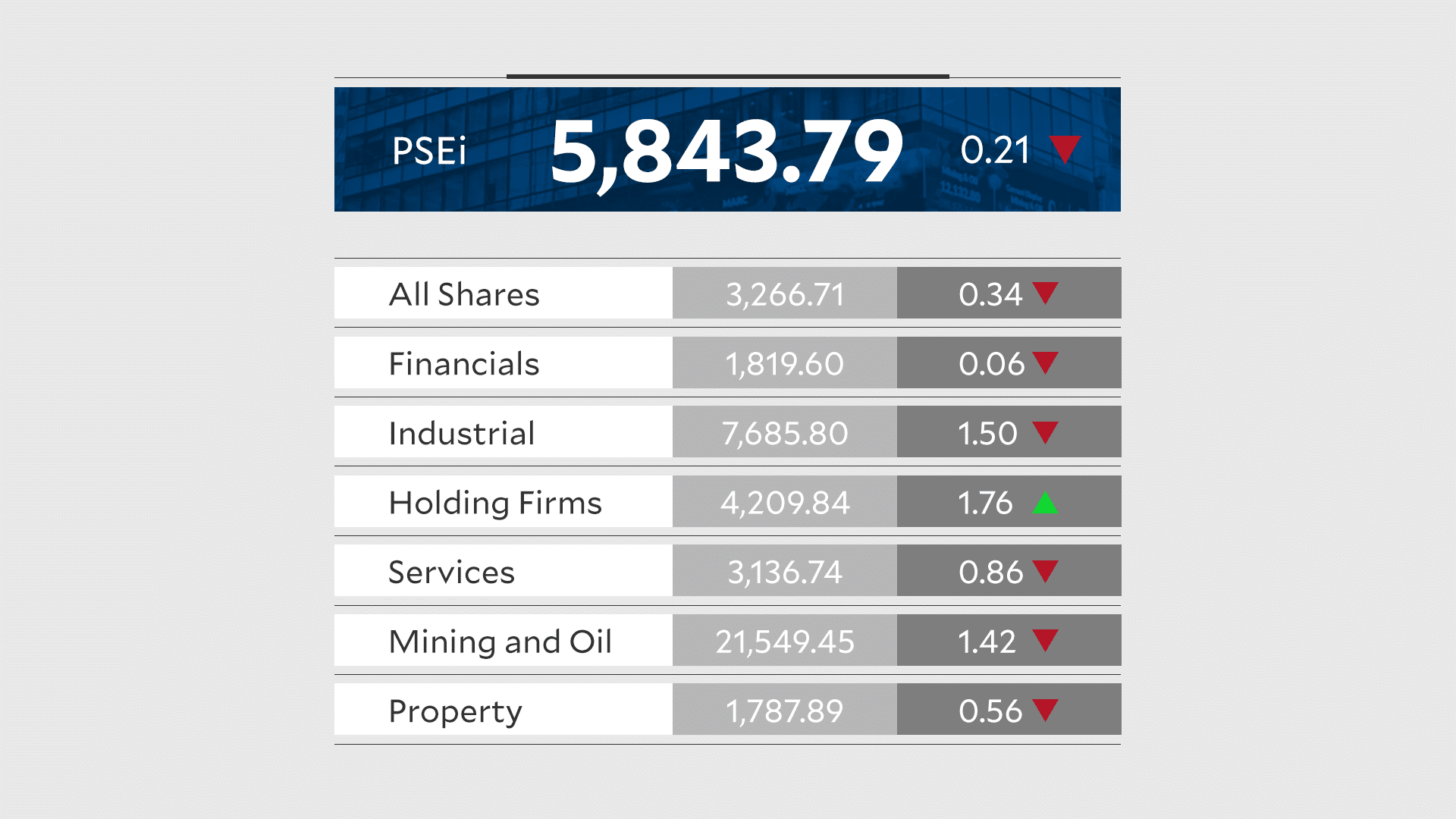
Philippine stocks continued their downward trend on Monday, influenced by escalating Middle East tensions, high oil prices, and rising local treasury yields. The benchmark Philippine Stock Exchange Index (PSEi) fell 0.21%, closing at 5,843.79 points, as investors adopted a cautious stance.
MANILA, Philippines — Philippine stocks slipped further on Monday as escalating tensions in the Middle East, high oil prices and rising local treasury yields kept investors on the sidelines. The benchmark Philippine Stock Exchange Index (PSEi) shed 0.21 percent, or 12.12 points, to close at 5,843.79. READ: US warns of rapid escalation in Middle East war These factors have heightened investor risk aversion, curbing capital inflows into the market. The uncertainty in the Middle East, with potential implications for oil supply, could affect the global economy, including the Philippines, which relies heavily on energy imports. Rising oil prices can fuel inflation, increasing costs for households and businesses. Furthermore, an increase in local treasury yields can incentivize a shift of funds away from the stock market towards safer fixed-income investments, acting as a headwind for equities. Concerns over domestic corporate earnings and economic outlook are dampening market sentiment. Any escalation of geopolitical tensions in the South China Sea could further exacerbate regional economic impacts. While remittances from Overseas Filipino Workers (OFWs) are a crucial pillar of the Philippine economy, a global economic slowdown or instability could impact OFW employment and remittance amounts, potentially affecting domestic consumption.
Original source
Inquirer Business