Philippine DOJ, OPAPRU Explore Integrating Local Peace Deals in Criminal Cases
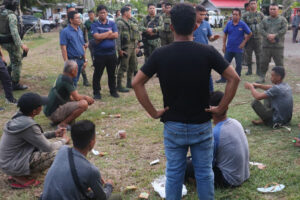
The Philippine Department of Justice (DoJ) and the Office of the Presidential Adviser on Peace, Reconciliation and Unity (OPAPRU) are studying mechanisms to consider locally brokered peace settlements in criminal cases in the Bangsamoro region, recognizing that convictions alone do not always end violence or deliver lasting justice.
By Mark Joseph M. Sanchez THE Department of Justice (DoJ) and the Office of the Presidential Adviser on Peace, Reconciliation and Unity (OPAPRU) are studying how locally brokered peace settlements in rido or clan feuds could be considered in criminal cases in the Bangsamoro Autonomous Region in Muslim Mindanao (BARMM), saying convictions alone do not always end violence or deliver lasting justice. “Our main objective here is to establish a system that recognizes that while talks are under way, legal accountability is not cast aside,” Justice Secretary Fredderick A. Vida said after the two agencies signed a memorandum of agreement on Tuesday creating a joint technical working group (TWG). The panel will study how verified community-based peace settlements may be factored into criminal proceedings “without diminishing prosecutorial discretion or judicial independence,” according to the DoJ. Mr. Vida said the initiative aims to bridge the gap between formal criminal prosecution and traditional conflict resolution, noting that many rido cases in BARMM stem from land disputes and are settled through negotiations among families, tribal leaders and religious elders rather than through punishment alone. “But what happens, given the context, is that [the approach] does not actually resolve the issue of reconciliation,” he told a news briefing in Filipino after the signing, referring to measuring success solely through prosecution and conviction rates. He said criminal complaints often continue independently of local peace efforts, creating situations where legal proceedings could undermine settlements already being pursued by communities. “At the DoJ, we have 120 days to resolve a preliminary investigation” he said. “But if, at the end of those 120 days, the outcome [brings more] conflict and more chaos, [and the families] feel they have not attained justice, then it has only given rise to more issues and more problems.” Government monitoring recorded 161 ridos and other community-based conflict incidents from 2023 to April 2026, according to the DoJ. OPAPRU Secretary Mel Senen S. Sarmiento said local governments, traditional leaders and religious authorities have long played a key role in preventing clan feuds from escalating. “Even if you imprison the offender, it will not stop the cycle of wiping out entire clans,” he said in Filipino. “One side loses a member, then they retaliate against the other. It never ends.” He said the proposed mechanism seeks to support grassroots reconciliation while preserving the role of the justice system. “But with this mechanism, initiated at the grassroots level and supported by the [National Government], we hope to stop these retaliatory acts by resolving them locally and in accordance with the culture of the area,” he added. Mr. Vida said any framework proposed by the TWG would comply with the Constitution and existing laws. “We will ensure that whatever guidelines and rules are drafted will strictly adhere to the Constitution and the rule of law,” he said. “The ultimate goal is to achieve genuine justice.” He noted that the Constitution recognizes customary law as one of the sources of Philippine law, providing a legal basis for exploring how traditional dispute resolution mechanisms could complement the formal justice system. The TWG will be co-headed by representatives from the DoJ and OPAPRU and include officials from the BARMM Ministry of Public Order and Safety, Department of the Interior and Local Government, Philippine National Police, local government units, traditional justice institutions and other stakeholders. Mr. Vida said the agencies are targeting to complete draft guidelines by Sept. 30 and determine whether implementing the framework would require legislation or action by the Supreme Court before it could be integrated into the country’s justice system.
多角的分析
この動きは、BARMM地域における経済活動の安定化に間接的に寄与する可能性がある。紛争解決が迅速かつ文化的に受け入れられる形で行われるようになれば、土地紛争など経済活動の障害となる要因が軽減され、投資環境の改善につながることも考えられる。ただし、現時点では具体的な経済的影響は不明であり、今後の枠組みの実施状況に依存する。
投資家にとっては、法制度の安定性と予測可能性の向上が期待できる。特に、土地所有権や地域社会との関係が重要となるプロジェクトにおいて、リドのような伝統的な紛争が紛糾化することを避けるためのメカニズムは、リスク低減要因となりうる。しかし、司法の独立性や検察の裁量への影響については、さらなる詳細の確認が必要だろう。
BARMM地域では、氏族間の報復の連鎖(リド)が、地域社会の平和と安定を長年脅かしてきた。この取り組みは、伝統的な紛争解決方法と現代の司法制度を調和させることで、地域住民が「真の正義」と感じられる解決策を提供することを目指している。これにより、コミュニティ内の信頼回復や、報復行為の抑制、ひいては地域社会全体の和解が進むことが期待される。ただし、このメカニズムが、被害者の権利保護や、紛争当事者双方の納得を得られる形で運用されるかが問われる。
BARMM地域の住民、特に紛争当事者やその家族にとっては、長年の報復の連鎖から解放され、より迅速かつ文化的に受け入れられる形で紛争が解決される可能性が開かれる。これにより、コミュニティ内の安定が回復し、生活の質が向上することが期待される。一方で、従来の司法手続きへの信頼や、新しいメカニズムへの理解と受容が課題となる。
背景・歴史的文脈
フィリピン南部、特にイスラム教徒が多く居住するミンダナオ島の一部地域では、氏族間の対立(リド)が長年にわたり紛争の原因となってきた。これらの対立は、土地所有権、名誉、家族間の問題など、多様な要因から発生し、しばしば激しい報復行為へと発展し、地域社会の平和と安定を著しく損なってきた。伝統的な紛争解決メカニズムは存在したが、現代の法制度との整合性や、紛争の根本的な解決、被害者の権利保護といった点で課題を抱えていた。2014年の包括的和平合意(CAB)以降、バンサモロ自治地域の設立が進められる中で、こうした伝統的な紛争解決と現代司法制度の調和が、平和構築の重要な要素として認識されるようになった。
原文ソース
BusinessWorld Nation