General articles are free for 24 hours after publish.
DPD Papua Urges Evaluation of Conflict Strategy Amid Civilian Casualties
The Special Committee for Papua of the Indonesian DPD has called for an evaluation of the government's security strategy in resolving the armed conflict in Papua. Following recent civilian shooting incidents in Jayawijaya Regency, the committee urged a stronger approach to the root causes of the conflict and prioritized civilian protection.
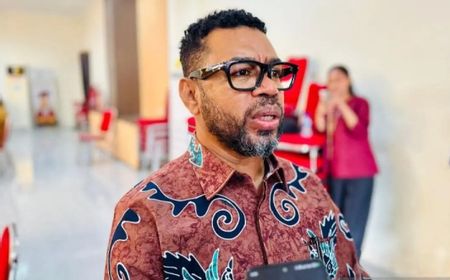
MANOKWARI - The Special Committee for Papua of the Indonesian DPD has asked the government to evaluate the security strategy and the resolution of the armed conflict in Papua. The demand arose after three civilians were victims of shootings in Jayawijaya Regency, Papua Mountains. Deputy Chairman of the Papua Sub-Committee of the DPD RI Filep Wamafma said that evaluation was needed so that conflict handling did not stop at security, but also touched on the root of the problem more accurately. "There must be a national conflict resolution plan for Papua and a roadmap for the implementation of the plan, including the establishment of a national commission for conflict resolution," he said. According to Filep, the protection of civilians must be a priority. Security needs to include public service lines, health workers, teachers, government officials, development workers, and indigenous people. Filep also highlighted residents who had fled due to the prolonged conflict between the TNI-Polri and armed criminal groups or KKB. "If civilians are still victims of shootings, then the government must dare to evaluate the effectiveness of the strategy for resolving conflicts in a comprehensive and thorough manner," he said. Citing data from Komnas HAM, Filep said there were 42 conflict events in Papua throughout the first semester of 2026. A total of 59 people died and 50 others were injured. Of the dead, according to data provided by Filep, 43 people were civilians, eight members of the TNI-Polri, and eight members of the KKB. He assessed that the figure showed that civilians were the most vulnerable group in the ongoing conflict. "The state must ensure that conflict areas are not a space where civilians lose their most basic rights," said Filep. The Papua Commission also encourages the government to strengthen political, legal, human rights, development, and dialogue approaches by involving relevant parties. According to Filep, the success of conflict management is not enough to be seen only from the security situation, but also from the safety of civilians and the resolution of the root of the problem. "Papua needs security. More than that, Papua needs assurances that every citizen has the right to live in peace and be protected," he said. Source: VOI English
Original source
VOI English