29 Sets of Remains Found in Ho Chi Minh City Park May Belong to Tet Offensive Martyrs
Ho Chi Minh City authorities announced the discovery of 29 sets of remains in Le Thi Rieng Park, potentially belonging to special forces and infantry soldiers who perished during the 1968 Tet Offensive. Artifacts and historical documents are being used for identification.
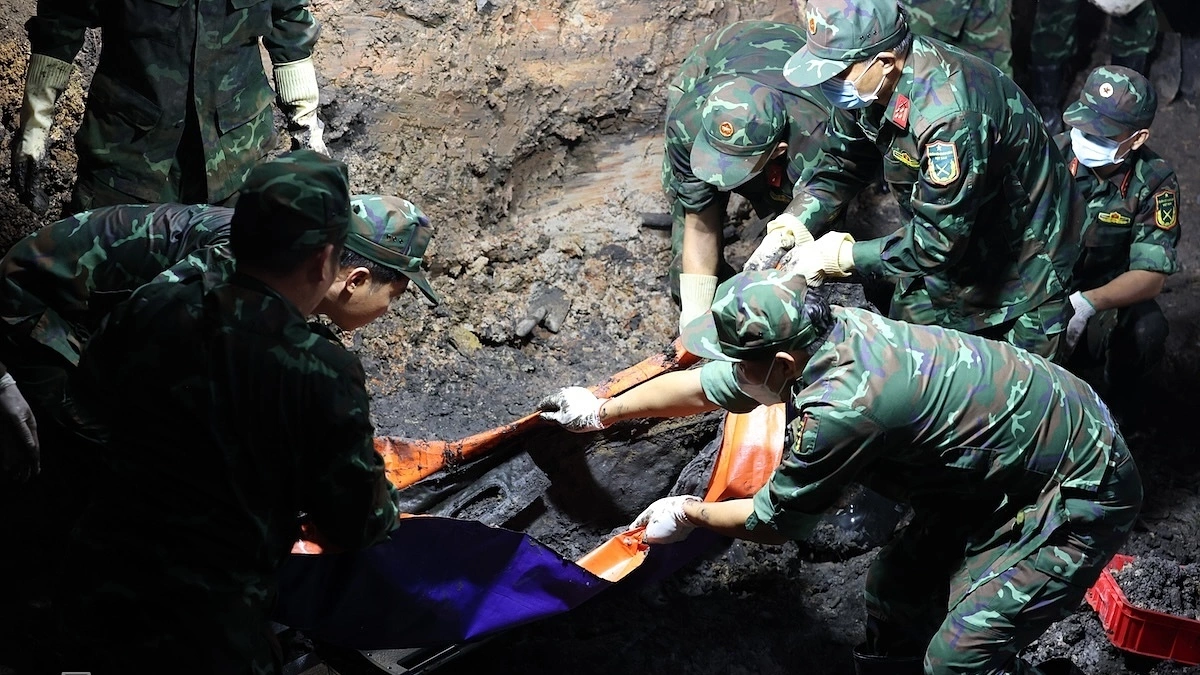
Ho Chi Minh City authorities announced on July 11 that 29 sets of remains discovered at Le Thi Rieng Park may belong to special forces and infantry soldiers who perished during the 1968 Tet Offensive. Major General Nguyen Thanh Trung, Political Commissar of the Ho Chi Minh City Military Command, stated this during an inspection by General Nguyen Trong Nghia, Director of the General Department of Politics of the Vietnam People's Army. According to Major General Trung, after a week of searching, functional forces unearthed 29 sets of remains arranged in multiple layers within a pit approximately 2 meters deep. The recovered artifacts bear the characteristics of the Liberation Army and the Saigon Special Forces. The Saigon Special Forces were a clandestine armed group operating within the city, organized into small teams. Soldiers lived under legal cover, relying on a network of bases for concealment, weapon storage, and access to targets. During the 1968 Tet Offensive, this force attacked key locations such as the Independence Palace, the U.S. Embassy, the Radio Station, the Saigon Army Headquarters, and the Naval Command. Approximately 60 soldiers died and 12 were captured in these engagements. Since July 4, the recovery team began excavating a trench measuring 25 square meters, finding 11 sets of remains. On July 9 and 10, an additional 18 sets of remains were discovered in a pit spanning about 20 square meters. The search area has since been expanded to a T-shaped trench, approximately 50 meters long and 3 meters wide. Among the remains, officials have preliminarily identified the remains of martyr Huynh Van Quen, belonging to Battalion 1 Long An, through personal documents and historical records. This unit participated in the battle at the Chu Y Bridge during the General Offensive and Uprising of Tet Mau Than 1968. General Nghia praised the discovery of remains at Le Thi Rieng Park as a highlight of the 500-day intensive campaign for the search, collection, and identification of martyrs' remains. He urged that the search operations be conducted with utmost dedication, reflecting gratitude for those who sacrificed their lives. The search at Le Thi Rieng Park is part of a "500-day campaign" aimed at commemorating the 80th anniversary of Vietnamese Martyrs' and Wounded Soldiers' Day. The campaign will run from March 15, 2026, to July 27, 2027, with the objective of collecting around 7,000 sets of remains and identifying 18,000 biological samples.
多角的分析
本件は直接的な経済活動とは関係ないが、ベトナム戦争の記憶を呼び覚ます出来事として、国民の愛国心や歴史認識に影響を与える可能性がある。これは、長期的な社会安定や、国家としてのアイデンティティ形成に間接的に寄与し、結果として経済活動の基盤となる社会資本の一部と見なせる。
投資家にとって、このニュースは直接的な投資機会やリスクをもたらすものではない。しかし、ベトナムの歴史的背景や社会の安定性に対する理解を深める一助となる。ベトナムの戦争の記憶は、同国の社会構造や国民感情に深く根ざしており、こうした歴史的文脈を理解することは、長期的な投資判断において無視できない要素となりうる。
ホーチミン市レ・ティ・リエン公園での遺骨発見は、ベトナム戦争の激戦地であったサイゴンの歴史を改めて浮き彫りにする。発見された遺骨が1968年のテト攻勢の犠牲者である可能性が高いことは、当時の戦闘の激しさと、多くの兵士が故郷に帰ることなく倒れた現実を物語る。特に、サイゴン特殊部隊は都市部での秘密作戦に従事し、一般市民の中に紛れて活動していたため、その犠牲者の特定は困難を極める。遺留品や身元特定の手がかりから、個々の兵士の人生や家族への想いが偲ばれる。こうした発見は、戦没者とその遺族への敬意を表すだけでなく、若い世代に戦争の悲劇と平和の尊さを伝える機会となる。また、公園という公共の場での発見は、市民が歴史に触れ、追悼する場を提供する意味合いも持つ。
ホーチミン市在住の市民にとって、レ・ティ・リエン公園での遺骨発見は、過去の戦争の記憶を身近に感じさせる出来事となる。特に、テト攻勢のような激しい戦闘の末に亡くなった兵士たちの遺骨が、自分たちの生活圏内で発見されたことは、戦争の現実をより一層強く意識させるだろう。発見された遺骨が「 biệt động Sài Gòn」(サイゴン特殊部隊)の隊員である可能性は、都市部での激しい戦闘や、兵士たちが一般市民に紛れて活動していた当時の緊迫した状況を想起させる。これにより、市民は、祖国のために命を捧げた兵士たちへの感謝の念を新たにするとともに、平和の尊さを再認識する機会を得る。また、遺骨の収集・特定作業が進むことで、犠牲となった兵士たちの身元が明らかになり、遺族にとっては長年の悲願が叶う可能性もある。
背景・歴史的文脈
1968年のテト攻勢は、ベトナム戦争における北ベトナム軍とベトコンによる大規模な攻勢でした。サイゴン(現ホーチミン市)を含む南ベトナム各地で同時に仕掛けられ、アメリカ軍と南ベトナム軍に大きな衝撃を与えました。この攻勢では、サイゴン市街地でも激しい戦闘が行われ、多くの兵士が犠牲となりました。特に、サイゴン特殊部隊(Biệt động Sài Gòn)は、都市部での秘密裏の活動を特徴とし、その犠牲者の特定や埋葬場所の特定は困難を伴うことが多かったとされています。今回の遺骨発見は、このテト攻勢の激しさと、失われた多くの命への追悼の機会を提供するものです。ベトナム政府は、戦争犠牲者の遺骨収集・特定を国家的な課題として推進しており、今回の発見もその一環として位置づけられています。
原文ソース
VnExpress