General articles are free for 24 hours after publish.
Philippines Faces Urgent Need for FDI to Boost Exports, Develop Domestic Industries
The Governor of the Bangko Sentral ng Pilipinas highlighted the critical need for export expansion to offset rising imports, emphasizing the urgency of attracting Foreign Direct Investment (FDI) into manufacturing. The country's consumption culture is noted as a factor limiting domestic savings and contributing to an investment gap.
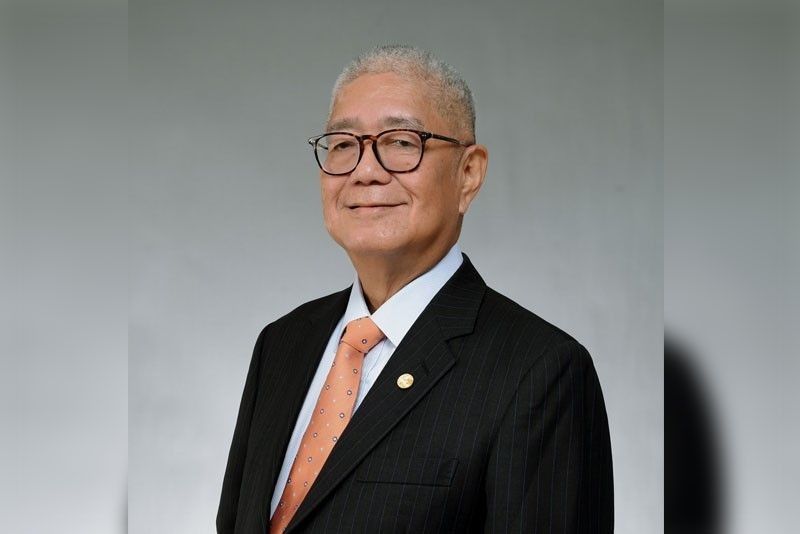
The Bangko Sentral ng Pilipinas (BSP) Governor Eli Remolona Jr. last week told a Senate hearing that the country needs more exports to generate the dollars required to buy the increasing volume of imported goods. He stated that remittances and business process outsourcing (BPO) are insufficient. This implies a need for substantial investments in manufacturing products that are in demand in foreign markets, similar to Vietnam's experience. However, the Governor observed a seeming decline in investor interest, remarking, "Wala na yatang gustong mag invest sa atin" (It seems no one wants to invest in us anymore). Remolona explained that the country's strong "consumption culture" limits the organic growth of domestic savings, leaving the economy structurally reliant on borrowing to fund major expansions. He clarified that this was not an insult to poor Filipinos who struggle to afford basic necessities, as accused by a leftist economist. Businessworld elaborated on the economic principle: in the second quarter of 2026, the country's savings rate was 8.6 percent of GDP, amounting to P643 billion. Meanwhile, the investment rate stood at 23.2 percent of GDP, or P1.74 trillion, resulting in a P1.1 trillion gap. An S-I deficit occurs when investment expenditures exceed savings, necessitating external borrowing. When domestic savings cannot finance infrastructure and business investments, a country must rely on foreign capital, FDI, or external debt. Leftist groups argue that sufficient domestic capital exists but is cornered by the economic elite, who prefer investing in safe, protected industries like property, retail, and banking. China and Vietnam successfully directed private domestic capital to priority industrial projects, leading to export success. However, the Philippines' past state-led industrialization attempts under the first Marcos regime failed due to heavy debt-driven financing, high capital needs, and rampant crony capitalism. Filipino leftists advocate for nationalist industrialization or state control, but China and Vietnam found that pure state ownership lacked innovation and global competitiveness. Philippine conglomerates tend to favor safe, domestic rent-seeking investments over risky global competition. Their focus is on non-tradable sectors like retail, property, banking, and utilities, showing little interest in high-tech manufacturing for export. Unlike Vietnam, which became an export powerhouse through global consumer brands, the Philippines specializes in the intermediary step of advanced semiconductor assembly, testing, and packaging. While the semiconductor industry accounts for 60 percent of commodity exports, its local value-added is at best 20 percent, heavily relying on imported raw materials. Furthermore, the country lacks fundamental industrial infrastructure: cheap and reliable electricity, efficient ports, predictable logistics, and streamlined bureaucracy, which deter even FDIs. For instance, Pax Silica, a potential high-tech manufacturing venture, hinges on improved governance.
Original source
Philstar Business