General articles are free for 24 hours after publish.
Indonesian SMEs Win IQSA Awards for AI and Leadership in High-Risk Industries
PT Schlumberger Geophysics Nusantara (SLB Indonesia), an SME in Indonesia's energy sector, has won four awards at the 2026 Indonesia QHSE for Business Sustainability Awards (IQSA Awards) for its integrated safety culture driven by AI and leadership. The company was recognized for its achievements in advanced energy technology, operational integrity, and individual leadership.
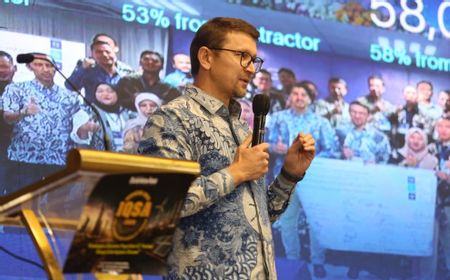
JAKARTA - In the midst of high risks in the energy industry, occupational safety is no longer merely a fulfillment of rules on paper, but rather the result of a merger between modern technology, daily risk analysis, and active leadership on the ground. The integrated safety culture approach led PT Schlumberger Geophysics Nusantara (SLB Indonesia) to bring home four awards at the 2026 Indonesia QHSE for Business Sustainability Awards (IQSA Awards) in Jakarta. Two Corporate Awards and Two Individual Awards In the annual event that assesses safety, occupational health, and environmental sustainability commitments, SLB Indonesia received two qualifications for the corporate category: The Global Excellence in Advanced Energy Technology and Sustainable Energy Operations 2026 The Best Team in QHSE & Commitment in Operational Integrity 2026 Meanwhile, the leadership appreciation was given to two of its personnel, namely Nurzhan Ongaltayev (The Best QHSE Director 2026) and Alam Sarkim (The Best Leadership VP HSSE In Safety Culture 2026). HSE Manager of SLB Indonesia, Alam Sarkim, said that participation in this event was a space to measure the effectiveness of the safety system implemented and at the same time opened the opportunity to share best practices across industry sectors. "This award is an important insight for us, not only to see benchmarks in the energy industry, but also how work safety is applied in various industrial lines in Indonesia," said Alam on the sidelines of the 2026 IQSA Awards ceremony. AI Integration and Learning from Normal Work Approach One of the main points in strengthening Quality, Health, Safety, and Environment (QHSE) in the energy operational environment is the use of technology to minimize potential hazards. One of its innovations is the application of artificial intelligence (AI) in transportation safety systems and operational driving activities. In addition to the utilization of AI, the risk management approach shifts towards the learning from normal work method. This method focuses on analyzing daily activities that run normally to identify potential danger gaps before an incident or work accident occurs. The Role of Field Leadership and Target Zero Fatality Even though it is supported by a sophisticated technology system, the role of human interaction is still considered the main determinant of the culture of occupational safety. Leadership at the management level is required to actively engage in direct dialogue with workers in the field (reality check). "Leaders play an important role in opening technical barriers or bottlenecks in the field. Direct presence at the work site ensures that risk studies are adequately carried out before high-risk work begins," continued Alam. Through the implementation of measurable risk management and multi-level supervision, the main objective of safety management is focused on the prevention of fatal incidents (zero fatalities) and the emphasis on the number of permanent injuries (zero permanent impairment), so that all workers can return home safely every day. Information Source: VOI English
Original source
VOI English