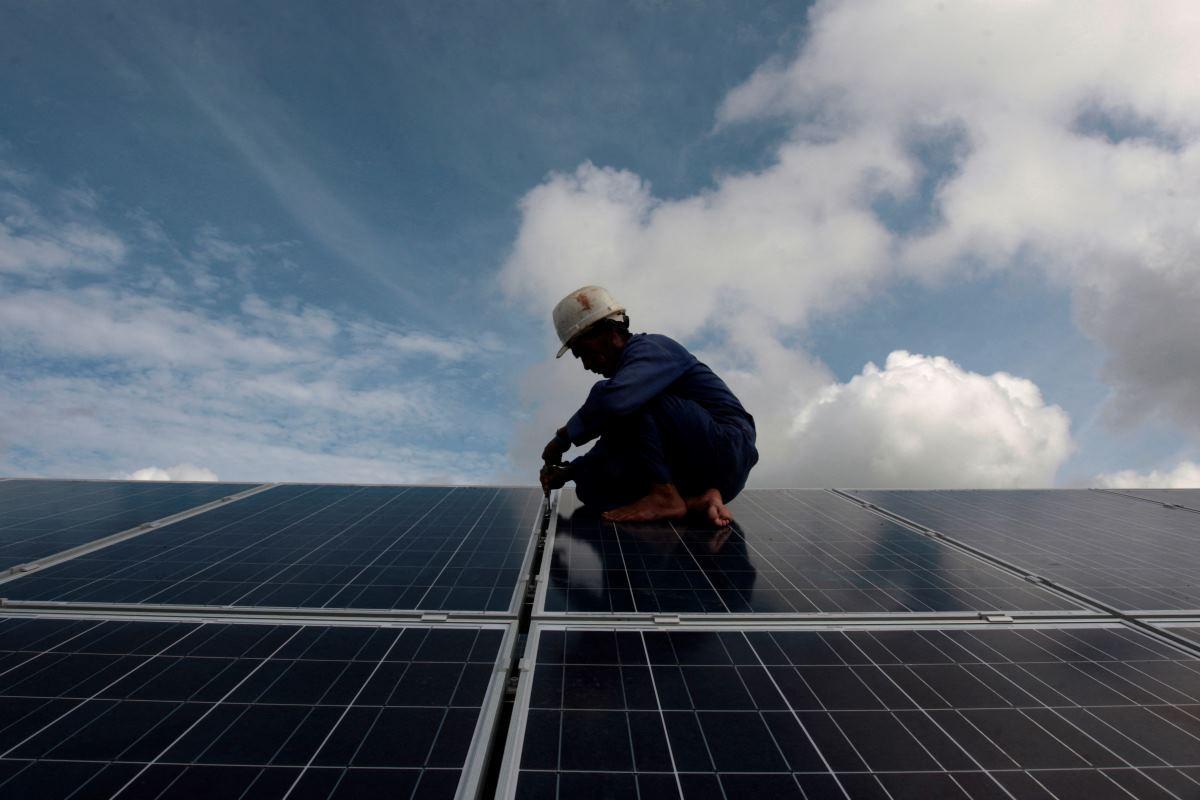
Philippines Leads World in Solar Adoption Amid Soaring Power Prices
The Philippines is seeing a surge in solar power adoption by households and businesses driven by soaring electricity prices, leading the world in solar panel spending since the start of the Iran-Israel conflict.
The Philippines is experiencing a surge in solar power adoption as households and businesses rush to install solar panels to escape the burden of soaring electricity prices. This has made the country one of the world's largest spenders on solar panels since the start of the conflict in Iran. Top power distributor Meralco has raised prices by 10% since the Middle East conflict began in late February. Consequently, a median household now spends around 12% of its monthly income on electricity, assuming a consumption of 200 kilowatt-hours, which is approximately the monthly average for three people. The Philippines is one of the few countries in Southeast Asia with minimal power subsidies, and its residential power prices are the highest in the region. Singapore comes close, but its citizens' average purchasing power is nearly 13 times higher. Adrian Sabatera, a 39-year-old software engineer, had considered solar for years but found it too costly. This changed as costs came down and electricity prices continued to rise. "I wouldn't be shocked if a third of the middle-class population eventually finds their way to this setup," Sabatera said after recently investing 570,000 pesos ($9,300) in an installation at his Manila home, which he shares with three others. In the three months through May, panel imports reached $407 million, a 145% increase from a year earlier, according to trade data from China, which accounts for most of the global supply. Even when Chinese panel shipments fell 13% in May after a tax rebate removal, exports to the Philippines rose by almost a third. On paper, the Netherlands remains a larger market for panels, but experts say that's because it is a transshipment hub. Surge in Inquiries Philergy German Solar, a Manila-based installer, received more than 2-1/2 times the number of customer inquiries in the first five months of this year compared to last year. At one point, it fielded 3,000 inquiries a day, according to managing partner Jochen Staudter. "Customers are deciding to buy much faster than before," Staudter said. "Demand will continue to be driven by high electricity prices." In two years, distributed solar capacity could nearly triple to 3,500 megawatts (MW), matching the current size of the Philippines' utility-scale solar fleet, as loan payback times shrink to 3.1 years from 4 years, said Alnie Demoral, analyst at energy think tank Ember. Solar accounts for under 4% of national power consumption, government data shows. Supply Challenges A weakening currency has compounded the increase in power prices, as the Philippines relies on imported coal and gas for power generation. This has pushed inflation to multi-year highs and slowed growth. Manila entrepreneur Jason Porciuncula installed a 12-kilowatt system with battery storage in January. As prices hit record highs in May, his monthly bill dropped to a fifth of last summer's 21,000 pesos. But it's not all smooth sailing. Installations are lagging behind demand due to component hoarding, volatile equipment costs, and inadequate quality checks, said Brenda Valerio, Philippines director at New Energy Nexus. The government offers loans for solar of up to 500,000 pesos at 5% interest, but it excludes private-sector workers. Another deterrent: high upfront costs, usually above average annual household incomes of 353,200 pesos. "The opportunity is real, but the upfront cost is often too high for a household or business, no matter how quick the payback time is," Ember's Demoral noted. ($1 = 61.2870 Philippine pesos) — Reuters
多角的分析
フィリピンの電力価格高騰は、輸入燃料(石炭、ガス)への依存と、通貨ペソ安が複合的に作用した結果である。特に、中東情勢の緊迫化による燃料価格の上昇は、輸入コストを直接的に押し上げ、国内の電力料金に転嫁されている。補助金が少ないフィリピンでは、この影響が家計に直撃し、太陽光導入という形で顕在化している。これは、エネルギー自給率の低さと、グローバルなサプライチェーンや地政学的リスクに対する脆弱性を示唆している。再生可能エネルギーへのシフトは、長期的なコスト削減とエネルギー安全保障の強化に繋がる可能性があるが、現状では初期投資の高さが大きな課題となっている。
フィリピンにおける太陽光パネル輸入の急増は、市場の成長ポテンシャルを示唆している。特に、高騰する電力料金と、比較的短縮されたローンの返済期間(3.1年)は、投資家にとって魅力的な要素となり得る。しかし、部品の供給制約、設備コストの変動性、品質管理の課題は、投資リスクを増加させる要因である。政府のローン制度は一部の層を除外しており、市場全体の拡大には、より包括的な金融支援策や、国内製造能力の強化が求められるだろう。新興国市場としての成長性は高いものの、インフラや規制の整備状況を慎重に見極める必要がある。
電力料金の高騰は、フィリピンの一般家庭、特に低・中間所得層の生活を圧迫している。ソフトウェアエンジニアのSabatera氏のように、以前は高嶺の花だった太陽光システムを導入する動きは、経済的余裕のある層から広がりを見せている。しかし、政府のローン制度が民間労働者を対象外としている点や、依然として高い初期費用は、多くの人々が太陽光導入を躊躇する要因となっている。これは、エネルギーアクセスの格差を浮き彫りにし、持続可能なエネルギーへの移行が、経済的、社会的な公平性を伴って進むべきであるという課題を提起している。地方都市や農村部では、インフラの未整備や情報不足から、この恩恵を受けられない層も多く存在すると考えられる。
電力価格の高騰は、マニラ首都圏の市民の生活に直接的な打撃を与えています。Sabateraさんのように、数年悩んだ末に太陽光パネルを設置する家庭が増えているのは、電気代の負担が限界に達している証拠です。しかし、57万ペソという初期費用は、平均的な年収の世帯にとっては依然として非常に高額です。政府のローン制度があるとはいえ、民間労働者が対象外というのは、多くの人々にとって導入のハードルを高くしています。地方では、さらにインフラの整備が進んでいないため、都市部のような太陽光導入の恩恵を受けられない人々もいるでしょう。これは、エネルギーの公平なアクセスという、社会的な課題を浮き彫りにしています。
背景・歴史的文脈
フィリピンは、エネルギー需要の増加と、国内の化石燃料資源の制約から、電力供給の大部分を輸入燃料に依存している。特に、石炭と天然ガスが発電の主要燃料であり、国際市場の価格変動や、中東情勢の緊迫化による供給不安の影響を直接受けやすい構造となっている。東南アジア地域の中でも、フィリピンは電力補助金が少なく、一般家庭の電気料金が高いことで知られている。近年、再生可能エネルギー、特に太陽光発電のコストが低下し、政府も導入を奨励しているが、高額な初期費用やインフラの課題が普及の障壁となっていた。しかし、近年の電力価格の急激な上昇は、これらの障壁を乗り越える強力な動機付けとなり、個人や企業による太陽光導入を加速させている。
原文ソース
GMA Money Philippines