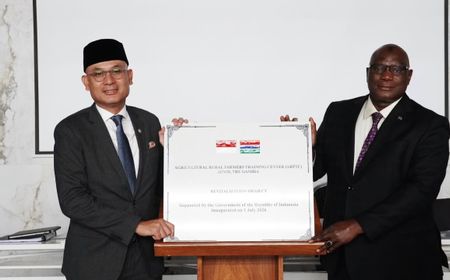
Indonesia Reopens Agricultural Training Center in The Gambia, Boosting Regional Food Security
Indonesia has revitalized the Agricultural Rural Farmers Training Center (ARFTC) in The Gambia, resuming cooperation to strengthen food security in West Africa. Established in 1996, the center has a track record of training over 6,000 farmers.
JAKARTA - Deputy Minister of Foreign Affairs of the Republic of Indonesia, Arrmanatha Nasir, together with the Minister of Foreign Affairs, International Cooperation, and Gambian Citizens Abroad Sering Modou Njie, inaugurated the Agricultural Rural Farmers Training Center (ARFTC) in Jenoi as an agricultural training center and food security driver in West Africa, on Wednesday. Almost three decades as a symbol of friendship between the two countries, ARFTC is now back in operation after being revitalized through the support of the Indonesian Government, marking a new phase of development cooperation that has a real impact on the region. The inauguration was carried out on the sidelines of the 2nd Indonesian-Gambia Joint Commission Meeting in Banjul on June 30-July 1, 2026. "The inauguration of the ARFTC is not merely a sign of infrastructure rejuvenation. This is an update of Indonesia's commitment to continue to work with Gambia in strengthening food security, building capacity, and sharing knowledge that will benefit future generations," explained Wamenlu Tata, launching the statement from the Indonesian Ministry of Foreign Affairs, Thursday (2/7). ARFTC in Jenoi, Gambia. (Source: Indonesian Ministry of Foreign Affairs) Established in 1996, ARFTC was initiated through cooperation between the Indonesian Government, the Indonesian Agricultural Community Charity Foundation (YAMPI), and the Food and Agriculture Organization (FAO). Since its inception, ARFTC has become a training center for more than 6,000 farmers and agricultural extension workers from The Gambia and various West African countries, such as Guinea, Liberia, Mali, and Senegal. "Indonesia is exploring the potential for collaboration with other development partner countries through the South-South and Triangular Cooperation schemes to organize various agricultural training in ARFTC Jenoi for African countries," said Wamenlu Tata. The revitalization of ARFTC confirms Indonesia's commitment to bringing about development cooperation that has a real impact. In the future, ARFTC is expected to develop as a regional center of excellence that strengthens agricultural innovation, human resource development, and food security in West Africa. One seed planted can feed a family. However, the knowledge shared can change the future of a nation. That is the spirit that continues to animate ARFTC. Indonesia will continue to be a partner for The Gambia in strengthening food security, building capacity, and sharing development experiences for the progress of The Gambia and West Africa. "Because true friendship, as the best harvest, is born from commitment and concrete actions that we continue to cultivate and maintain together," concluded Deputy Minister of Foreign Affairs Tata.
多角的分析
インドネシアのガンビアにおける農業訓練センター(ARFTC)の再活性化は、食料安全保障というグローバルな課題に対する同国の貢献を示すものだ。これは、開発途上国間協力(南南協力)の一環として、インドネシアが持つ農業技術やノウハウをアフリカ諸国と共有する戦略であり、経済的な相互依存関係の深化と、インドネシアの国際社会における影響力拡大に繋がる可能性がある。特に、食料自給率の向上は、現地の経済安定化に寄与し、長期的な視点では新たな市場機会の創出にも繋がりうる。
今回のARFTC再開は、直接的な投資機会を提示するものではないが、インドネシアの国際的な開発協力における積極的な姿勢を示すものである。これは、インドネシアが持続可能な開発目標(SDGs)達成に貢献する企業イメージを構築する一助となり、間接的にインドネシアへの投資リスク低減や、ESG投資(環境・社会・ガバナンス)を重視する投資家からの評価向上に繋がる可能性がある。また、将来的にARFTCが地域のエクセレンスセンターとして発展すれば、関連する農業技術や肥料、種子などの分野で新たなビジネスチャンスが生まれることも考えられる。
ARFTCの再開は、ガンビアおよび西アフリカ諸国の農民にとって、直接的な生活改善に繋がる可能性がある。6,000人以上の農民が研修を受け、農業技術の向上や生産性の向上に貢献してきた実績は、食料供給の安定化と収入増加に寄与する。これは、貧困削減や食料不足の解消といった社会課題の解決に貢献するものであり、地域社会の安定化に繋がる。また、インドネシアが知識や経験を共有する姿勢は、国際的な連帯感の醸成にも寄与する。
今回のARFTC再開は、インドネシア国民にとって、自国の国際社会における貢献を実感する機会となる。特に、食料安全保障という普遍的な課題への取り組みは、国民の誇りを高める。また、インドネシアが開発途上国として、先進国だけでなく他の開発途上国とも協力する姿勢は、多国間協調の重要性を再認識させる。将来的に、この協力がインドネシア自身の農業技術のさらなる発展や、国際市場での競争力強化に繋がれば、国民生活への恩恵も期待できる。
背景・歴史的文脈
インドネシアとガンビアの関係は、1996年に設立されたARFTCを象徴とする。同センターは、インドネシア政府、YAMPI、FAOの協力により、西アフリカ諸国への農業技術普及の拠点として機能してきた。しかし、長年の運営の中で施設老朽化や運営体制の見直しが必要となり、一時的にその機能が限定的になっていたと考えられる。今回の再活性化は、インドネシアが国際社会における開発協力、特に食料安全保障分野でのリーダーシップを再び発揮しようとする意図の表れであり、南南協力の推進というインドネシアの外交政策とも合致する。
原文ソース
VOI English