UN Human Rights Investigator Expresses Concerns Over Cambodia's Displaced Persons, Freedom of Expression, and Trafficking
Society
2026年8月5日
5
CamboJA News
Relations
🇰🇭Cambodia🇹🇭Thailand🌐United Nations / ASEAN

General articles are free for 24 hours after publish.

UN Human Rights Investigator Expresses Concerns Over Cambodia's Displaced Persons, Freedom of Expression, and Trafficking

Share
AI Summary

UN Human Rights Investigator Tom Andrews concluded a 12-day mission in Cambodia, expressing concerns over displaced persons from the border conflict with Thailand, jailed activists, restrictions on freedom of expression, and human trafficking. He particularly highlighted concerns for the right of return for displaced individuals and those imprisoned for exercising their freedom of expression.

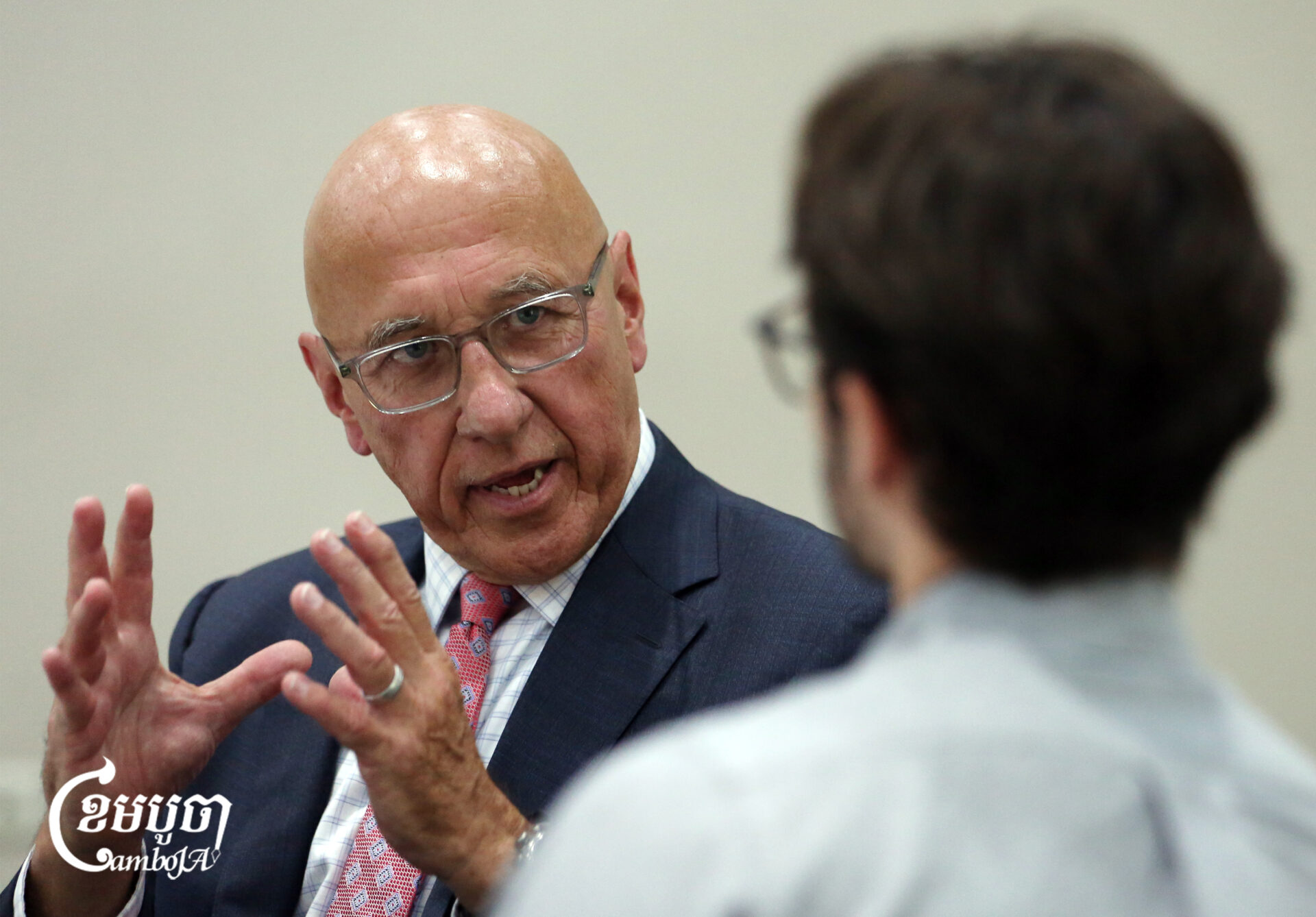
The United Nations’ human rights investigator for Cambodia, Tom Andrews, concluded a 12-day mission to the country last week and spoke with CamboJA News in an exclusive interview in Phnom Penh. Andrews met with communities displaced by the border conflict with Thailand, government officials, jailed activists, and journalists. He took up the Cambodia mandate in March 2026 after serving six years in the equivalent role for Myanmar. His full findings will be presented to the UN Human Rights Council in October. Andrews noted that more than 20,000 Cambodians remain displaced half a year after the ceasefire, with many still in temporary shelters. Cambodia blames continued Thai military presence on formerly undisrupted land for the ongoing displacement. He discussed what specific protections or assistance are still missing for these families and what leverage his office has to press Thailand to withdraw and allow people to return home. "The prism that I’m looking at this conflict and that I bring to this discussion is human rights, and also a foundation on international law as a foundation for addressing this particular crisis and the human rights of those who are suffering," Andrews stated. He emphasized that international law and the agreement signed on December 27 last year grant people the right to return to their homes. He described seeing extraordinary housing constructed in a short period and meeting with displaced people as a "very powerful moment," highlighting the human dimensions often lost in analytical discussions in Geneva or New York. Regarding freedom of expression, he expressed concern over the dozens of people, including activists, journalists, opposition figures, and ordinary citizens, who have been arrested or charged over commentary on the conflict. Human rights group Licadho tracks around 120 “prisoners of interest” jailed on what it calls unfounded charges criminalizing speech. Andrews stated that there is a need to examine the relationship between Cambodian law and judicial processes and international standards. He cited the government's ratification of eight UN human rights-related treaties and acceptance of 84% of Universal Periodic Review (UPR) recommendations as a foundation for dialogue. While disagreements arose regarding specific cases discussed with officials, he revealed that government officials committed to engaging on these issues. He clearly conveyed that "nobody should be behind bars because they’re exercising their fundamental human rights, expression, association, and assembly." He also addressed Cambodia’s crackdown on scam compounds. Rights groups like Amnesty International have pointed out that freed and escaped workers are not always properly screened for trafficking, sometimes being treated as visa violators and held in overcrowded detention. Andrews stated that while the government cited "capacity issues" for the lack of large-scale victim identification, there is a "real cloud" around this for him, as he heard contrasting perspectives. He heard from some officials that a process is in place for screening and supporting victims of human trafficking, while others stated they never had the capacity to do so. He intends to gather more information on this issue and engage in discussions about its relation to human rights law and potential measures to move forward. Source: CamboJA News

0

Original source

CamboJA News

原文を読む