General articles are free for 24 hours after publish.
Cambodia Develops New Melon Variety 'Rachani' for Improved Yield and Quality
The National Academy of Agricultural Sciences of Cambodia has successfully developed a new melon variety named 'Rachani' using grafting technology. This technique is expected to yield healthier seedlings and improve both the yield and quality of the fruit compared to traditional seed cultivation. Notably, melons grafted onto wax gourd rootstock showed inferior taste and texture compared to other rootstock types.
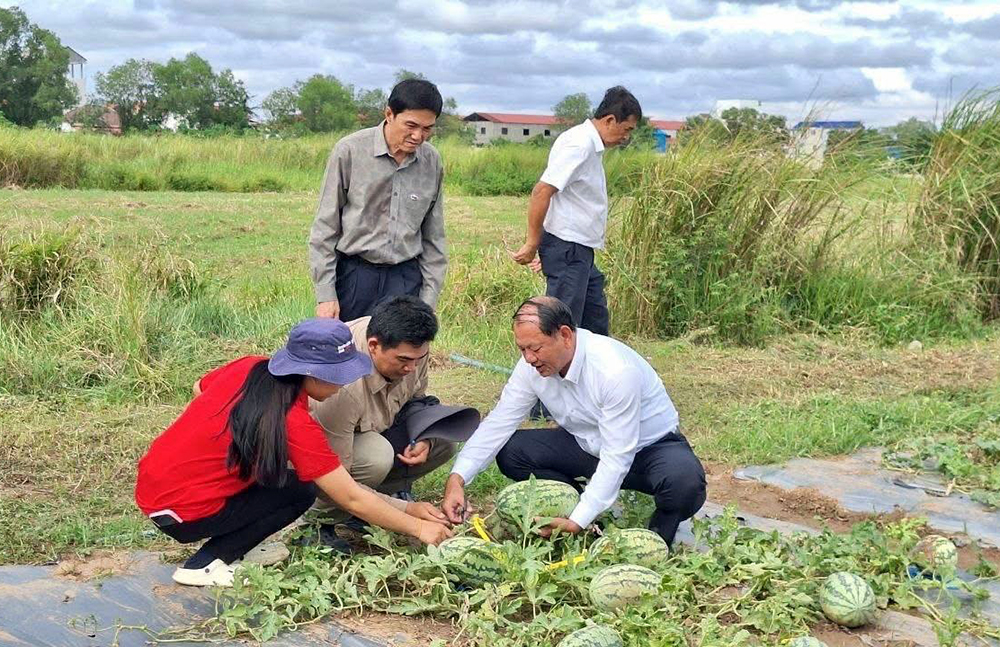
The National Academy of Agricultural Sciences of Cambodia (NAAS) has announced the successful development of a new melon variety named 'Rachani', cultivated using grafting technology. This innovative breeding method has proven to produce healthier seedlings and enhance the quality of the harvested fruits compared to conventional seed cultivation. According to NAAS, a research team led by President Sok Heng conducted experiments grafting the 'Rachani' melon variety onto three types of rootstock: pumpkin, wax gourd, and calabash (tralach). The results indicated that melons grafted onto any of these rootstocks exhibited healthier growth and increased fruit yield compared to those grown directly from seeds. However, it was also observed that melons grafted onto wax gourd rootstock were less sweet and had a less desirable texture compared to those grafted onto other types. The research aims to establish suitable methodologies and techniques for melon cultivation in Cambodia. Traditionally, Cambodian farmers often cultivate melons during the dry season or at the end of the rainy season due to the crop's susceptibility to heavy rainfall. This study seeks to develop techniques that allow for cultivation even during the monsoon season. NAAS stated that these preliminary findings will serve as a foundation for further research and development of melon grafting techniques. This is expected to lead to the establishment of more appropriate grafting methods tailored to market demands and climate change. The research is anticipated to boost melon production efficiency, expand farming opportunities for growers, and contribute to the development of Cambodia's agricultural sector.
Original source
AKP Khmer