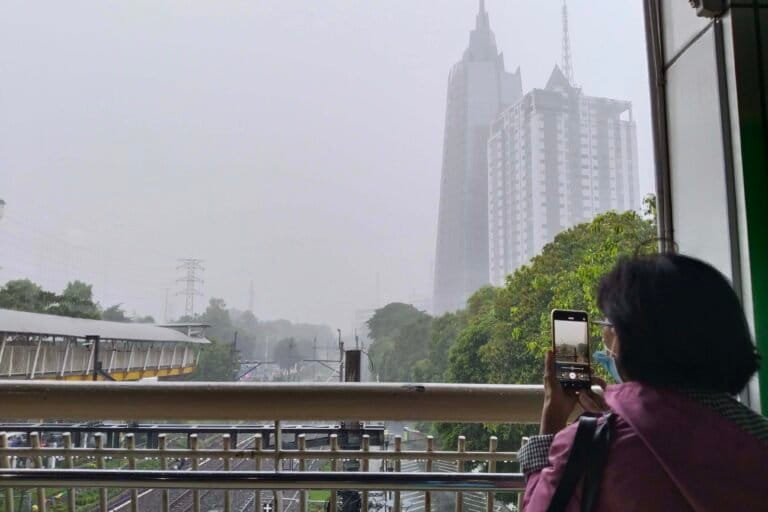
Jakarta's Rain Contaminated by Microplastics: BRIN Study Reveals
Environment
2026年7月12日
5
Mongabay Indonesia

Jakarta's Rain Contaminated by Microplastics: BRIN Study Reveals

AI サマリー

A study by Indonesia's National Research and Innovation Agency (BRIN) has revealed that Jakarta's rainwater is contaminated with microplastics. An average of 15 microplastic particles per square meter were detected daily in urban areas, attributed to atmospheric plastic degradation and wind dispersal.

A recent study by Indonesia's National Research and Innovation Agency (BRIN) has revealed that Jakarta's rainwater is contaminated with microplastics. The research indicates that the raindrops falling in the capital city now contain microplastics, which are invisible plastic fragments measuring less than 5 millimeters down to 1 micrometer in size. Professor Muhammad Reza Cordova, a Principal Researcher at BRIN, and his team have been tracking this phenomenon since 2022. Their findings are striking: in Jakarta's coastal areas alone, an average of 15 microplastic particles fall on every square meter of land daily. In scientific terms, this phenomenon of the sky "vomiting" plastic is known as atmospheric microplastic deposition. How do plastics ascend into the sky? This is a consequence of brutal natural laws: plastics never truly decompose; they merely refuse to break down and instead age into smaller pieces. In a busy city like Jakarta, which generates thousands of tons of plastic waste daily, plastic degradation occurs massively in open spaces. This is compounded by friction from vehicle tires on asphalt, smoke from combustion, and even synthetic fabric fibers from clothes hung out to dry. These super lightweight particles are then carried by winds and warm air currents, soaring high into the atmosphere, mingling with clouds, and eventually descending back to earth with heavy rainfall. The issue is that these microplastic particles are not ordinary fragments. They act like "poisonous sponges," carrying hazardous chemicals such as Bisphenol A (BPA) and phthalates. When they fall back to earth, these microplastics flow into rivers, seep into agricultural land, and contaminate water sources. This research highlights the potential risks to the health and environment of Jakarta's residents. It serves as a stark reminder of the severe implications of plastic pollution in urban environments. Addressing this issue requires a comprehensive approach that extends beyond plastic waste management to encompass the control of air pollution.

多角的分析

経済的影響

ジャカルタの雨水におけるマイクロプラスチック汚染は、水資源の質に長期的な影響を与える可能性がある。汚染された水が農業用水や飲料水として利用される場合、作物の生育不良や、それを摂取する人々の健康被害につながり、結果として農業生産性の低下や医療費の増加といった経済的損失を引き起こす。また、水質浄化にかかるコストの増大も避けられない。これは、都市インフラへの投資だけでなく、環境保全のための新たな技術開発や規制強化の必要性を示唆しており、関連産業への新たなビジネスチャンスを生む可能性も秘めている。

投資家心理

マイクロプラスチック汚染問題は、投資家にとって新たなリスク要因となる。特に、水処理関連企業や環境技術分野への投資機会が増加する一方、汚染された水資源に依存する農業や食品産業、さらには不動産開発など、環境リスクに脆弱なセクターへの投資は慎重な評価が必要となる。BRINの研究結果は、インドネシアにおけるESG(環境・社会・ガバナンス)投資の重要性を一層高めるものであり、企業は環境規制への対応や持続可能な事業運営能力を投資判断の重要な基準とするだろう。

社会的影響

ジャカルタ市民にとって、雨は涼をもたらすだけでなく、健康への懸念材料ともなり得る。マイクロプラスチックが農作物や水源に到達する可能性は、食の安全に対する不安を増大させる。特に、低所得者層や地方の農村部では、汚染された水や食料へのアクセスがより深刻な問題となりうる。BRINの研究は、市民社会に対して、プラスチック消費の削減やリサイクルの促進といった行動変容を促すとともに、政府に対して、より厳格な環境規制と監視体制の構築を求める声を高める契機となるだろう。

市民の声

ジャカルタ市民の日常生活において、雨は単なる気象現象ではなく、健康への潜在的な脅威となりつつある。特に、子供たちや高齢者など、脆弱な層への影響が懸念される。BRINの研究結果は、市民が日常的に摂取する水や食品の安全に対する不安を増幅させる。この問題は、個人の消費行動の見直しだけでなく、地域社会全体でプラスチックごみ問題に取り組む必要性を浮き彫りにしている。例えば、地域での清掃活動や、プラスチック代替品の利用促進などが考えられる。

背景・歴史的文脈

ジャカルタは、インドネシアの首都として急速な都市化と人口増加を経験してきた。これに伴い、プラスチック消費量も増加し、廃棄物管理システムが追いつかない状況が続いている。特に、屋外でのプラスチックの劣化や、車両の排気ガス、合成繊維の飛散などが、大気中に微細なプラスチック粒子を放出する原因となっている。BRINの研究は、2022年からの継続的な観測に基づき、この大気中マイクロプラスチック堆積という現象が、単なる都市ごみ問題の延長ではなく、より広範な環境汚染として進行していることを示している。

原文ソース

Mongabay Indonesia

原文を読む