General articles are free for 24 hours after publish.
Long-Tailed Monkey Export Plan Sparks Concerns Over Wildlife Welfare and Population Impact
Indonesia's plan to export long-tailed macaques for research purposes has raised concerns about animal welfare and the impact on wild populations. Animal protection groups oppose the plan, citing potential suffering from capture to transport.
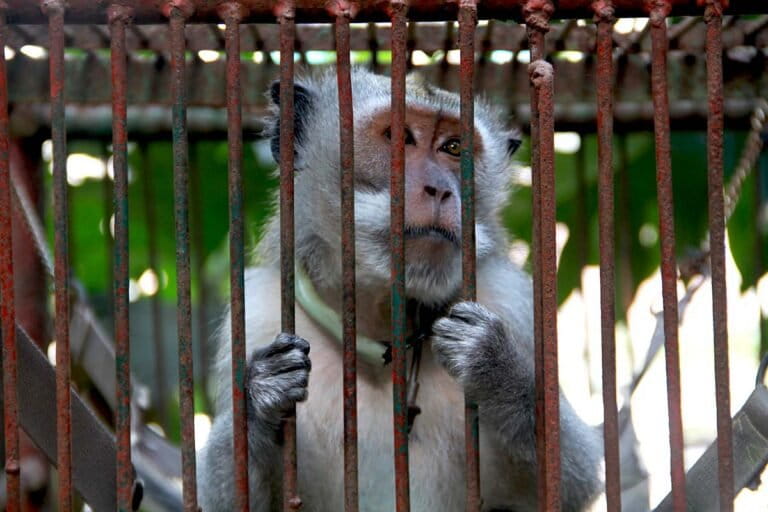
The Indonesian government's plan to export long-tailed macaques (Macaca fascicularis) for research purposes has sparked concerns among experts and animal welfare groups regarding the welfare of the animals and the impact on their wild populations. The issue extends beyond their use in laboratories, encompassing the entire process from capture, transport, and captive breeding to export. Jakarta Animal Aid Network (JAAN) has firmly rejected the plan. Benvika, Co-Founder and National Director of JAAN, stated, "We have always rejected the utilization of long-tailed macaques in any form," highlighting the potential for prolonged suffering. While the government intends to use captive breeding schemes to ensure exported macaques are not wild-caught, questions remain about the capacity to produce individuals in large numbers. Long-tailed macaques are social animals with complex group structures and extensive home ranges. Prolonged confinement in small cages can lead to stress and behavioral disorders. Another significant concern is the traceability of the animals. Increased demand could create economic incentives for people to capture wild macaques, including from conservation areas. Therefore, oversight must be robust enough to verify that all individuals originate from standardized breeding facilities. Furthermore, the notion that long-tailed macaques are overpopulated needs careful examination. Fahma Wijayanti, a primateology lecturer at UIN Jakarta, noted that research in parts of Sumatra between 2024 and 2026 recorded densities of approximately 5–9 individuals per hectare. However, this figure alone is insufficient to declare the population safe. The overall health of the population depends on factors such as group structure, total numbers, habitat conditions, and reproductive capacity. Instances of macaques entering human settlements often stem from habitat loss or shrinkage rather than an overabundance of the species.
Original source
Mongabay Indonesia