General articles are free for 24 hours after publish.
Philippines Pushes Extended Continental Shelf Claim at UN
The Philippines has formally presented its claim for an extended continental shelf in the West Philippine Sea to a UN body, seeking jurisdiction over seabed resources beyond its 200-nautical mile exclusive economic zone. This move, part of a 15-year effort, could unlock potential resource development.
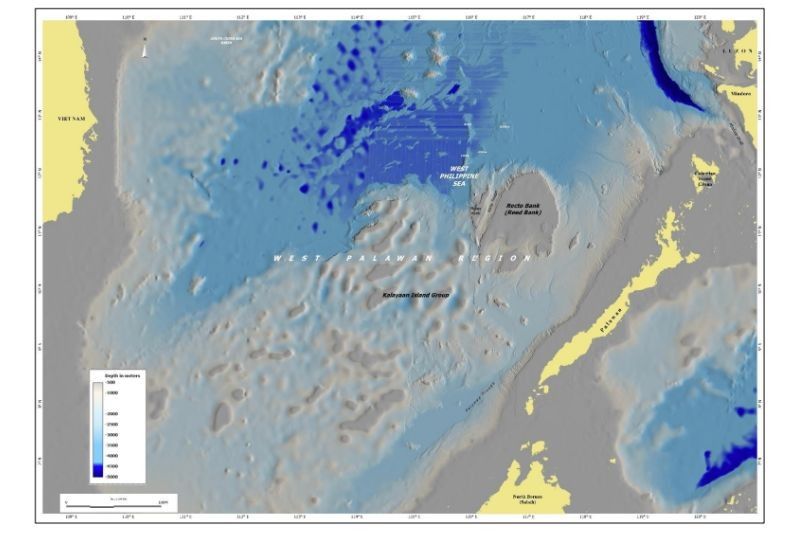
MANILA, Philippines — The Philippines' 15-year effort to claim seabed rights outside its exclusive economic zone in the West Philippine Sea came before a United Nations body this week, in a bid that could add thousands of square kilometers of seafloor area under Manila's resource jurisdiction. In a statement on Wednesday, July 29, the Department of Foreign Affairs announced the Philippines has officially presented its extended continental shelf claim for the West Palawan Region before the UN Commission on the Limits of the Continental Shelf in New York. The oral presentation comes after the Philippines formally deposited its claim with the UN in June 2024. In it, Manila is seeking recognition of its rights over the seabed and subsoil beyond 200 nautical miles from its baselines — the outer edge of the EEZ — but no farther than 350 nautical miles. Under UNCLOS Article 76, a coastal state can claim an extended continental shelf up to 350 nautical miles if data shows the seabed is a natural extension of its landmass. The submission of the claim shows "the Philippines’ steadfast commitment to the United Nations Charter and the 1982 UNCLOS" and the rules-based order, the DFA said. The presentation "further underscored that the submission was part of the country’s responsibility to secure a peaceful South China Sea through the rule of law in order to sustain the livelihoods of Filipinos, foster trade, protect marine biodiversity, and unite coastal and littoral States," it added. What exactly does the Philippines stand to gain? UN recognition of the claim would confer sovereign rights to the resources on and under the seafloor, specifically oil, gas and minerals. An extended continental shelf does not confer fishing rights, and it won't translate to an expanded territory. The UN commission can only rule on outer limits and does not settle boundaries between countries. In its presentation this week, the Philippines asked the commission to factor in rulings by tribunals constituted under UNCLOS, chief among them the 2016 arbitral award that voided Beijing's sweeping claims, the DFA said. The arbitral award turned 10 on July 12. Former DFA chief and now-Ambassador and Permanent Representative to the UN Enrique Manalo led the delegation. With him was the Extended Continental Shelf Technical Working Group under National Mapping and Resource Information Authority Administrator (NAMRIA) Undersecretary Peter Tiangco, alongside academics from the University of the Philippines. NAMRIA led the group "in preparing the submission over a 15 year-period," the DFA statement read. This is Manila's second such bid. The UN commission validated a Philippine Rise submission in 2012, three years after filing, handing the country 135,506 square kilometers of seabed, the DFA said. "In that submission, the Philippines stated that it reserved the right to make submissions in other areas in the future," the department added. In 2024, rival claimants moved quickly against Manila's West Palawan submission. China told the UN commission in a June 18, 2024 note verbale to not consider the submission, claiming sovereignty over the South China Sea islands, the surrounding waters and the seabed beneath. Vietnam and Malaysia also eventually submitted their own objections. What's next? The UN commission, by its own rules, cannot consider or evaluate a submission if an affected state asserts an unresolved land or maritime dispute. According to the UN commission's website, the latest communication it received on the Philippines' claim was from Malaysia on July 24. Malaysia said in its note verbale that it "reaffirms its categorical rejection of the Philippines' Partial Submission." Manila's claim, according to Malaysia, is "unacceptable, and does not conform with international law, including the 1982 UNCLOS." "This is in view of the Republic of the Philippines' purported projection of its continental margin from the baselines of the Malaysian state of Sabah, in blatant disregard of Malaysia's indisputable sovereignty over the state of Sabah," the note verbale by Malaysia read.
Original source
Philstar Nation