General articles are free for 24 hours after publish.
China's Boarding of Japanese Vessel Sparks Diplomatic Outrage
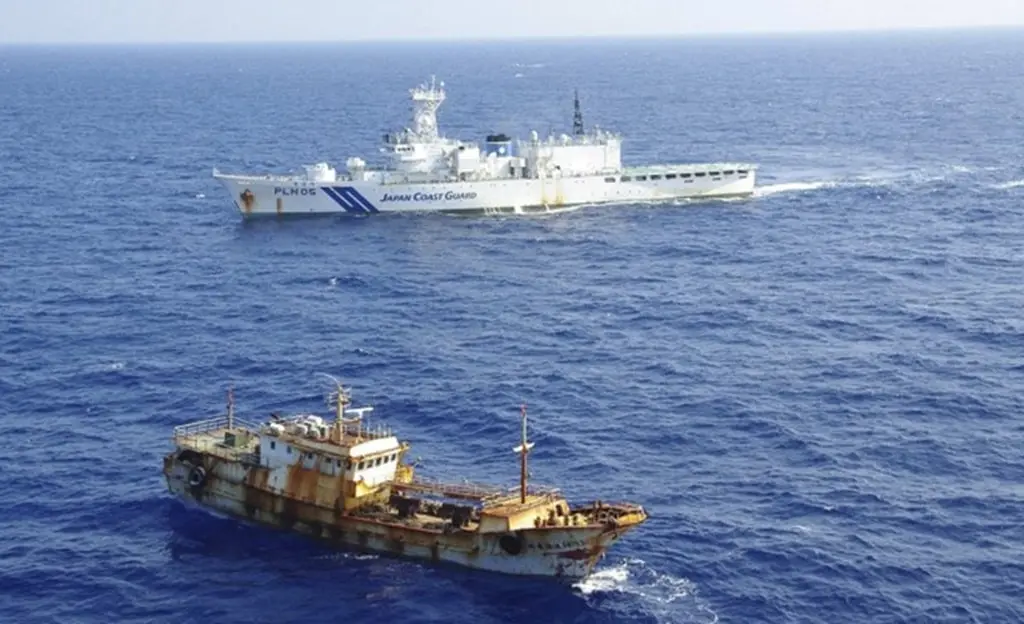
Chinese Coast Guard personnel boarded and inspected a Japanese fishing vessel in the North Pacific. The action has sparked strong backlash in Japan and heightened regional tensions.
Home - News Asia - China’s Boarding of Japanese Vessel Sparks Diplomatic Outrage TOKYO, Japan – A tense new chapter is unfolding in the complex relationship between China and Japan. Chinese Coast Guard personnel recently launched a predawn operation to board and inspect a Japanese fishing vessel. The incident occurred in the open waters of the North Pacific and lasted for approximately three hours. This sudden maritime law enforcement action has sparked immediate outrage and deep concern across Japan. The timing of this clash is highly sensitive for regional stability. It happened just as American F-35 stealth fighters temporarily left Japanese bases for military exercises in Alaska. The temporary absence of these advanced aircraft added a layer of vulnerability to an already fragile security environment. Consequently, the Chinese boarding operation is being viewed by many as a calculated test of Japan’s defense readiness. The maritime confrontation began in the early hours of the morning under the cover of darkness. A Chinese Coast Guard vessel intercepted the Japanese saury fishing boat operating in international waters. Heavily armed Chinese personnel boarded the commercial ship to conduct what they called a routine fisheries inspection. The Japanese crew was reportedly detained and questioned for three agonizing hours before being released. Technically, this specific boarding falls under the jurisdiction of the North Pacific Fisheries Commission. This international framework allows member nations to inspect vessels to prevent illegal, unreported, and unregulated fishing. However, the aggressive manner of this predawn raid has raised serious alarm bells in Tokyo. Japanese officials argue that the inspection was less about conservation and more about projecting raw power. The North Pacific is a vital fishing ground for both nations, especially for highly prized Pacific saury. Fishing fleets from various countries constantly compete for these shrinking and incredibly valuable ocean resources. The Chinese Coast Guard has increasingly taken on the role of an enforcer in these distant waters. This heavy-handed approach to a civilian fishing vessel is a clear departure from standard diplomatic norms. This incident creates a dangerous precedent for future maritime operations across the entire region. By utilizing a legal fisheries framework, Beijing can justify its presence far beyond its own shores. Yet, the aggressive execution leaves Japanese fishermen feeling vulnerable and intimidated in international waters. The line between routine law enforcement and military intimidation has never been more thoroughly blurred. The boarding of the Japanese vessel is not an isolated or accidental diplomatic event. It is a direct reflection of President Xi Jinping’s broader strategy for expanding China’s maritime influence. Under his leadership, the Chinese Coast Guard has been transformed into a formidable maritime force. It now operates with ships that are often much larger and better armed than many foreign naval vessels. Beijing’s strategic goal is to push its maritime boundaries far beyond the First Island Chain. By deploying coast guard vessels into the North Pacific, China projects power across the wider Indo-Pacific region. This strategy relies heavily on gray zone tactics that fall just below the threshold of open warfare. It allows China to assert dominance without triggering a formal military response from rival nations. The Chinese Coast Guard acts as the vanguard for these territorial and jurisdictional ambitions. They routinely shadow, harass, and inspect foreign vessels under the guise of domestic or international law. This provides Beijing with a thin veneer of legality while effectively asserting physical control over international waters. It is a calculated and highly effective method for changing the status quo over time. For neighboring countries, this expanding maritime posture represents a direct threat to national security. The constant presence of Chinese government vessels disrupts traditional economic activities like commercial fishing. Furthermore, it forces nations like Japan to constantly divert resources to monitor and respond to these incursions. The North Pacific incident is a textbook example of this slow but relentless expansion strategy. While the North Pacific boarding involved a fisheries dispute, it cannot be viewed in isolation. It is deeply connected to the separate, ongoing confrontations near the Senkaku Islands in the East China Sea. Known as the Diaoyu Islands in China, these uninhabited islets are a massive historical flashpoint. Both nations claim absolute sovereignty over the rocky outcroppings and their surrounding resource-rich waters. The Chinese Coast Guard maintains a near-constant presence in the waters surrounding the disputed Senkaku Islands. They routinely chase away Japanese fishing boats and challenge Japanese Coast Guard vessels patrolling the area. These daily encounters are incredibly tense and carry a high risk of accidental escalation or miscalculation. The profound distrust generated in the East China Sea naturally spills over into the North Pacific. When Chinese personnel board a Japanese vessel anywhere, the historical baggage of the Senkaku dispute follows. Japanese citizens view these actions not as isolated fisheries management, but as coordinated bullying tactics. The fear is that Beijing is using the North Pacific to test tactics intended for the East China Sea. This deep-seated suspicion makes diplomatic resolution of any maritime incident exceptionally difficult to achieve. This environment of mutual suspicion requires both sides to tread carefully to avoid conflict. However, the aggressive posturing by Chinese forces suggests a willingness to accept higher levels of diplomatic risk. As these gray zone operations continue, the margin for error shrinks dramatically for both nations. A single misstep could easily ignite a much larger and more dangerous regional crisis. The Japanese government’s reaction to the North Pacific incident has been swift and unequivocally firm. Under the leadership of Prime Minister Sanae Takaichi, Japan is adopting a much stronger national defense posture. Takaichi has built her political career on advocating for a robust, uncompromising approach to national security. She views these maritime incursions as direct challenges to Japanese sovereignty that demand a resolute response. Following the predawn raid, Prime Minister Takaichi’s administration immediately lodged a severe diplomatic protest with Beijing. Japanese officials demanded assurances that civilian fishing vessels would not be subjected to such aggressive tactics again. Furthermore, the government has pledged to increase its own coast guard patrols to protect vital fishing fleets. Takaichi recognizes that showing weakness will only invite further encroachments by Chinese state vessels. The temporary departu
Original source
Chiang Rai Times