General articles are free for 24 hours after publish.
Hue City Promotes Circular and Safe Livestock Models
Hue City in central Vietnam is developing circular and safe livestock models to reduce environmental impact and connect producers with consumers. Advanced technologies and sustainable methods, including organic pork production and chicken farming, are being implemented.
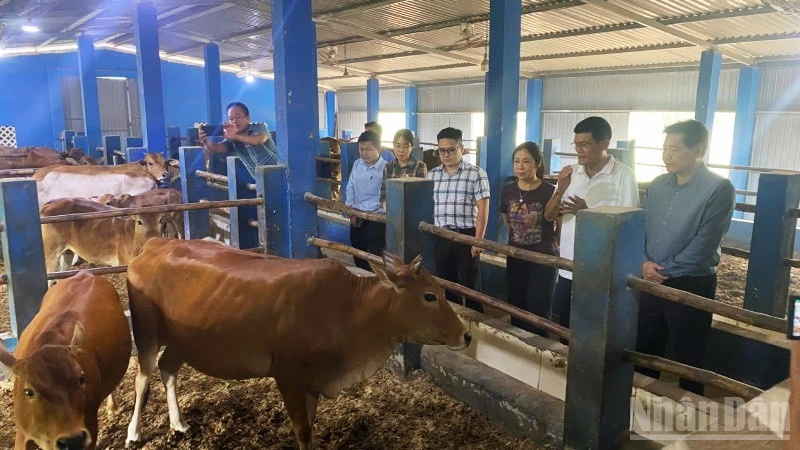
Hue City in central Vietnam is actively promoting the development of safe and environmentally friendly livestock models as part of its sustainable agricultural development initiatives. This move aligns with the national strategy of the Communist Party of Vietnam, which aims to achieve economic growth and improve social welfare. On September 17, the National Agricultural Extension Center organized a media tour in Hue City to survey central government-funded agricultural extension projects for 2026, focusing on safe livestock farming, waste treatment, and product linkage for consumption. The tour included a model for organic pork production that ensures biosecurity and follows the principles of a circular economy. This model, with a scale of 9,000 fattening pigs, guides farmers through production processes from breeding stock selection, feed, care, and disease prevention to waste management. Products meeting the required standards are then linked to consumption channels. According to the project results for the 2024-2025 period, the average daily weight gain reached 714.3 g/head, with a feed conversion ratio of 2.4 kg of feed per kg of weight gain. 100% of the participating farms treat their waste to be used as fertilizer for crops. The project has established 14 contracts for livestock production and product linkage. At the 4F Que Lam Organic Agriculture - Circular Economy - Ecology Complex, spanning 17.5 hectares, the delegation learned about a model that integrates livestock farming, crop cultivation, processing, and the production of organic nutrients and microbial products. Animal waste is treated and utilized for agricultural production. The delegation also surveyed a project to build Minh Dư (MD) chicken farming models according to VietGAHP (Vietnam Good Agricultural Practices) standards, linked with product consumption. This project, to be implemented from 2025 to 2027 in Hue and Da Nang, aims to establish 7 models with a total scale of 60,000 chickens. The VietGAHP process focuses on controlling breeding stock, farm facilities, feed, drinking water, veterinary hygiene, disease prevention, veterinary drug use, and waste management. Products from this model are linked for consumption with CODO Vietnam Joint Stock Company. These initiatives demonstrate Vietnam's commitment to addressing environmental challenges in its agricultural sector and enhancing the value of its agricultural products, contributing to strengthening the nation's food security.
Original source
Nhan Dan