Vietnam Intensifies Efforts to Recover and Identify Fallen Soldiers' Remains
Vietnam is advancing a large-scale project to recover and identify the remains of over 1,300 fallen soldiers. Utilizing DNA analysis and a digital management system, the initiative aims to identify unknown remains and clear unexploded ordnance from former battlefields.
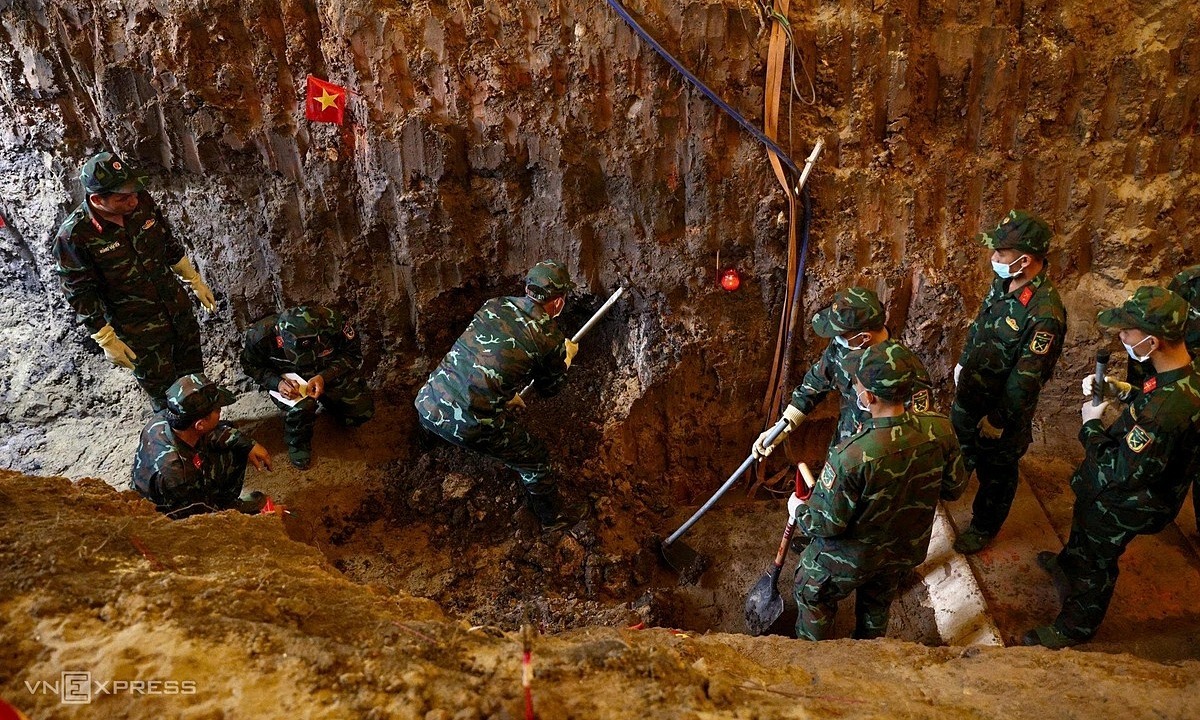
The Vietnam People's Army is advancing a groundbreaking initiative to recover and identify the remains of over 1,300 fallen soldiers over the past 111 days. The campaign, running from March 15, 2026, to July 27, 2027, is a comprehensive effort aimed at achieving breakthroughs in locating, recovering, and identifying fallen soldiers. It focuses on five major objectives: recovering remains of about 7,000 martyrs; collecting samples from around 230,000 unidentified graves at martyrs' cemeteries; conducting DNA testing on approximately 18,000 sets of remains; establishing a genetic database of relatives of unidentified martyrs; and completing unexploded ordnance clearance in key former battlefields, including Vi Xuyen in Tuyen Quang Province, and Lao Cai and Lang Son provinces. To support the work, the Ministry of National Defense has assigned quotas to military regions and units based on field surveys and verified information. Nationwide, 32 search and recovery teams with around 1,500 personnel are currently carrying out operations. Son said a newly adopted approach has produced encouraging results. The initiative involves reviewing documents and information supplied by organizations and individuals both inside and outside Vietnam, followed by expert workshops to verify suspected mass grave locations. As a result of two workshops held in Quang Ngai Province and Ho Chi Minh City, one set of remains has been recovered in Quang Ngai, while excavation at a suspected mass grave site in Le Thi Rieng Park of Ho Chi Minh City began on July 6. Search teams dig and turn over every layer of soil in a deep trench at Le Thi Rieng Park in Ho Chi Minh City. When they find anomalies or artifacts, the specialist team cordons off and marks the area, then uses careful techniques to excavate so as not to damage the martyrs' remains or artifacts. Photo by VnExpress Search operations have also become more efficient through the combined use of map coordinates, on-site surveys, witness accounts and ground-penetrating radar, improving accuracy while reducing excavation time and workload. The Ministry of National Defense has issued procedures for collecting, digitizing, transporting and preserving samples from unidentified remains, and organized training for local authorities nationwide. More than 300 sampling teams, involving around 3,500 personnel, have been established across the country. To improve traceability and minimize errors, Viettel Group has developed a digital management system that records and stores information throughout the sampling process. On the identification front, the Ministry of Home Affairs advised the Government to issue Resolution No. 26/NQ-CP, establishing special mechanisms to facilitate DNA sampling, testing and identification of unidentified remains. It also introduced regulations governing coordination and the allocation of responsibilities among DNA testing centers. The Ministry of National Defense has deployed 330 demining teams, comprising more than 5,000 personnel and equipped with over 1,300 specialized vehicles and machines, to clear unexploded ordnance in priority areas. To date, the campaign has collected samples from more than 27,000 graves, with over 20,000 transferred to DNA testing centers after meeting technical requirements. More than 7,000 hectares of land have been cleared of unexploded ordnance, including over 3,000 hectares in the former battlefield of Vi Xuyen, representing more than 70% of the planned clearance target. The Ministry of Public Security has also collected nearly 95,000 DNA samples from relatives of fallen soldiers, with more than 50,000 already analyzed and integrated into the national genetic database, Son added. Subsidiary of VnExpress License number: 71/GP-CBC, Ministry of Information andCommunications, September 22, 2021 Editor-in-Chief: Pham Van Hieu Email: [email protected]: 028 7300 9999 - Ext 8556 10th floor, Block A FPT Tower, 10 Pham Van Bach, Cau Giay Ward, Hanoi
多角的分析
このニュースは直接的な経済活動ではないが、戦没者遺骨の収集・特定は、国家の歴史的記憶の継承と国民統合という社会経済的安定に寄与する。長期的な視点では、このような国家的な取り組みは、国民の士気高揚や愛国心の醸成を通じて、間接的に経済活動への前向きな影響をもたらす可能性がある。また、関連技術(DNA分析、デジタル管理システム)の開発・導入は、国内のテクノロジー産業の発展を促す側面もある。
投資家にとって、このニュースは直接的な投資機会を示すものではない。しかし、ベトナム政府が国家の歴史的・社会的課題に対して大規模かつ組織的に取り組む姿勢は、国家運営の安定性や長期的なビジョンを示すものとして評価できる。これは、ベトナム市場への投資リスクを評価する上で、間接的にポジティブな要素となり得る。特に、テクノロジー分野やインフラ関連企業への投資を検討する際には、このような国家主導のプロジェクトがもたらす波及効果に注目すべきである。
戦没者の遺骨収集・身元特定は、ベトナム社会における長年の悲願であり、戦争の記憶と向き合い、犠牲者とその家族の尊厳を回復する上で極めて重要な意味を持つ。特に、身元不明の遺骨が多い現状において、DNA分析技術の導入は、多くの家族に安らぎをもたらす可能性がある。また、旧戦場での不発弾処理は、住民の安全確保と土地の有効活用に繋がり、地域社会の発展に不可欠である。この取り組みは、国民の連帯感を深め、国家としてのアイデンティティを強化する効果も期待される。
ベトナム市民、特に戦争を経験した世代やその子孫にとって、この取り組みは深い感動を伴うものである。長年、身元不明のまま眠っていた家族や知人の遺骨が特定されることは、彼らにとって長年の悲願が叶う瞬間となる。また、旧戦場に埋められたままの不発弾が処理されることは、生活圏の安全が確保されることを意味し、地域住民の安心感に直結する。これは、国家が過去の犠牲を忘れず、国民一人ひとりの尊厳を重んじているというメッセージとしても受け止められる。
背景・歴史的文脈
ベトナム戦争(1955年-1975年)をはじめとする度重なる紛争により、数多くの兵士が戦死し、その多くが身元不明のまま埋葬された。戦後、ベトナム政府は一貫して、これらの戦没者の遺骨収集と身元特定に努めてきた。特に、近年の経済成長と国際社会との関係改善に伴い、先進的なDNA分析技術の導入や、国際的な協力体制の構築が進められている。これは、戦争の記憶を風化させず、国民の犠牲に敬意を払い、国家としてのアイデンティティを強化する一環である。
原文ソース
VnExpress International