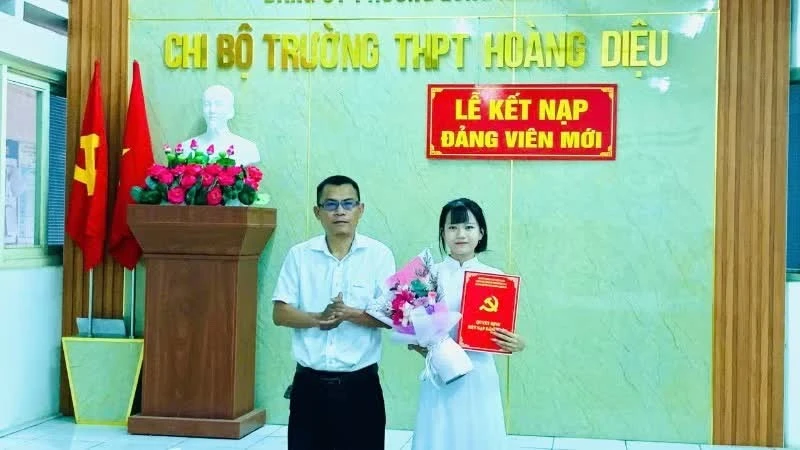
Vietnam Communist Party Focuses on Youth Engagement to Boost New Membership
Society
2026年6月29日
5
Nhan Dan

Vietnam Communist Party Focuses on Youth Engagement to Boost New Membership

AI サマリー

The Communist Party of Vietnam is implementing reforms to boost youth engagement and recruit new members, aiming to strengthen party organizations and secure future leadership. Drawing on successful local initiatives, efforts focus on fostering a competitive spirit in learning and labor, creating an environment where young people are motivated to join the Party.

The Communist Party of Vietnam is exploring new approaches to motivate young people to join the Party, aiming to strengthen its organizations and secure future generations of members. Drawing on experiences from various localities, the cultivation and quality improvement of party candidates have yielded promising results through diverse efforts and innovations. Some party committees and organizations in challenging areas, including rural, mountainous, border, and island regions, as well as ethnic minority areas, have successfully met their set targets. Practical insights from these regions indicate that by implementing solutions that encourage competition in learning and labor, party committees are adapting their methods. They are creating environments and providing opportunities for individuals, particularly the youth, to demonstrate their resolve and commitment to joining the Party. In Ha Tinh province, the Provincial Party Committee's Standing Committee proactively issued Directive No. 08-CT/TU on "Enhancing the Quality of Party Member Development in the New Phase," along with several key solutions. These include supporting local youth unions, schools, and businesses in innovating their activities, intensifying patriotic, labor, learning, and innovation competitions, and organizing forums and clubs to identify and nurture exemplary individuals for the Party. Competitive movements for socio-economic development and new rural construction have actively engaged youth union members and participants, forming a basis for selecting outstanding individuals and developing long-term training plans. Furthermore, young party members are positioned as bridges to the youth, disseminating motivation for joining the Party through practical activities such as maintaining security and order, and supporting youth entrepreneurship. In Lai Chau province, many village and hamlet branches are proactively identifying and selecting individuals from competitive movements focused on wealth creation and cultural life building. Party members are assigned to mentor and assist these candidates. According to the Standing Committee of the Sin Ho Commune Party Committee, during the candidate cultivation process from grassroots movements, the Party Committee and assigned members are tasked with closely monitoring the growth in awareness and actions of each individual. This serves as a crucial basis for party organizations to evaluate progress and ensure that party member recruitment prioritizes quality over quantity. For long-term and sustainable candidate development, some party committees are implementing comprehensive solutions to retain young laborers in their hometowns. These include preferential loans, vocational training, and encouragement for high-tech agricultural and eco-tourism startup models. This enables young people to establish businesses locally rather than seeking work elsewhere, contributing to agricultural, rural, and farming development goals while building a stable foundation for party member recruitment. This dual-purpose measure not only aids in achieving local socio-economic development objectives but also fosters an environment for nurturing future party cadres. This approach has been effectively applied by the Binh Thuan Commune Party Committee in Son La province, contributing to the achievement of annual party development targets. By 2025, the commune's party organization aims to admit 24 new members, fulfilling 100% of its plan. Notably, the Ta Khoang village branch is a leading unit in this endeavor within Binh Thuan Commune. New members from this branch are exemplary youth union members and farmers who actively participate in new rural construction, boldly adopt advanced techniques in production and animal husbandry, and are trusted by the community. The plan for 2026 includes cultivating and admitting three more new members. Moreover, enhancing the exemplary role of party members and building an image of pioneering and model individuals in daily life is considered a fundamental solution. This aims to build trust and attract individuals to join the Party, thereby elevating the prestige of party organizations and ensuring the quality of admitted members. Through practical competitive movements closely linked to local socio-economic activities, numerous advanced models have emerged and are continuously nurtured and admitted by party committees. This contributes to building increasingly clean and strong party organizations from the grassroots, in line with the directives of the 14th National Party Congress. Source: Nhan Dan

多角的分析

経済的影響

ベトナム経済の持続的成長には、質の高い人材の確保が不可欠である。党員候補者育成は、経済発展の担い手を確保する一環と捉えられる。特に、ハイテク農業やエコツーリズムといった新興分野への若者の関与を促すことは、経済構造の高度化と地方経済の活性化に寄与する。若者の地元定着支援は、地方の労働力不足緩和と所得向上にもつながり、内需拡大にも貢献しうる。

投資家心理

党員候補者育成策は、直接的な投資機会を創出するものではないが、ベトナムの政治的安定性と長期的な発展戦略の実行可能性を示す指標となりうる。若年層の党への関与強化は、次世代リーダーの育成と党組織の活性化を通じて、政策の一貫性と実行力を高める可能性がある。これは、外国投資家にとって、ベトナムの将来的なビジネス環境の安定性に対する信頼を高める要因となりうる。

社会的影響

この記事は、ベトナム社会における党の役割と、若者の社会参加への期待を浮き彫りにしている。農村部や少数民族地域での党員育成の具体例は、地域格差の是正や社会統合の試みを示唆している。若者が地元で起業し、社会に貢献できる機会を提供することは、都市部への人口流出を抑制し、地方の活力維持に不可欠である。しかし、党員になることがキャリアパスとして強く意識される構造は、社会における党の影響力の強さを示している。

市民の声

若者が党への入党を目指すことは、社会貢献や自己成長の機会と捉えられている。特に地方では、雇用機会の創出や地域開発への参加が、入党への動機付けとなっている。しかし、党員になることへのプレッシャーや、党の方針への従順さが求められる側面も懸念される。若者が自身の能力を最大限に発揮し、多様なキャリアを追求できる環境が、より広く求められていると言える。

背景・歴史的文脈

ベトナム共産党は、国家建設と発展において指導的役割を担っており、党組織の強靭化と次世代リーダーの育成は常に重要な課題である。特に、経済成長に伴う社会構造の変化や、若年層の価値観の多様化に対応するため、党は入党プロセスや党員育成方法の見直しを進めている。農村部や少数民族地域など、開発が遅れている地域での党員育成は、地域間の格差是正と国家統合の観点からも重視されている。過去の党大会でも、組織の質的向上と若手党員の登用が繰り返し強調されてきた。

原文ソース

Nhan Dan

原文を読む