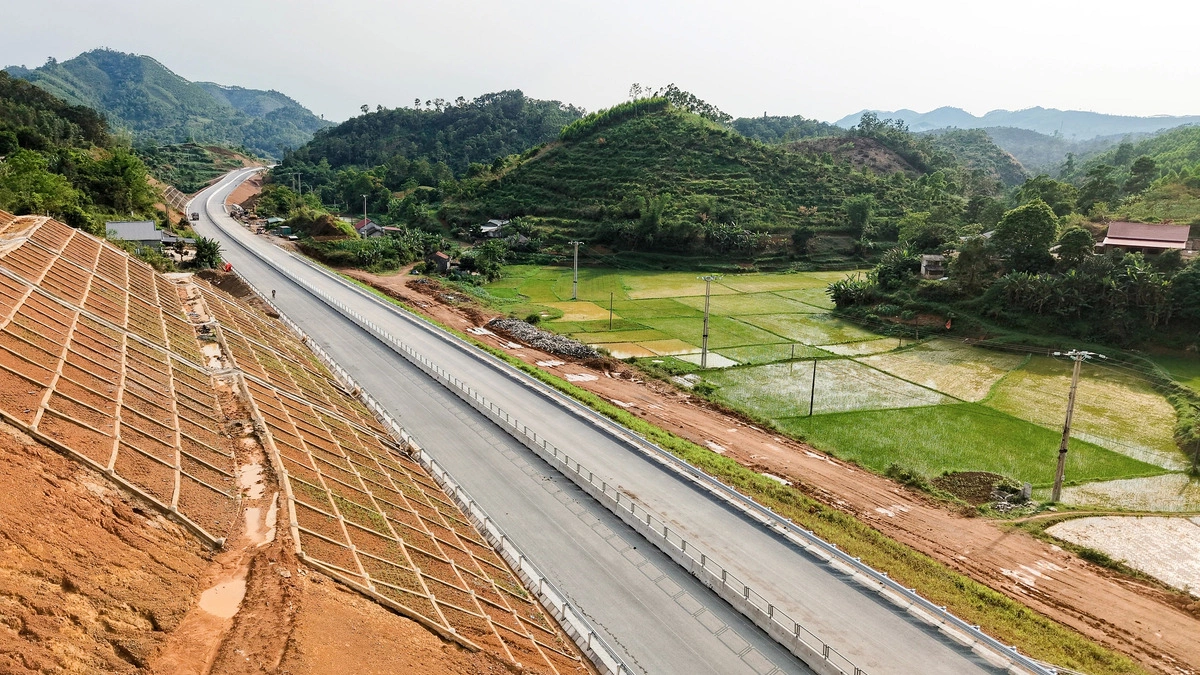
Vietnam Expands Highway Network to Enhance Inter-Regional Connectivity
Vietnam's Ministry of Construction has revised its road network plan for 2021-2030 and beyond, adding five new expressways to bolster inter-regional connectivity. This expansion aims to foster economic development and improve logistics efficiency.
The Ministry of Construction has approved revisions to the national road network plan for the period 2021-2030, with a vision towards 2050, adding five new expressways aimed at enhancing inter-regional connectivity. These additions are expected to boost economic development and improve logistics efficiency across Vietnam. The five new routes include the Northern Mountain Ring Road, the Northern Midland Ring Road, the Ha Tinh - Cau Treo Expressway, the Hue - A Luoi Expressway, and the Phan Thiet - Bao Loc - Gia Nghia - Bu Prang Expressway. The Northern Mountain Ring Road will span approximately 327 km, starting from the Ta Lung border gate in Cao Bang province, passing through Lang Son, Thai Nguyen, Tuyen Quang, and Lao Cai provinces, and concluding in Son La. This route is divided into seven sections and is slated for investment after 2030. The Northern Midland Ring Road, about 378 km long, will connect the Tan Thanh border gate in Lang Son province with Son La. It is divided into three sections, with the Lang Son - Thai Nguyen segment planned for implementation after 2030, and the remaining two sections projected for investment thereafter. The Ha Tinh - Cau Treo Expressway, approximately 85 km, will be divided into two sections: Ha Tinh to Ho Chi Minh Road and Ho Chi Minh Road to Cau Treo. Planned for 4 to 6 lanes, its investment is scheduled for before and after 2030. The Hue - A Luoi Expressway, around 45 km, is designed to connect the western part of Hue city with the Eastern North-South Expressway. It will have 4 lanes and is expected to be invested in after 2030. The Phan Thiet - Bao Loc - Gia Nghia - Bu Prang Expressway, approximately 141 km, will be split into two sections: Phan Thiet - Bao Loc - Gia Nghia and Gia Nghia - Bu Prang. This route will feature 4 lanes, with the Phan Thiet - Bao Loc - Gia Nghia segment prioritized for investment after 2030, and the Gia Nghia - Bu Prang segment planned for later. The Ministry of Construction has also adjusted the investment timelines for seven existing expressways. For instance, the Ngoc Hoi - Gia Nghia section of the Western North-South Expressway is designated for investment in phases before and after 2030. The Bao Ha - Lai Chau Expressway will be invested in before 2030, a shift from the previous plan. Other expressways such as Vung Ang - Cha Lo, Phu Yen - Dak Lak (Phu Yen - Buon Ho section), Nha Trang - Lien Khuong, and Ho Chi Minh City - Vinh Long - Can Tho - Ca Mau are all planned for 4 lanes and will be implemented in phases before and after 2030. According to the Vietnam Road Administration, the expansion of the expressway network is crucial to meet projected surges in transportation demand in the coming decades. It aims to open up development space for new economic hubs and enhance connectivity between economic centers, international border gates, seaports, and industrial zones. The administration also stated that updating the plan is a vital step towards gradually completing a synchronized and modern transportation infrastructure network by 2050. Source: VnExpress
多角的分析
ベトナム政府は、経済成長の持続と地域間の経済格差是正のため、インフラ投資、特に高速道路網の拡充を最重要課題の一つと位置づけている。今回追加された5つの高速道路は、北部山岳地帯や中部高原といった、これまで開発が遅れていた地域と主要経済圏を結びつけることを目的としている。これにより、物流コストの削減、産業立地の促進、観光開発の活性化が期待され、国内総生産(GDP)のさらなる押し上げに寄与すると考えられる。特に、国境検問所へのアクセス改善は、貿易促進という観点からも重要である。
今回の高速道路網の拡充計画は、インフラ関連企業や建設資材メーカーにとって、新たなビジネスチャンスをもたらす。特に、長距離にわたる新規路線は、大規模な建設プロジェクトとなり、国内外からの投資を呼び込む可能性がある。また、これらの高速道路沿線での不動産開発や物流施設の建設なども期待され、多方面での投資機会が生まれるだろう。ただし、投資回収には長期的な視点が必要であり、ベトナム政府の財政状況や土地収用、環境アセスメントなどの進捗状況が投資判断の鍵となる。
高速道路網の拡充は、地方と都市部の間の物理的な距離を縮め、人々の移動や物資の流通を格段に容易にする。これにより、地方の農産物や特産品がより迅速かつ安価に市場へ供給できるようになり、地方経済の活性化に繋がる可能性がある。また、医療や教育といった公共サービスへのアクセスも向上し、地方住民の生活の質向上に貢献することが期待される。一方で、開発に伴う土地収用や環境への影響、そして地域間の経済格差がさらに拡大する可能性も指摘されており、社会的な調和を保つための慎重な計画と実行が求められる。
今回の高速道路網の拡充は、特に地方に住む人々の生活に大きな変化をもたらす可能性がある。これまでアクセスが悪かった地域と主要都市が結ばれることで、農産物の販売機会が増えたり、より多くの雇用機会が生まれることが期待される。また、遠隔地の医療機関へのアクセスが容易になったり、子供たちがより良い教育を受けられる機会が増えるかもしれない。しかし、土地収用による移転を余儀なくされる住民や、開発による環境の変化に懸念を抱く人々もいるだろう。地域経済の活性化と、住民一人ひとりの生活の質の向上とのバランスが重要となる。
背景・歴史的文脈
ベトナムは、1986年のドイモイ(刷新)政策以降、市場経済化を進め、目覚ましい経済成長を遂げてきた。この成長を支える重要な柱の一つがインフラ整備であり、特に交通網の近代化は国家戦略として位置づけられている。2010年代以降、ベトナム政府は高速道路網の整備を加速させ、主要都市間や経済特区を結ぶ路線を次々と開通させてきた。しかし、国土の広さや地域間の開発格差から、依然として物流のボトルネックや地域間格差が課題となっている。今回の計画改定は、こうした課題に対応し、持続的な経済発展と国土の均衡ある発展を目指すベトナムの長期的なインフラ戦略の一環である。
原文ソース
VnExpress