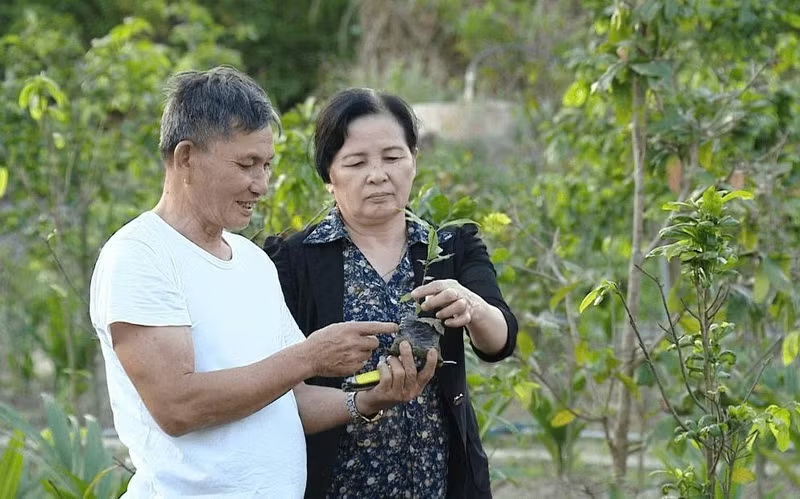
Vietnam Enhances Elderly Welfare Policies: Focus on Social Security and Healthcare
The Vietnamese government is implementing comprehensive policies in social security and healthcare to improve the quality of life for the elderly and encourage their contributions to society, aiming to create an environment where they can live healthy and fulfilling lives.
This article requires PRO
This article is outside the free access window or is a special report. PRO unlocks it and the full archive.
Related articles
- Vietnamese PM to Visit Laos, Cambodia to Strengthen Bilateral Ties
Vietnamese Prime Minister Le Minh Hung will embark on official visits to Laos and Cambodia from October 8-10. The trips aim to further deepen traditional friendships and comprehensive cooperation, focusing on enhancing practical collaboration in economy, infrastructure, and digital transformation.
- Vietnam's Party Central Committee Concludes Plenum, Emphasizing Party Building and International Ties
Vietnam's Communist Party concluded the 14th Central Committee's fourth plenum, reaffirming its commitment to strengthening the Party and political system while deepening international cooperation with Panama, Laos, and Cambodia. Emphasis was placed on enhancing economic and infrastructure connectivity.
- Ngoc Linh Ginseng Products Face Confusion Amidst Unlicensed Services and Misleading Displays
Confusion surrounds the sale and related services of the premium 'Ngoc Linh Ginseng' in Vietnam's Quang Ngai province, with unlicensed DNA testing services and non-sale display items contributing to the disorder.
- Vietnam's Lending-Driven Growth Courts Financial Risks
Vietnam's economy continues its lending-driven growth, but analysis from East Asia Forum Vietnam suggests this is increasing financial system risks, with over-lending to the real estate sector being a particular concern.