General articles are free for 24 hours after publish.
Massive Male Great White Shark, Weighing Over 750kg, Discovered Off Indonesian Coast
A colossal male great white shark, weighing over 750kg and exceeding typical size records, has been discovered off the coast of Indonesia. Scientists anticipate this find will shed new light on the species' ecology.
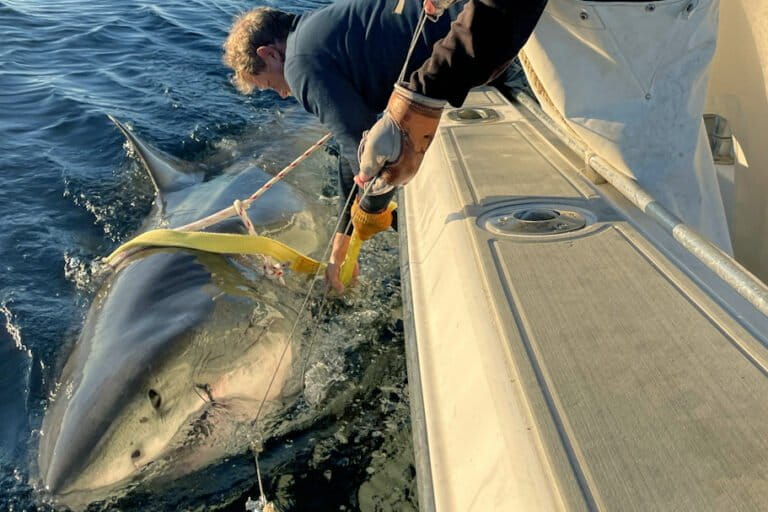
A colossal male great white shark, exceeding previous scientific records, has been discovered in Indonesian waters. The individual weighed over 750 kilograms, with scientists expressing surprise at its immense size. The great white shark (Carcharodon carcharias) is an apex predator in marine ecosystems, playing a crucial role in maintaining prey populations and the structure of the food chain. Despite being one of the most studied shark species, data on the size, age, and movement patterns of adults, particularly males, remains limited. Adult great white sharks tend to travel long distances and dive into deep waters that are difficult for researchers to access, making direct observation opportunities of individuals valuable for science. This recent discovery occurred in waters approximately 70 kilometers off the Indonesian coast. The research team has named the massive male shark 'Contender' and has begun detailed investigations into its ecology. Size Beyond Records Contender was recorded with a length of 4.2 meters and a weight of 750 kilograms. These figures surpass what has been considered the typical size range for adult male great white sharks. According to data from the Smithsonian National Museum of Natural History, most adult male great white sharks range between 3.4 and 4 meters in length. Harley Newton, the lead veterinarian at Ocearch, stated that this finding was far beyond his team's expectations. He explained that male great white sharks generally reach sexual maturity around the age of 26, which aligns with studies analyzing the growth patterns of great white sharks in the Northwest Atlantic. This discovery highlights the importance of Indonesia's marine biodiversity and its conservation. Future research is expected to yield new insights into the breeding, diet, and extensive habitat of this giant shark. Source: Mongabay Indonesia
Original source
Mongabay Indonesia