ASEAN Foreign Ministers to Meet Myanmar Counterpart This Weekend, Highlighting Bloc Divisions
Diplomacy
2026年7月10日
5
The Diplomat Indonesia
Relations
🇮🇩Indonesia🇲🇲Myanmar🇹🇭Thailand🌐United Nations / ASEAN

ASEAN Foreign Ministers to Meet Myanmar Counterpart This Weekend, Highlighting Bloc Divisions

AI サマリー

ASEAN foreign ministers are set to meet with their Myanmar counterpart this weekend for the first time in five years. However, deep divisions among member states regarding Myanmar's situation persist, suggesting a potential for further fragmentation within the bloc.

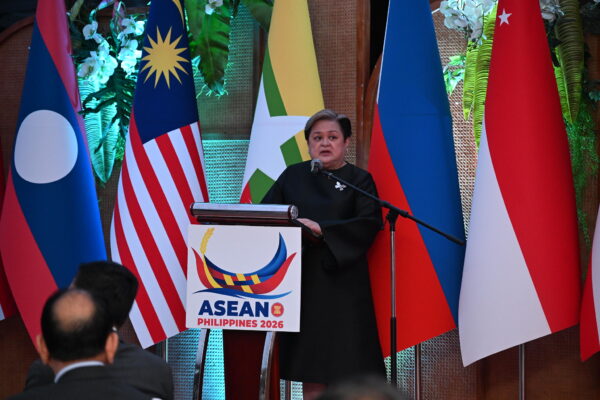
Read The Diplomat, Know The Asia-Pacific Tin Maung Swe is likely to press the case for diplomatic normalization between ASEAN and the military-backed government in Naypyidaw. Philippine Foreign Secretary Ma. Theresa Lazaro, speaks at a welcome dinner for ASEAN foreign ministers ahead of the 48th ASEAN Summit in Cebu, Philippines, May 6, 2026. The foreign ministers of the Association of Southeast Asian Nations (ASEAN) will hold an informal meeting with their ​Myanmar counterpart this weekend, for the first time in five years. The meeting, which will take place in Bangkok on July 12, was confirmed yesterday by the foreign ministries of Thailand and Vietnam, Reuters reported. “The meeting in Bangkok is an opportunity for ASEAN foreign ​ministers to directly exchange views, strengthen cooperation, and promote reconciliation dialogue in ​Myanmar,” Vietnam Foreign Ministry spokesperson Pham Thu Hang said in a regular press briefing yesterday. Since the military’s seizure of power in February 2021, Myanmar has been paralyzed by conflict between the military and a host of ethnic armed groups and other resistance forces. There are now around 3.6 million displaced people within the country, according to the United Nations, most of whom have been driven from their homes since the coup. The meeting with the military-backed government’s Foreign Minister Tin Maung Swe was agreed by ASEAN’s foreign ministers at their last summit in May, when Philippine Foreign Secretary Ma. Theresa Lazaro, the current ASEAN special envoy for Myanmar, briefed her counterparts on the “evolving political and humanitarian situation” inside the country. The 11-nation bloc has excluded Myanmar from the bloc’s summits since late 2021, due to its lack of implementation of the Five-Point Consensus, ASEAN’s roadmap for the management of the country’s conflict. The Consensus, which was agreed at a special ASEAN meeting in April 2021, calls for an immediate cessation of violence and inclusive dialogue involving “all parties” to the conflict. Since taking office as “president” in April, following a controversial and widely boycotted election, coup leader Min Aung Hlaing has spearheaded a campaign to normalize diplomatic relations with Myanmar’s neighbors, including ASEAN. Shortly after his inauguration, Min Aung Hlaing has announced that his new “civilian” administration intends to “‌enhance ‌international relations and strive to restore normal relations” with the Southeast Asian bloc. As part of the campaign, Min Aung Hlaing has in recent months announced the release of political prisoners and the relocation of deposed leader Aung San Suu Kyi from prison to house arrest, and invited key ethnic armed groups to take part in fresh peace talks. While this normalization campaign has been widely dismissed as a sham by resistance groups and rights organizations both within Myanmar and abroad, and ASEAN has not officially recognized the election result, it has highlighted the divisions between member states advocating greater engagement with the Myanmar military and those taking a harder line. Leading the pro-engagement camp is Thailand, which pushed for the July 12 meeting and wants to bring Myanmar back into “the ASEAN family,” as Thai Foreign Minister Sihasak Phuangketkeow put it back in February. Over the past year, Sihasak has held several meetings with Tin Maung Swe, most recently in Naypyidaw in April, during which the two officials “stated the importance of strengthening the existing friendship and cooperation between the two countries, as well as enhancing closer collaboration at regional and international levels.” The pro-engagement camp also includes Laos, which last week rolled out the red carpet for Min Aung Hlaing, his first official trip to an ASEAN member state in his guise as president. (The former military chief has also managed to fit in high-profile state visits to China and India.) During this weekend’s meeting, Tin Maung Swe is likely to press the government’s case for re-engagement, and to describe how the military plans to resolve the ongoing conflict according to its own contentious “roadmap.” Whether this manages to convince more recalcitrant nations, such as Malaysia and the Philippines, ASEAN’s current chair, is unclear. Last week, Myanmar’s government denied Manila’s request to give Lazaro “brief access” to Aung San Suu Kyi, which it said was necessary if she was to fulfill her role of engaging “all stakeholders and parties to create an environment conducive to inclusive national dialogue.” The Philippines responded by reiterating that the release of political prisoners, including Aung San Suu Kyi, was “essential to advancing meaningful political dialogue as envisioned in the [Five-Point Consensus].” Lazaro has also announced plans to continue engagements with ethnic armed groups opposed to the Myanmar military. Given Manila’s views, it is unlikely that ASEAN will be able to muster the consensus necessary to bring Myanmar back into the fold. As such, the most likely outcome for now is a growing bifurcation, in which ASEAN continues to exclude the military-backed government from its summits, while certain member states advance their own engagement with Naypyidaw. Subscribe today and join thousands of diplomats, analysts, policy professionals and business readers who rely on The Diplomat for expert Asia-Pacific coverage. Get unlimited access to in-depth analysis you won't find anywhere else, from South China Sea tensions to ASEAN diplomacy to India-Pakistan relations. More than 5,000 articles a year. Already have an account? Log in. Sebastian Strangio is Southeast Asia editor at The Diplomat. Get briefed on the story of the week, and developing stories to watch across the Asia-Pacific.

多角的分析

経済的影響

ミャンマーの経済的孤立は、ASEAN全体、特に近隣諸国との貿易や投資に間接的な影響を与える可能性がある。軍政権下での紛争継続は、サプライチェーンの不安定化や、地域全体の経済成長への懸念材料となりうる。ASEANがミャンマーとの関係を正常化できれば、経済制裁の緩和や貿易ルートの回復といった経済的恩恵が期待できるが、現状ではその道筋は不透明である。

投資家心理

投資家にとって、ミャンマー情勢の不確実性は直接的なリスク要因となる。軍政権への制裁や国内紛争が続けば、新規投資は極めて困難であり、既存投資も回収の見通しが立たない。ASEAN諸国が独自に関与を深めるとしても、国際的な制裁や人権問題への懸念から、大規模な資本流入は期待しにくい。投資判断は、ASEAN全体の足並みが揃うか、あるいはミャンマー国内の政治的安定化が進むかに大きく左右されるだろう。

社会的影響

ミャンマー国内の避難民360万人の人道的危機は、ASEAN諸国、特に国境を接するタイやバングラデシュに難民流入という形で影響を与える可能性がある。また、ASEAN内での意見対立は、人権擁護団体や市民社会の間で、ASEANの原則や信頼性に対する疑問を投げかけることにもなりかねない。フィリピンのような人権重視の姿勢と、タイのような実利重視の姿勢の対立は、ASEANの地域統合のあり方そのものを問うている。

市民の声

ミャンマー国民にとっては、ASEANとの関係改善は、国際社会からの孤立脱却と国内情勢の安定化への希望となりうる。しかし、軍政権が「5点合意」を履行せず、政治囚解放や対話の進展が見られない限り、ASEANとの会談が直接的な生活改善につながる可能性は低い。むしろ、ASEAN内部の分断が、軍政権の権力維持を助長する結果となれば、国民の苦難は長期化する懸念がある。フィリピンがアウン・サン・スー・チー氏との面会を求めたように、市民の自由と権利の回復が、関係正常化の真の指標となるだろう。

背景・歴史的文脈

ミャンマーは2021年2月の軍事クーデター以降、深刻な政治危機と内戦状態に陥っている。ASEANは、この危機解決のため「5点合意」を提示したが、軍政権はこれをほとんど履行していない。そのため、ASEANはミャンマーを首脳会議から排除してきた。しかし、タイのような一部加盟国は、地域安定のためミャンマーとの関係正常化を強く主張しており、ASEAN内での意見の相違が顕著になっている。今回の会談は、こうした加盟国間の温度差が浮き彫りになる機会となる。

原文ソース

The Diplomat Indonesia

原文を読む