Vietnam Accelerates DNA Collection to Identify 300,000 Unaccounted Soldiers
Vietnam is accelerating DNA sample collection from relatives to identify approximately 300,000 fallen soldiers who have remained unaccounted for over half a century. As part of the '500-Day Operation,' elderly relatives are placing their last hopes on the process, with DNA bank registrations advancing.
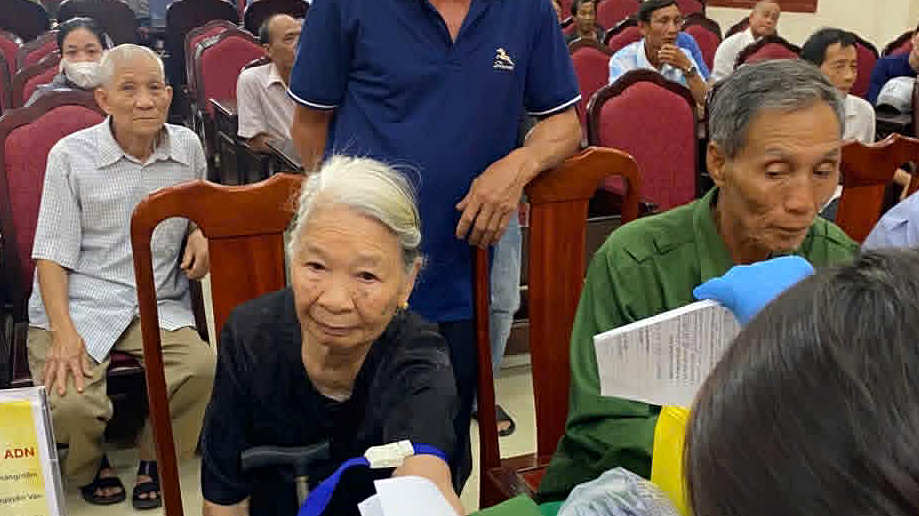
Vietnam is rapidly accelerating the collection of DNA samples from relatives of fallen soldiers, aiming to identify approximately 300,000 individuals who have remained unaccounted for since the Vietnam War. This initiative is part of a nationwide '500-Day Operation,' offering a final glimmer of hope to families who have long searched for their loved ones. In Huong Khe commune, Ha Tinh province, a community hall was filled with relatives of fallen soldiers coming for DNA testing. Ms. Nguyen Thi Dinh, 90, was among the oldest participants. Her biological sample will be entered into the national gene bank, serving as a reference for identifying the remains of her younger brother, Lieutenant Nguyen Van Lac. "I am happy to be alive to provide genetic samples for my brother, but I am also saddened that he has not yet been found," said Ms. Dinh. In Thanh Hoa province, the family of Ms. Le Thi Quynh, 97, completed their DNA sample collection by the end of 2025. Due to mobility issues following a stroke five years ago, Ms. Quynh was brought to a police station by her children to provide samples along with two other family members. Although her memories are fading, Ms. Quynh weeps each time her eldest son, Lieutenant Le Thanh, is mentioned. Ms. Le Thi Que, Ms. Quynh's fifth child, expressed the family's greatest concern: that her mother might pass away before Lieutenant Le Thanh's remains can be returned. The '500-Day Operation' and the DNA sample collection represent the last hope for over 300,000 families like Ms. Dinh's and Ms. Quynh's, who have been searching for their missing relatives for decades. Many soldiers never returned from the battlefield. Lieutenant Nguyen Van Lac, Ms. Dinh's brother, enlisted in 1960 and was reportedly a reconnaissance operative in a special forces unit, working secretly. The last contact the family had was in late 1961. Years later, they received a death notice stating he died in Quang Ngai province in 1966. However, discrepancies between witness accounts of his activities in Quang Tri and the location of his reported death in Quang Ngai made the family's search arduous. His relative, Mr. Nguyen Thanh Son, investigated military records and archives extensively, but without success. It is explained that due to his covert special forces mission, records are extremely limited or have been lost. Lieutenant Le Thanh, Ms. Le Thi Quynh's eldest son, died in Gia Lai province in 1972 at the age of 20. His remains were buried by local residents. After the war, when remains were consolidated at the Mang Yang National Cemetery, his body, along with two other fallen soldiers, was interred as 'Unidentified Soldier.' The family has identified one of the three anonymous graves as their son's but requires cooperation from the families of the other two soldiers for DNA confirmation, a process delayed by economic difficulties. The '500-Day Operation' aims to collect 7,000 sets of remains, collect samples from 230,000 unidentified graves, and conduct DNA identification for 18,000 samples. Nationwide, there are approximately 1.2 million fallen soldiers, with over 900,000 sets of remains collected, but the identities of around 300,000 remain unknown. Relatives' DNA samples will be stored in a national database for cross-referencing with military records. The race against time continues, with elderly relatives' health and the natural decomposition of remains posing significant challenges. Source: VnExpress
多角的分析
このDNA収集事業は、直接的な経済効果は限定的であるものの、国家的な遺骨収集・身元特定事業への投資として位置づけられる。これは、戦争の遺産処理という側面だけでなく、国民の愛国心や国家への帰属意識を高め、社会の安定に寄与するという間接的な経済効果が期待できる。また、関連するバイオテクノロジーやデータベース管理技術の発展にも繋がる可能性がある。
投資家にとって、このニュース自体に直接的な投資機会はない。しかし、ベトナム政府が国家の威信をかけた事業にリソースを投入している姿勢は、社会インフラや長期的な社会安定へのコミットメントを示すものと解釈できる。これは、ベトナムの長期的な投資環境におけるリスク要因の一つである過去の戦争の遺産処理が進むことへの期待感に繋がる可能性がある。
この取り組みは、長年不明のままだった戦没者の身元を特定することで、数多くの遺族に安寧をもたらすことを目的としている。特に、高齢化が進む遺族にとって、故郷への帰還や供養は切実な願いである。DNA鑑定による身元特定は、個々の家族だけでなく、国家全体として戦争の傷跡を癒し、国民統合を強化する側面を持つ。しかし、DNAサンプルの収集や分析には時間とコストがかかり、全ての遺骨が特定できるとは限らないという現実も存在する。
多くのベトナム市民、特に戦争を経験した世代やその子孫にとって、行方不明の兵士の身元特定は、個人的な悲願であると同時に、国家的な課題でもある。高齢の親族が最後の希望を託す姿は、多くの国民の共感を呼ぶだろう。この事業の進捗は、戦争の記憶を風化させず、平和への願いを再確認する機会となる。一方で、未だ特定に至らない多くの遺骨の存在は、戦争の悲劇を改めて浮き彫りにする。
背景・歴史的文脈
ベトナム戦争(1955年~1975年)では、多くの兵士が戦死し、その遺骨の多くが未特定あるいは行方不明となった。戦後、ベトナム政府は遺骨の収集と身元特定に継続的に取り組んできたが、膨大な数と、戦争の激しさ、記録の散逸などにより、いまだに約30万人の戦没者が未特定である。近年、DNA鑑定技術の進歩により、遺族からのサンプル収集と照合による身元特定が可能になり、政府は「500日作戦」としてこの取り組みを加速させている。これは、戦争の遺産処理という側面と、国民統合および愛国心の醸成という政治的側面を併せ持つ。
原文ソース
VnExpress