General articles are free for 24 hours after publish.
Cambodia Files Complaint with OPCW Against Thai Military for Chemical Weapon Use
Cambodia has filed a complaint with the Organisation for the Prohibition of Chemical Weapons (OPCW) in The Hague, Netherlands, alleging that the Thai military used chemical substances and incendiary bombs during border conflicts. This usage reportedly caused health impacts on Cambodian citizens and military personnel.
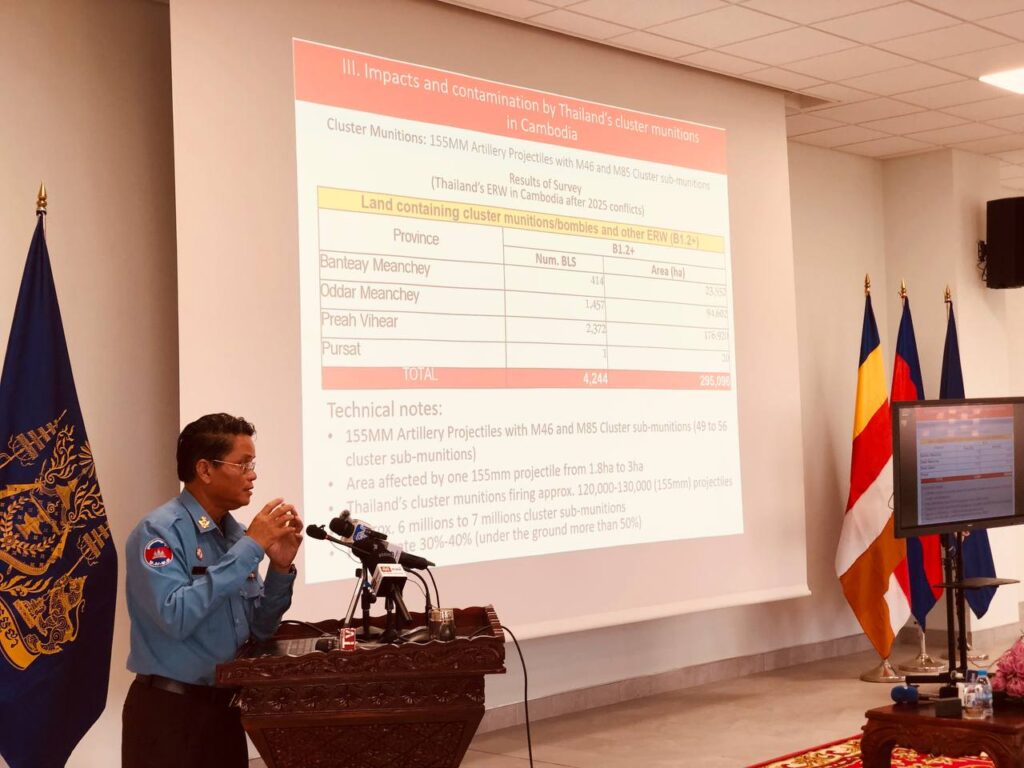
Cambodia has officially filed a complaint with the Organisation for the Prohibition of Chemical Weapons (OPCW), headquartered in The Hague, Netherlands, accusing the Thai military of using chemical substances and white phosphorus bombs during border conflicts. According to Heng Ratana, Director-General of the Cambodian Mine Action Centre (CMAC), the Thai military employed chemical substances and white phosphorus during past conflicts, utilizing 155mm and 130mm artillery, as well as aircraft and drones for attacks. Ratana asserted that the use of chemical weapons and substances on civilian areas constitutes an act contrary to international law, specifically the 1993 Chemical Weapons Convention, to which both Cambodia and Thailand are state parties. This complaint to the OPCW is part of Cambodia's efforts to request an examination and investigation into the use of chemical substances and weapons that could endanger civilians during armed conflicts. An official from CMAC highlighted that the use of toxic substances has impacted numerous soldiers and citizens. According to figures from the Ministry of Health, 399 citizens have been reported injured due to the use of chemical weapons by the Thai side. CMAC authorities indicated that during the conflict, the Thai military used approximately 43 types of weapons. Among these were MK series bombs, particularly MK82 and MK84, which are large and require careful excavation and disposal. Cambodian authorities claim that the armed conflict along the Cambodia-Thailand border, initiated by the Thai side, affected 22 districts, covering 60 communes and 349 villages. The conflict's repercussions impacted approximately 92,000 families, totaling around 367,000 individuals.
Original source
Kampuchea Thmey Local