General articles are free for 24 hours after publish.
Billions Spent, Yet Waters Rise: Flood Control Projects in Davao Region Face Scrutiny
Despite billions allocated to flood control projects in the Philippines' Davao Region, communities continue to suffer from rising waters. Projects linked to individuals dubbed 'king and queen of flood control,' who face corruption charges, are under scrutiny, raising questions about their effectiveness and fueling local discontent.
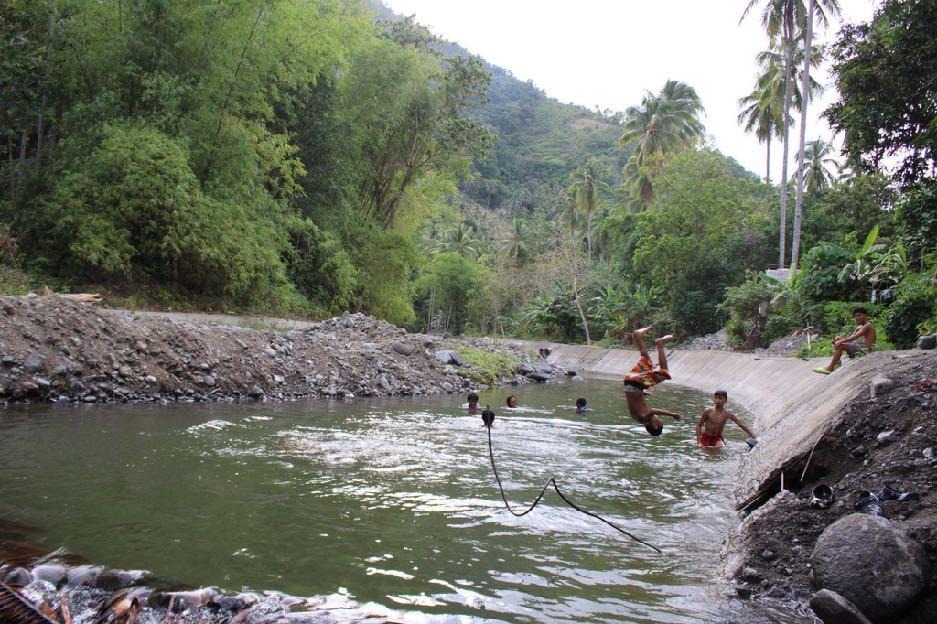
Residents in parts of the Davao Region are questioning the efficacy of flood control projects, despite billions of pesos allocated, as communities continue to suffer from rising waters. Projects linked to individuals dubbed the "king and queen of flood control," who are facing corruption charges, are under particular scrutiny. In Barangay Lapuan, Don Marcelino town, Davao Occidental, residents have turned a cemented riverbank protection project (revetment) into their own "private swimming pool." While the infrastructure is intended to protect communities from floods, the river transforms into a surging torrent during heavy rains, inundating downstream areas and occasionally claiming lives. According to data from the Department of Public Works and Highways (DPWH) transparency website, companies linked to Pacifico "Curlee" and Cezarah Rowena "Sarah" Discaya cornered approximately P4.2 billion worth of flood control contracts in Region XI from 2016 to 2025. This represents about 8% of the total P54 billion allocated for flood control projects in the region during the same period. The Discayas also secured nationwide contracts worth P78 billion but have been arrested on multiple corruption-related charges. While Sarah Discaya has been granted bail, Curlee Discaya remains in detention on malversation charges. Environmental planner Lemuel Manalo argues that current flood control efforts are overly reliant on infrastructure. "We need to allocate funds and design our drainage and flood management projects like 'sponges' that can capture, absorb, store, and carefully release water," he stated, emphasizing the importance of integrating nature-based solutions. He suggests incorporating man-made detention ponds to compensate for the loss of wetlands due to reclamation and urbanization. In Barangay Lapuan, Jemboy Tuado, the barangay chair, expressed that there was insufficient consultation with the community regarding two flood control projects in the area, including one awarded to a Discaya-linked firm. The P96.5 million revetment project, initiated in 2022, reportedly lacked engagement with local officials during its planning phase. With the onset of the rainy season, Tuado voiced concerns over cracks in the concrete revetment, lamenting, "They should have spoken to us barangay officials since we know where the floods are." Barangay Lapuan faces multiple environmental hazards: it is situated in a rugged mountainous topography, adjacent to a river prone to flash floods, and vulnerable to the Davao Gulf's coastal risks. In May 2025, floods in the barangay claimed the life of a 68-year-old man. In January-February 2024, heavy rains caused millions of pesos in property damage. More recently, on July 10, 2026, monsoon rains and Typhoon Inday battered parts of Jose Abad Santos town, causing flash floods that swept away homes, killing at least four people, with six others still missing. Despite the abundance of flood control projects, the devastation the region has suffered from flooding in recent years is well-documented. Residents are increasingly skeptical about whether these infrastructure projects are truly effective against more frequent extreme weather events, a sentiment not limited to projects linked to the Discayas.
Original source
MindaNews Philippines (GN)