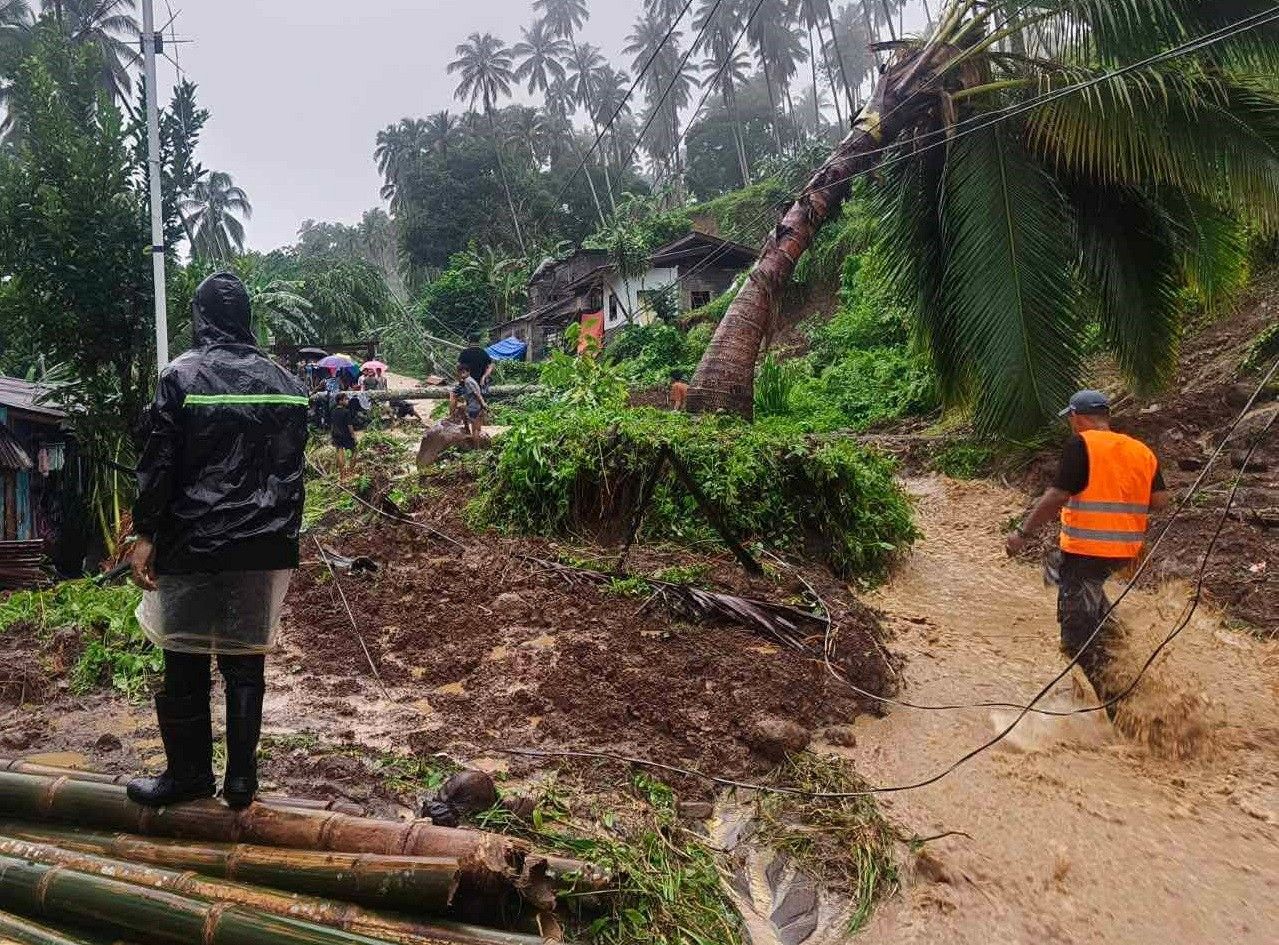
5 villagers dead in Lanao del Sur landslides due to heavy rains
Environment
2026年7月10日
4
Philstar Nation

5 villagers dead in Lanao del Sur landslides due to heavy rains

AI サマリー

Five villagers were buried alive in Lanao del Sur, Philippines, following landslides caused by heavy rains attributed to Super Typhoon Inday (international name: Bavi). Six others remain missing.

Five villagers were buried alive after mud and rocks from a hill, loosened by heavy rains, cascaded with force into their yards and hit their houses in Barangay Ngingir in Calanogas, Lanao del Sur, before dawn Friday, July 10. Ranking employees of the Calanogas Municipal Disaster Risk Reduction and Management Office and the spokesperson of the Police Regional Office-Bangsamoro Autonomous Region, Capt. Steffie Salanguit, separately told reporters at noon Friday that the landslide was caused by heavy rains spawned by the Super Typhoon Inday (international name: Bavi) that started to pummel southern cities and provinces late Wednesday. Salanguit, citing an initial report by officials of the Calanogas Municipal Police Station and Lanao del Sur’s provincial police director, Col. Caesar Cabuhat, said the cadavers of the five landslide fatalities, Norhana Ali, Akmad Camar, Naifa Mansawi, Juhary Muhshin and Norhaya Camar, were recovered a few hours later by barangay officials and policemen who responded to the incident. Local executives in Calanogas said six Maranao villagers, Mujahid Abdulmajid, Mobairah Abdulrashid, Norhasan Abdulrashid, Arab Lilikan, Norlin Ali and Norhanima Ali, whose houses were covered by the mud and rocks the fell from uphill following two days of recurring downpours, are still missing. The disaster left two villagers injured, according to barangay and municipal officials. The heavy rains since Wednesday in Maguindanao del Sur and Maguindanao del Norte provinces, both also in the Bangsamoro Autonomous Region in Muslim Mindanao, spawned rampaging floods and caused dozens of rivers in both areas to overflow, affecting more than 30,000 villagers, according to BARMM officials. Army Major Gen. Jose Vladimir Cagara, commander of the Army’s 6th Infantry Division, and Police Brig. Gen. Christopher Abecia, director of PRO-BAR, had separately dispatched emergency responders from units under them to support the disaster response operations of local government units in the flooded towns in the two provinces. Cagara said soldiers from units of 6th ID in Maguindanao del Sur towns that are near the 220,000-hectare Ligawasan Delta, a catch basin for large rivers that spring from hinterlands in Bukidnon, Cotabato, Sultan Kudarat and South Cotabato, are using rubber boats in evacuating villagers from flooded villages to relief sites.

多角的分析

経済的影響

フィリピンでは、気候変動による異常気象が頻発しており、特に農村部や山間部でのインフラ被害、生産性の低下、そして復旧・復興にかかるコスト増大が経済への負担となっている。今回の土砂災害は、直接的な物的損害に加え、被災者の生計維持の困難化や、地域経済活動の停滞といった二次的な経済的影響をもたらすと考えられる。政府は、災害対策への支出を増やさざるを得ず、財政への圧迫要因となる可能性がある。

投資家心理

フィリピンにおける自然災害のリスクは、投資家にとって無視できない要素である。特に、インフラ関連、農業、そして地域経済に依存する産業への投資は、気候変動による影響を受けやすい。今回の土砂災害は、短期的な市場の不確実性を高めるだけでなく、長期的な視点では、災害に強いインフラ開発や、気候変動適応策への投資機会を示唆しているとも言える。ただし、リスク管理が不十分な地域への投資は慎重な判断が求められる。

社会的影響

ラナオ・デル・スル州での土砂災害は、地方コミュニティにおける脆弱性を浮き彫りにした。特に、山間部や河川沿いの低所得者層は、自然災害に対する十分な避難設備や保険制度へのアクセスが限られている場合が多い。今回の被災者の中には、家屋を失い、生計手段を奪われた人々が含まれる。彼らの生活再建には、政府やNGOからの長期的な支援が不可欠であり、社会的な格差の是正と、災害に強いコミュニティづくりが喫緊の課題となっている。

市民の声

今回の土砂災害は、フィリピン国民、特に地方に住む人々の生活がいかに自然災害に脆弱であるかを示している。スーパー台風やそれに伴う豪雨は、人々の命や財産を奪うだけでなく、インフラを破壊し、生活基盤を揺るがす。政府による迅速な救助活動や支援は重要だが、根本的な解決策としては、より強固な防災インフラの整備、早期警報システムの強化、そして気候変動への適応策が求められている。国民一人ひとりが、災害への備えを怠らない意識を持つことも重要である。

背景・歴史的文脈

フィリピンは、太平洋「火の輪」上に位置し、台風銀座とも呼ばれる地域にあり、自然災害のリスクが非常に高い国である。特に、南シナ海を通過する熱帯低気圧は、しばしば強力な台風となり、甚大な被害をもたらす。近年、気候変動の影響により、台風の強大化や豪雨の頻発化が観測されており、土砂災害や洪水のリスクが増大している。2013年のスーパー台風ヨランダ(ハイエン)による壊滅的な被害は、フィリピンの脆弱性を世界に示し、防災対策の強化が喫緊の課題となっている。今回のラナオ・デル・スル州の災害も、こうした長期的な気候変動と、脆弱な地域社会の構造的課題が複合的に作用した結果と考えられる。

原文ソース

Philstar Nation

原文を読む