General articles are free for 24 hours after publish.
Quang Tri Province Focuses on Party Member Recruitment, Enhancing Quality of New Cadres
Quang Tri Province in central Vietnam is prioritizing the recruitment and quality enhancement of new Communist Party members to strengthen the Party. As of late August 2024, the province had admitted 2,535 new members, exceeding 82% of its annual target, with a focus on diverse demographics including ethnic minorities, religious followers, business owners, and students.
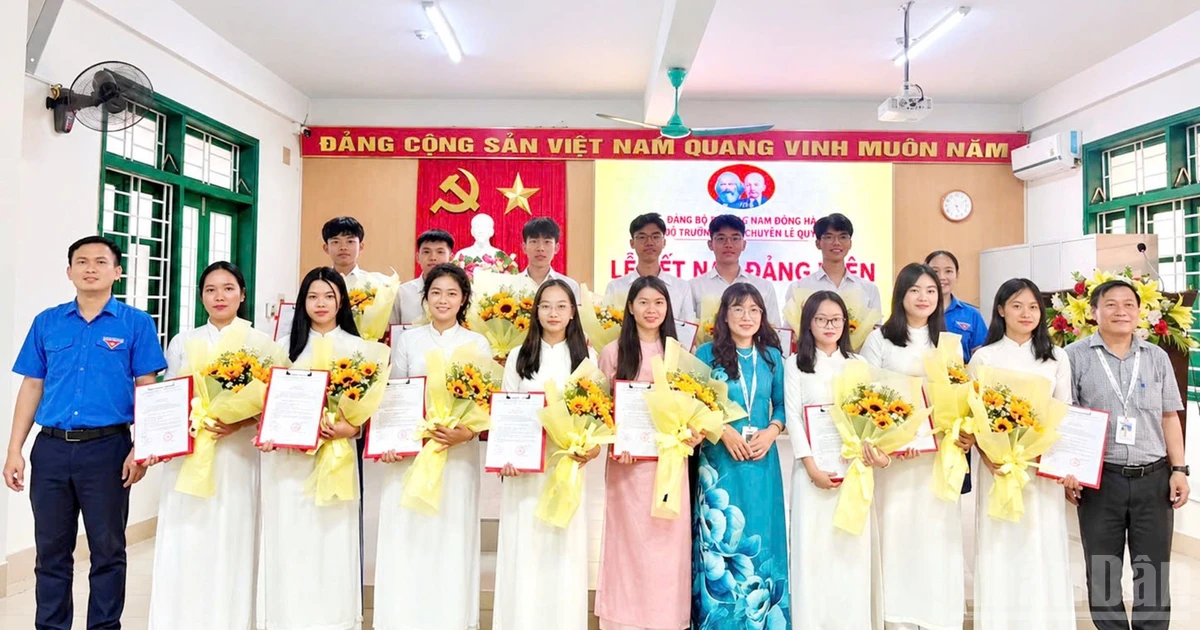
Quang Tri Province in central Vietnam is intensifying its efforts to recruit and enhance the quality of new Communist Party members, aiming to bolster the Party's strength and development in line with new era requirements. This focus stems from the recognition that securing individuals with strong political convictions, moral integrity, and a desire to contribute is crucial for the Party's future. Following its 2025-2030 Party Congress, Quang Tri Province has promptly issued plans for new member recruitment, development strategies, and directives to strengthen party member development in the current phase. The Provincial Party Organization Committee has assigned officials to monitor specific areas and guide subordinate party organizations on candidate sourcing, membership application procedures, and formal recognition. Regular monthly reports are utilized to assess progress and commend exemplary practices. As of late August 2024, the province had admitted 2,535 new party members, surpassing 82% of its annual target. This cohort includes 164 individuals from ethnic minorities, 28 from religious backgrounds, 78 business owners and employees, 574 students, and 1,392 women. Many party units have met or exceeded their annual recruitment goals. In Dong Ha City's Nam Dong Ward, party committees have set recruitment targets for each branch, linking candidate sourcing to the responsibilities of party organizations and their leaders. The ward has organized three political awareness courses, nurturing 213 promising candidates and achieving 101% of its annual target with 93 new members. Similarly, the border town of Lao Bao has prioritized developing potential candidates, admitting 39 new members, reaching 185.7% of its goal. At Vo Nguyen Giap High School for the Gifted, 26 new members, including one teacher and 25 students, were admitted, fulfilling 260% of the annual target. Student members who enroll in universities will transfer their party records to university party organizations for continued engagement. Meanwhile, Con Tien Commune, facing significant economic challenges, has recruited 23 new members in the first eight months, nearing 80% of its annual target of 30. The commune's party committee actively promotes grassroots activities to identify and nurture potential candidates. The commune has 32 subordinate party units with a total of 1,191 members. Nguyen Luong Binh, Head of the Provincial Party Organization Committee, emphasized the importance of proactively creating environments for individuals to train and contribute, rather than passively waiting for candidates. The coordination between local political centers and party organizations in developing annual and term-based training plans for prospective and new members has been effective in ensuring candidate quality. However, challenges remain, with uneven progress in new member development across regions, particularly in sourcing candidates from the private sector and specific geographical areas. For the 2026-2030 period, the province aims to recruit over 3,000 new members annually, with subordinate party units targeting a minimum annual growth of 3% of their total membership. To achieve these objectives, the Quang Tri Provincial Party Committee calls for strengthened Party leadership, the active involvement of the entire political system, and the accountability of leaders in member development initiatives. It also advocates for policies supporting party organizations and political systems in economically disadvantaged and border regions, as well as financial aid for training aspiring members from ethnic minority, religious, border communities, and enterprise workers. The integration of new member recruitment with cadre development and force building is also highlighted. Source: Nhan Dan
Original source
Nhan Dan