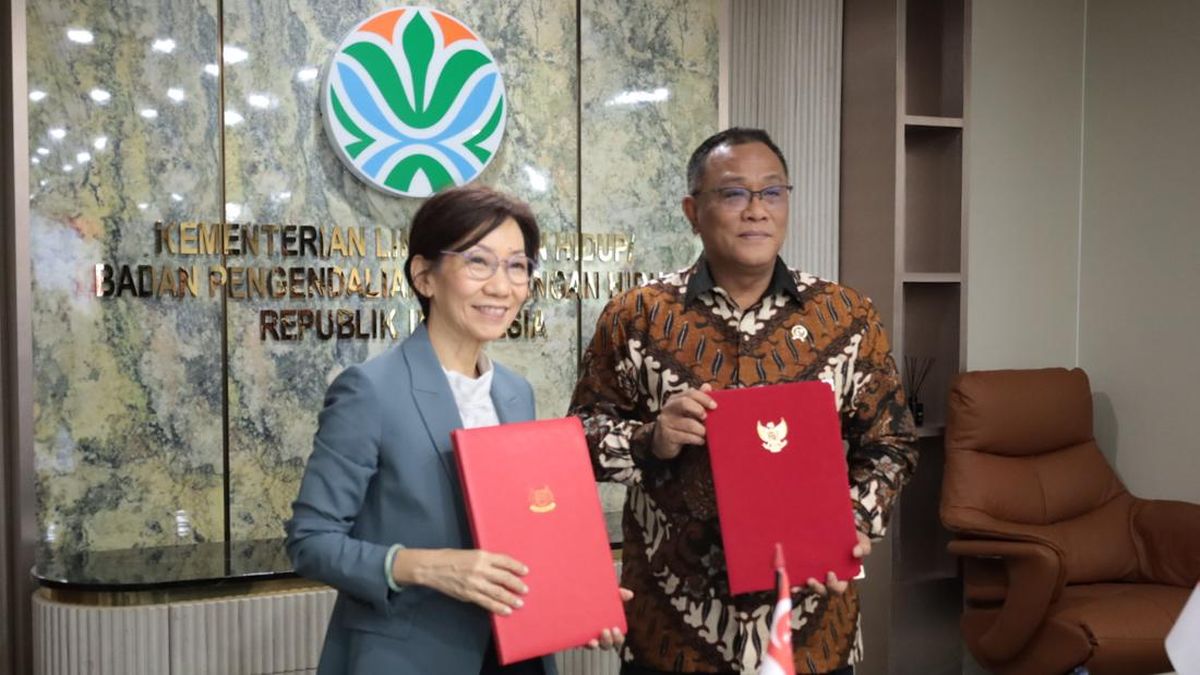
Indonesia and Singapore Ink Strategic Environmental Protection Pact
Diplomacy
2026年6月29日
5
CNN Indonesia
Relations
🇮🇩Indonesia🇸🇬Singapore

Indonesia and Singapore Ink Strategic Environmental Protection Pact

AI サマリー

Indonesia's Ministry of Environment and Singapore's Ministry of Sustainability and the Environment have signed a comprehensive environmental protection cooperation agreement to address regional environmental challenges and accelerate the transition to a green economy in Southeast Asia. Key areas include circular economy, waste management, and air and water quality preservation.

The Indonesian Ministry of Environment (KLH) and Singapore's Ministry of Sustainability and the Environment have signed a strategic agreement to address environmental challenges and accelerate the transition to a green economy in the Southeast Asian region. The comprehensive bilateral cooperation was signed by Indonesia's Minister of Environment/Head of the Environmental Management Agency (BPLH), Moh Jumhur Hidayat, and Singapore's Minister for Sustainability and the Environment, Grace Fu, on Monday, June 29. As the vanguard of national environmental management, KLH/BPLH ensures that this cooperation will continue with a series of concrete actions to be executed by both countries soon. The scope of collaboration covers vital issues ranging from accelerating the circular economy, modern waste management, maintaining water and air quality, to controlling transboundary pollution. Furthermore, KLH/BPLH will also focus on developing human resource capacity to be more prepared to usher in a new era of a low-carbon economy. Minister Jumhur stated that Indonesia is strongly committed to continuously building regional collaboration amidst the increasingly complex dynamics of the Earth crisis, including with Singapore. "This MoU is a framework for cooperation, and later there will be many joint activities, for example, related to climate change, waste management, air pollution, including how to face the El Niño phenomenon which is predicted to last longer," Jumhur said. Grace Fu also expressed optimism that Indonesia and Singapore have great opportunities to expand collaboration in addressing various environmental challenges in the region, including through ministerial-level dialogues or policies and the formation of a special working group consisting of senior officials. This task force will continuously monitor the implementation of programs, evaluate achievements, and formulate new collaboration opportunities. "I hope the signing of this MoU becomes the beginning of many dialogues and collaborations, both at the government and private sector levels, so that both countries can focus on concrete implementation and areas of cooperation," said Grace Fu. In its realization, Indonesia and Singapore will regularly hold technical personnel exchanges, launch joint research, and build environmentally friendly and sustainable pilot projects. Facilitating technology transfer between the two countries will also be guaranteed to accelerate environmental management innovation. Roadmap Towards Sustainable Development The strengthening of strategic steps by Indonesia and Singapore is part of a tangible commitment to the success of the Paris Agreement and the achievement of Sustainable Development Goals (SDGs). For Indonesia, this initiative spearheaded by KLH/BPLH is crucial and aligns with the direction of the National Medium-Term Development Plan (RPJMN) 2025-2029. Building environmental resilience and sustainable natural resource management are now inseparable pillars in national economic development. The unity of these two Southeast Asian powerhouses drives efforts for a more resilient, clean, and ecologically sustainable future for the region.

多角的分析

経済的影響

この協定は、東南アジアにおけるグリーン経済への移行を加速させる上で重要な一歩となる。循環経済の推進や現代的な廃棄物管理は、資源効率の向上と新たな産業創出の機会をもたらす。特に、技術移転の円滑化は、インドネシアにおける環境技術分野の発展を促し、長期的な経済成長に寄与する可能性がある。シンガポールは技術と資金面で、インドネシアは広大な国土と資源で貢献する形となり、両国の経済的シナジーが期待される。

投資家心理

投資家にとって、この協定は東南アジアにおける環境・再生可能エネルギー分野への投資機会拡大を示唆する。循環経済や廃棄物管理、クリーンエネルギー関連技術への投資は、ESG投資の観点からも魅力的である。両国政府のコミットメントは、これらの分野における政策の安定性と長期的な成長見通しを強化するため、リスクを低減させる要因となりうる。特に、実証プロジェクトの実施は、具体的な投資先を特定する上で参考になるだろう。

社会的影響

この協力は、大気汚染や水質汚染といった、両国の市民が直面する具体的な環境問題の改善に繋がる可能性がある。例えば、国境を越える汚染の抑制は、両国国民の健康増進に貢献する。また、人材育成は、将来的に環境分野で活躍する専門家を輩出し、持続可能な社会の実現に向けた意識向上を促すだろう。さらに、エルニーニョ現象への対応策は、農業や水資源管理といった市民生活に直結する分野でのレジリエンス強化に繋がる。

市民の声

インドネシアの市民、特にジャカルタのような大都市に住む人々は、大気汚染や廃棄物問題に日々直面している。この協定による具体的な対策、例えば廃棄物管理の近代化や汚染抑制は、直接的に生活環境の改善に繋がる可能性がある。また、エルニーニョ現象への共同対応は、食料価格の安定や水供給の確保といった、生活の基盤に関わる問題への安心材料となる。人材育成は、将来世代がより良い環境で暮らせる社会への期待を高める。

背景・歴史的文脈

インドネシアとシンガポールは、地理的に近接し、経済的にも深い関係にある。東南アジア地域は、急速な経済成長に伴い、環境汚染、資源枯渇、気候変動の影響といった共通の課題に直面している。特に、大気汚染や廃棄物問題は、両国の都市部で深刻化しており、市民生活に影響を与えている。過去にも、両国は海上安全保障や経済協力で連携してきたが、環境分野での包括的な協力は、地域全体の持続可能性を高める上で、新たな段階を示すものと言える。パリ協定やSDGs達成に向けた国際的な枠組みも、こうした二国間協力の推進要因となっている。

原文ソース

CNN Indonesia

原文を読む