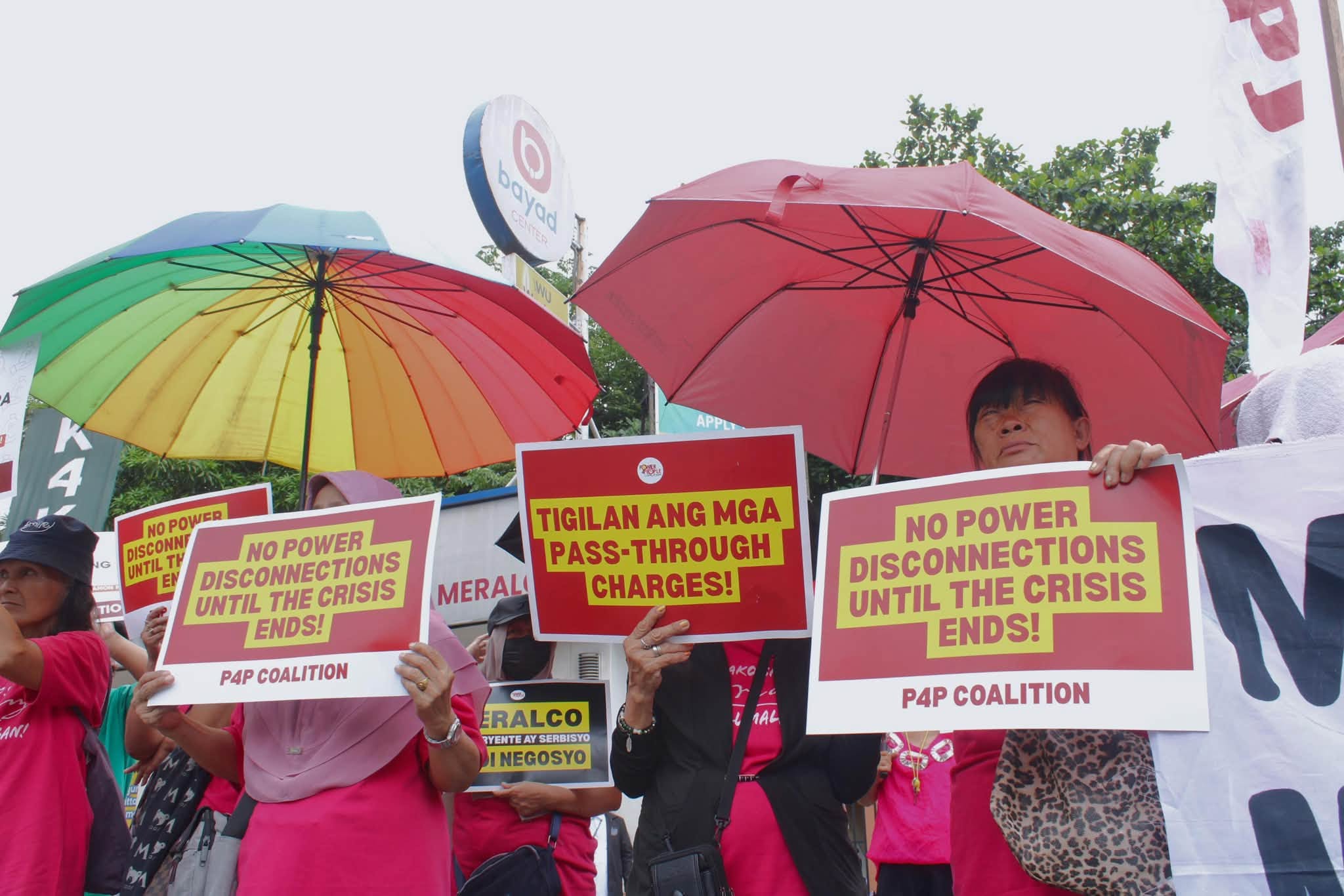
Philippine consumer group urges probe into Meralco billing, suspension of rate hikes
The Power for People Coalition (P4P) is urging the Energy Regulatory Commission (ERC) to investigate alleged anomalies in Manila Electric Company (Meralco) billing and suspend electricity rate increases. Thousands of households report significantly higher bills despite no corresponding rise in consumption, sparking widespread concern.
The Power for People Coalition (P4P), a national coalition of consumer groups, people's organizations, and civic movements advocating for clean, affordable, and accessible energy, on Tuesday urged the Energy Regulatory Commission (ERC) to immediately investigate complaints of alleged anomalous electricity readings by the Manila Electric Company (Meralco), conduct a comprehensive audit of its billing practices, and impose appropriate sanctions for any violations that may be established. "Consumers deserve answers, not confusing bills, unexplained charges, and the constant threat of disconnection," said Leodegario “Ka Leody” De Guzman, president of Partido Lakas ng Masa, in a statement issued by P4P. "Families who have faithfully paid their bills should not be punished by questionable charges that they cannot verify or understand. The ERC must act in the interest of the ordinary consumer," he added. P4P, a national coalition of consumer groups, people’s organizations, and civic movements advocating for clean, affordable, and accessible energy, staged a protest on Tuesday at the ERC office in Pasig City calling for stronger regulatory action. Another rally was staged earlier at Meralco on Monday. The coalition said thousands of households have reported electricity bills that have doubled or even tripled in recent months despite little or no increase in their power consumption. With July electricity bills now being released, P4P warned that many Filipino families are again being forced to choose between paying their electricity bills and meeting other essential household expenses. "The ERC was created to protect the public interest. Consumers should not be treated as captive sources of revenue whenever fuel prices rise, or generation costs increase," said lawyer Aaron Pedrosa, secretary-general of activist group Sanlakas. Pedrosa said the burden of market inefficiencies and rising generation costs should not automatically be passed on to consumers already struggling with soaring food prices, stagnant wages, and the rising cost of living. "It is the height of cruelty to profit off the backs of ordinary working people in a time of continued crisis," he said. P4P campaigner Krishna Ariola also urged the ERC to extend its no-disconnection policy while the complaints are being investigated to prevent consumers from losing access to an essential public service. She also called on the commission to suspend electricity rate increases, citing the continuing impact of the global energy crisis and the country’s heavy reliance on fossil fuels. "With the current no-disconnection policy set to end next month, it is crucial for the ERC to consider extending it for several more months," Ariola said. "More importantly, the ERC should suspend all rate increases. The impact of the global energy crisis on our economy, compounded by our continued reliance on fossil fuels, has become so severe that suspending service disconnections alone is no longer enough to protect consumers," she added. P4P also urged the ERC to reject Meralco’s pending rate reset application, which is expected to be decided this quarter. Under Meralco’s proposal, the average distribution charge could increase by nearly P1 per kilowatt-hour (kWh), adding around P200 or more to the monthly electricity bills of many consumers. "If the rate reset application is approved as proposed, Meralco’s distribution charge would immediately increase by more than 73 percent. That should be rejected outright because the law explicitly requires electricity rates to comply with the least-cost principle," Pedrosa said. Earlier on Monday (July 13), the ERC had announced the adoption of a standardized reporting framework for transmission and ancillary service charges to improve transparency in electricity billing. Under Resolution No. 22, Series of 2026, all distribution utilities will be required to use a uniform reporting template for computing, monitoring, and reporting transmission and ancillary service charges. The ERC said the measure would strengthen regulatory oversight, improve compliance among distribution utilities, reduce inconsistencies in submitted reports, and streamline the review process. The new reporting framework will take effect beginning with the first billing cycle after July 16. The commission said the standardized system would enable regulators to more effectively validate transmission and ancillary service costs before these are passed on to consumers. Also on Monday, Sen. Panfilo “Ping” M. Lacson filed a resolution seeking a Senate inquiry into the continued increase in electricity rates and the “bill shock” experienced by consumers amid concerns over unexplained charges, alleged irregularities in meter readings, and system losses ultimately borne by paying customers. Lacson noted that while affordable and reliable electricity is essential to public welfare, national productivity, and economic development, residential electricity rates in the Philippines remain among the highest in Southeast Asia, placing a heavy financial burden on Filipino families, workers, and businesses. He also cited reports from Meralco customers who have experienced substantial and unexplained increases in their electricity bills in recent months./coa
多角的分析
フィリピン経済は、電力料金の高騰が家計の可処分所得を圧迫し、消費支出の低下を招くリスクを抱えている。特に低所得者層や中小企業にとっては、事業継続の負担増となり、インフレ圧力のさらなる悪化につながりかねない。Meralcoのような大規模な電力事業者の料金設定は、国内経済全体の安定に直接的な影響を与えるため、ERCの規制監督機能の強化と透明性の確保が急務である。過去にも同様の料金問題が頻発しており、その度に経済活動への悪影響が懸念されてきた。
電力料金の不透明さや、規制当局による介入の可能性は、フィリピンのエネルギーセクターへの投資リスクを高める要因となる。投資家は、Meralcoの料金設定プロセス、ERCの規制判断、そして政府のエネルギー政策の安定性を注視する必要がある。料金引き上げが却下されたり、大幅に抑制されたりした場合、電力事業者の収益性が悪化し、新規投資やインフラ整備への意欲が削がれる可能性がある。一方で、消費者保護を強化する動きは、長期的な市場の健全性には寄与するが、短期的な収益見通しには不確実性をもたらす。
電気料金の高騰は、フィリピン国民、特に低所得者層の生活に直接的な打撃を与えている。多くの家庭が、食料品や医療費など、他の生活必需品の支出を削って電気料金を賄わざるを得ない状況に追い込まれている。これは、教育機会の喪失や健康状態の悪化といった、より広範な社会問題を引き起こす可能性がある。また、請求書の不透明さは、電力会社への不信感を増幅させ、市民と企業、そして規制当局との間の信頼関係を損なう要因となっている。過去の同様の protests は、国民の不満の高まりを示唆している。
マニラ首都圏で暮らす市民の多くは、毎月の電気料金の請求書を見てため息をついています。特に、先月と比べて何も変わっていないのに、請求額が急に跳ね上がった時のショックは大きく、家計をやりくりする上で大きな不安材料となっています。食料品の値上がりも続いている中で、電気代まで上がると、本当に生活が苦しくなります。Meralcoの請求書は、何がどう計算されているのか分かりにくく、疑問があってもすぐに解決できないのが現状です。ERCには、私たち一般市民の声を聞き、公正な対応をしてほしいと切に願っています。
背景・歴史的文脈
フィリピンにおける電力料金問題は、長年にわたり市民団体や消費者から批判されてきた。特に、電力料金の構成要素の不透明さ、メーターの不正読み取り疑惑、そして電力会社の市場における支配力などが、問題の根源として指摘されてきた。過去には、同様の料金高騰や不透明な請求に対する抗議活動が度々行われており、その度にERCや政府への監督強化、料金体系の見直しが求められてきた。今回の事案は、こうした過去の懸念が再燃した形であり、フィリピンのエネルギー市場における構造的な課題を浮き彫りにしている。
原文ソース
Inquirer NewsInfo