Philippine Bank Secrecy Laws Criticized for Hindering Investigations
Politics
2026年7月22日
5
Rappler Business

General articles are free for 24 hours after publish.

Philippine Bank Secrecy Laws Criticized for Hindering Investigations

Share
AI Summary

A senior Bangko Sentral ng Pilipinas (BSP) official has criticized the country's decades-old bank secrecy laws, stating they have long frustrated investigators. Concerns were raised about the difficulty of accessing foreign currency deposit accounts, even in impeachment proceedings, highlighting issues in the asset probe of the Vice President.

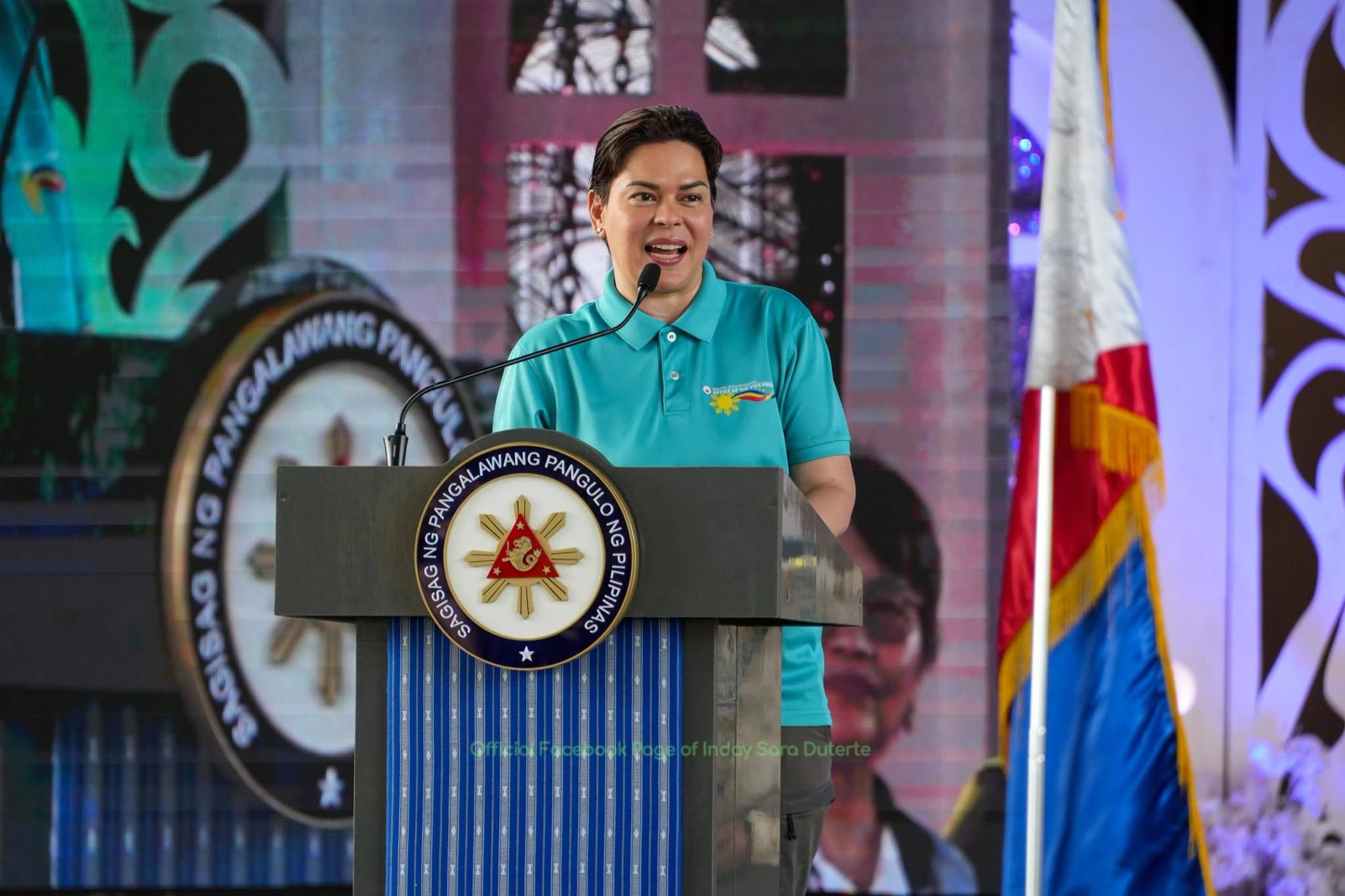
MANILA, Philippines – A senior Bangko Sentral ng Pilipinas (BSP) official has criticized the country’s decades-old bank secrecy laws after the House prosecution’s attempt to examine Vice President Sara Duterte’s money trail was stopped at foreign currency deposits, which seem to remain beyond reach even in impeachment cases. Bangko Sentral ng Pilipinas (BSP) Deputy Governor Elmore Capule referenced the Senate impeachment court’s decision as he sharply criticized bank secrecy laws that he said have frustrated investigators for decades. “The other day, the impeachment court issued an order to open bank deposits. But lo and behold, you cannot open FCDU deposits,” Capule said during the signing of an information-sharing agreement between the BSP and the Department of Justice. FCDU refers to foreign currency deposit unit accounts, which are commonly denominated in US dollars and other foreign currencies. “We are talking of bank secrecy being used to hide illegal activities,” Capule added during his speech on Wednesday, July 22. Must Read ‘Bank documents don’t lie’: Financial records can trace Duterte’s money trail – ex-prosecutor The Senate, sitting as an impeachment court, approved subpoenas on Monday, July 20, for bank and Anti-Money Laundering Council (AMLC) records involving Duterte, her husband Manases Carpio, and several linked companies. The prosecution sought the records to establish a financial baseline that could be compared with the couple’s declared income, assets, liabilities, and business interests. The request forms part of the impeachment article accusing Duterte of amassing unexplained wealth. IN NUMBERS: What impeachment hearings unveiled about Sara Duterte’s wealth But the court excluded the couple’s dollar accounts from the subpoenas because foreign currency deposits enjoy stricter protection under the Foreign Currency Deposit Act than peso accounts do under the Bank Secrecy Law. The Bank Secrecy Law expressly allows bank inquiries in impeachment cases. The Foreign Currency Deposit Act does not contain the same exception and requires the depositor’s written permission before an account may be examined. That could leave prosecutors with only part of the possible financial picture, even after securing the impeachment court’s approval. ‘It can be used by criminals’ Capule is one of the BSP’s most senior legal officials. Before becoming deputy governor, he served as the central bank’s general counsel and spent years working on banking legislation and financial sector reforms. He was also closely involved in developing the Anti-Financial Account Scamming Act (AFASA), which created new powers for tracing money used in scams and money-muling. His frustration and distaste with bank secrecy stems from one of his earliest brushes with possible government corruption. Capule recalled that one of the first cases he handled in government involved a state-owned corporation that transferred funds to a private account at the height of the EDSA revolution. He said he argued that authorities should be allowed to examine the account because the deposited money was itself the subject of litigation. It took about a year to secure a favorable ruling. “Lo and behold, the fund was transferred one year before,” Capule said. “So what do we do now? We have to trace it. So essentially, it’s dead.” “That is my first experience with the secrecy. It can be used by criminals. Thirty-five years later, fast forward, bank secrecy is still very much alive,” he added. Capule also criticized the treatment of bank secrecy as it “mutated” into state policy under the Anti-Money Laundering Act. “Whenever other jurisdictions see that, they are telling me, ‘Are you joking? Bank secrecy and then money laundering in one statute?’” he said. Note that Capule did not allege that Duterte held undisclosed foreign currency deposits or that any account contained illegal proceeds. His biggest criticism is that the Philippines’ outdated bank secrecy laws can stop authorities from getting a complete financial trail. AFASA, the new law that he helped craft, provides a narrow exception. In investigations involving financial scams and money-muling, a designated BSP officer may inquire into accounts, including foreign currency deposits, to trace disputed funds and help build cases. Capule noted that this gives the BSP officer authority to examine foreign currency accounts “which the impeachment court cannot do.” That power, however, applies only to suspected violations of AFASA. What Sara Duterte’s traveling BIR box says about Philippine tax secrecy BSP has no role in subpoenas BSP General Counsel Roberto Figueroa separately clarified that the central bank was not a recipient of the subpoenas and would not direct banks on how to respond. “So far, we haven’t received any subpoena,” Figueroa told Rappler along the sidelines of the event. The subpoenas were directed at individual banks, leaving their respective legal teams to determine how to respond, including whether to comply, raise objections, or seek clarification from the impeachment court. “It’s for their own legal counsel to determine what they’re going to do, whether they’re going to comply with the subpoena or not,” Figueroa said. He also stressed that the Anti-Money Laundering Council, which was separately ordered to submit financial records, is institutionally distinct from the BSP. “I know the AMLC was mentioned,” he said. “But again, that’s AMLC, so that’s not BSP.” Although BSP Governor Eli Remolona Jr. also chairs the AMLC, the council is a separate government agency with its own statutory powers, procedures, and confidentiality requirements. – Rappler.com 3 obstacles the prosecution must hurdle in Sara Duterte’s money trail

0

Original source

Rappler Business

原文を読む