General articles are free for 24 hours after publish.
Activists march to Myanmar Consulate in Chiang Mai to demand halt to transboundary river pollution
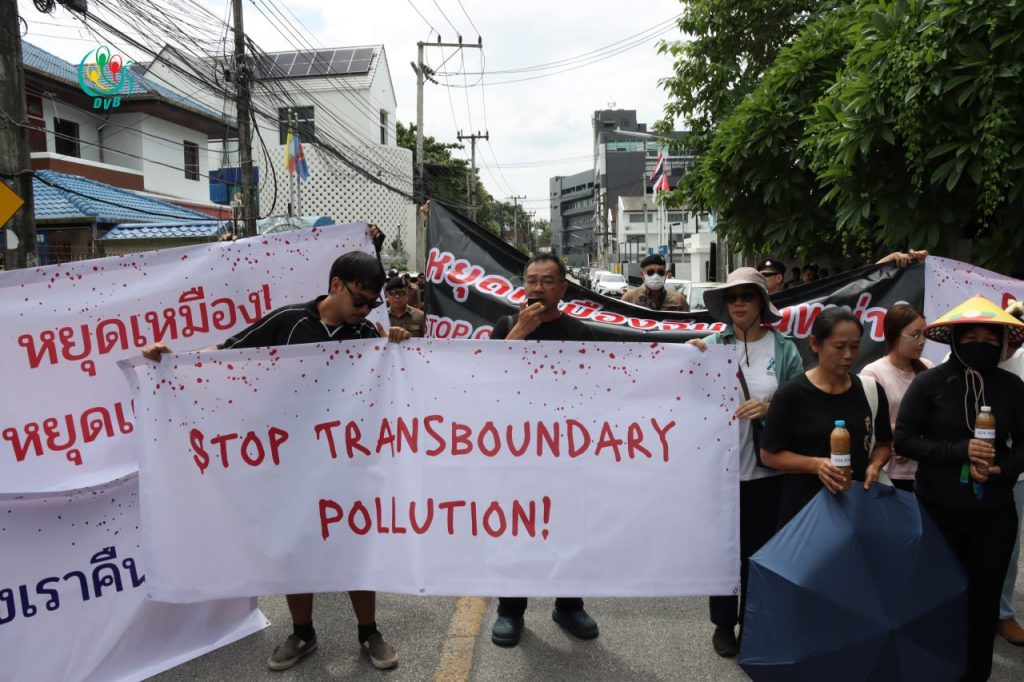
Environmental activists and local residents marched to the Myanmar Consulate in Chiang Mai on Aug. 3 demanding that the military regime in Naypyidaw take immediate action to stop mining operations responsible for severe
Environmental activists and local residents marched to the Myanmar Consulate in Chiang Mai on Aug. 3 demanding that the military regime in Naypyidaw take immediate action to stop mining operations responsible for severe transboundary heavy metal contamination along the Thailand–Myanmar border. Organized by the People’s Network for the Protection of the Kok, Sai, Ruak, and Mekong Rivers, the demonstration saw campaigners march from Wat Santitham to the consulate grounds. The rally was strategically timed ahead of an official state visit by Myanmar regime leader Min Aung Hlaing to Bangkok on August 6–7 to meet with Thai Prime Minister Anutin Charnvirakul. A tipping point for public health and agriculture In an open letter addressed to Min Aung Hlaing, the activist coalition warned that toxic runoff containing lead, cadmium, and mercury from mining zones inside Myanmar has reached a catastrophic threshold across northern Thailand: Agricultural Contamination: Farmers across the Mekong basin are being forced to irrigate at least 110,000 rai (40,000 acres) of paddy fields with contaminated river water, inadvertently distributing heavy-metal-tainted produce nationwide. Loss of Livelihoods: Fishing communities across 60 villages and tourism operators along the Kok River are facing severe financial ruin. The Thai Ministry of Public Health has officially advised the public against consuming local shrimp, shellfish, crabs, and fish offal. Drinking Water Crisis: Approximately 40,000 households (roughly 120,000 residents) in Chiang Rai Province currently rely on municipal tap water systems contaminated with toxic heavy metals. Transboundary Mining Pollution Crisis ├── Rivers Affected: Kok, Sai, Ruak, & Mekong Rivers ├── Contaminants Detected: Lead, Cadmium, Mercury, & Arsenic ├── Agricultural Impact: 110,000 Rai (40,000 Acres) of paddy fields compromised ├── Public Health Impact: ~120,000 residents in Chiang Rai using contaminated water └── Diplomatic Pressure: Demonstration timed ahead of Aug 6–7 Thailand-Myanmar Summit Scientific evidence vs. regime denials Activist leaders emphasized that independent scientific analysis and satellite imagery directly disprove claims by Naypyidaw that no such mining activity is occurring along shared river basins. “The message that we want to send to Min Aung Hlaing is that the Myanmar junta needs to accept that the mining causes transboundary pollution. As we know from the Stimson Center and from Google Maps, it’s very clear that the contaminated river is caused by mining in Myanmar, and many scientific tests also show that the heavy metals were released from the mining in Myanmar,” Suebsakun Kidnukorn, Lecturer at Mae Fah Luang University’s School of Social Innovation, told DVB. The network highlighted that a letter circulated in July revealed the regime sent a formal response to the United Nations on June 17, denying all allegations of transboundary environmental and human rights violations. The U.N. communication had originally been submitted by the Office of the High Commissioner for Human Rights (OHCHR) on April 20 regarding illegal mining operations in Shan State. Activists labeled the regime’s denial a “flagrant lie” and confirmed they will closely monitor the upcoming bilateral talks between Prime Minister Anutin and Min Aung Hlaing in Bangkok before deciding on their next phase of regional campaign actions. The post Activists march to Myanmar Consulate in Chiang Mai to demand halt to transboundary river pollution appeared first on DVB.
Original source
DVB