General articles are free for 24 hours after publish.
Indonesia Advances One Data Bill to Enhance Public Policy Precision
The Indonesian government is advancing the 'One Data Indonesia Bill' (RUU SDI) to integrate citizen data and improve public policy accuracy. The focus is on how data integration will be managed and personal data protection.
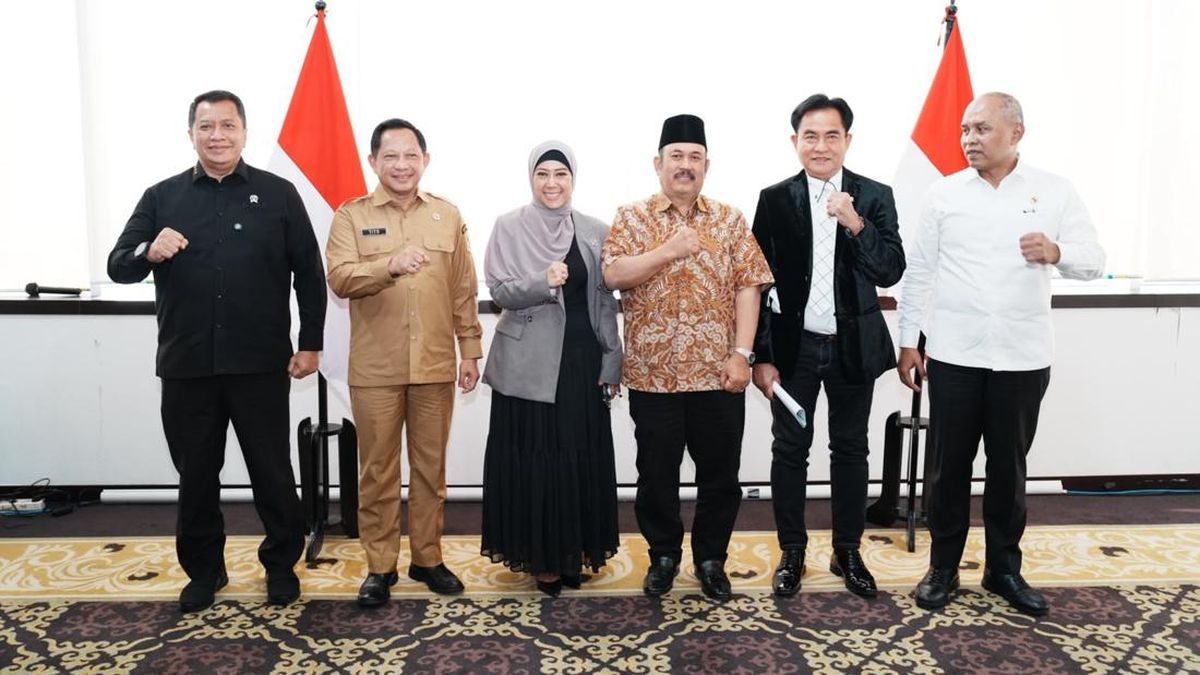
The Indonesian government is accelerating discussions on the 'One Data Indonesia Bill' (RUU SDI), aiming to integrate individual citizen data and ensure proportional services and protection in public policy. The bill has seen concrete progress with the signing of the Inventory of Problems (DIM) for the draft law at the Ministry of National Development Planning (Bappenas) in Jakarta on Tuesday (8/9). Minister of Home Affairs Muhammad Tito Karnavian emphasized the importance of the term 'integrated data' (data terpadu) in the bill, as opposed to 'centralized data' (data terpusat). According to Tito, the term 'centralized data' could be interpreted as an effort to centralize and control data. Furthermore, using 'integrated data' is important to affirm that data integration does not mean taking over the authority of those who have been producing and managing the data. The role of data custodians (walidata) remains significant in ensuring that the data produced can be optimally used and integrated. "And this makes the walidata, who create [data], who produce the data, feel that their work will not be used or considered, even though they work hard, and they still use that data," he said. In addition to terminology, Tito also focused on personal data protection and data security. He stated that the government needs to refer to the Personal Data Protection Law, especially in determining which data needs to be protected and which data can be opened for public interest. "We also need to be vigilant about data that, based on the law, needs to be protected," he said. On the other hand, Minister of National Development Planning and Head of Bappenas, Rachmat Pambudy, explained that the role of data custodians will be assigned to the ministries and agencies that are most authorized and interested in specific data. For instance, population data will continue to be managed by the Directorate General of Population and Civil Registration (Dukcapil) under the Ministry of Home Affairs, as they are responsible for organizing and safeguarding this data. Furthermore, Rachmat affirmed that personal data protection already has a legal basis, including provisions for sanctions against violators. "I am also trying to look back at the issue of sanctions, and usually, the laws have sanctions. We will follow the existing laws for sanctions," he explained. He reiterated that the goal of implementing SDI is to improve public welfare through enhanced public services and to empower national independence and competitiveness. Additionally, SDI aims to produce national foundational data as a reference for national development planning, ensuring that development continues to progress effectively. "This bill is actually a bill for the benefit of all Ministries/Agencies and all state interests, and ultimately all citizen interests, and with that, we can formulate conveniences because our reference will be the same," he emphasized. At the end of the discussion, the DIM for the One Data Indonesia Bill was signed. The signing involved Minister of National Development Planning/Head of Bappenas Rachmat Pambudy; Minister of Home Affairs Muhammad Tito Karnavian; Coordinating Minister for Legal Affairs, Human Rights, Immigration, and Correctional Facilities Yusril Ihza Mahendra; Minister of Communication and Digital (Komdigi) Meutya Hafid; and Head of the National Cyber and Crypto Agency (BSSN) Nugroho Sulistyo Budi. Source: CNN Indonesia
Original source
CNN Indonesia