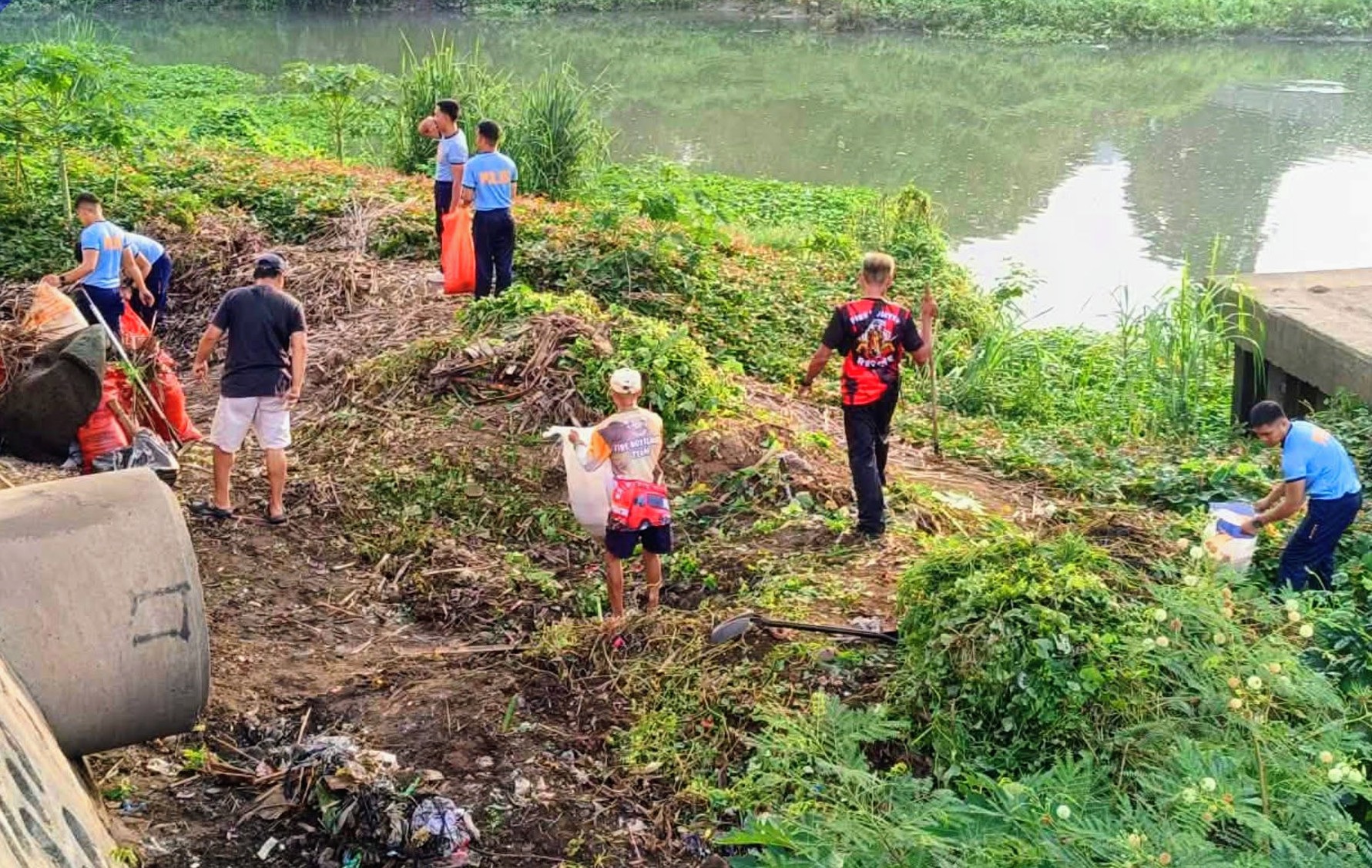
Lucena City Cleans Iyam River, Collects 105 Sacks of Waste
As part of the National Disaster Resilience Month, Lucena City launched a clean-up drive along the Iyam River, with volunteers collecting approximately 1.4 metric tons of waste. City officials reiterated their appeal to residents to stop dumping garbage into waterways.
Lucena City launched a clean-up drive along the Iyam River on Wednesday, collecting an estimated 1.4 metric tons of waste with the help of volunteers. The activity was part of the city's observance of National Disaster Resilience Month. Personnel from the City Environment and Natural Resources Office (CENRO) reported that volunteers gathered 105 sacks of waste from the riverbanks. This included polyethylene terephthalate (PET) plastic bottles, other plastic materials, household waste, construction debris, and biodegradable waste. The biodegradable materials were buried to allow for natural decomposition and composting. The initiative saw participation from city government personnel, the Philippine National Police, the Bureau of Fire Protection, the Philippine Coast Guard, barangay and Sangguniang Kabataan officials, and community volunteers. "The initiative serves as an important step toward rehabilitating and restoring the city’s rivers," stated the Lucena City Public Information Office. Authorities also renewed their appeal to residents to cease dumping garbage and human waste into the city’s waterways. They noted that some riverside communities have historically used the rivers for waste disposal, laundry, and sanitation. Lucena's urban center is situated between the Dumacaa River to the east and the Iyam River to the west. These major rivers converge in the southern part of the city before emptying into Tayabas Bay, with seven smaller rivers serving as tributaries. Previous studies by the Department of Environment and Natural Resources (DENR) and the University of the Philippines National Institute of Geological Sciences have warned that low-lying areas of Lucena would face increased flooding risks if the two main rivers remain clogged with garbage, pollutants, and debris from Mt. Banahaw. In the 1960s, the Dumacaa and Iyam rivers were popular recreational spots for fishing, swimming, and picnics. However, decades of unchecked pollution and improper waste disposal have degraded these waterways into dumping grounds. In recent years, extensive mangrove planting along the riverbanks has helped restore parts of the river ecosystem and provided a natural buffer against flooding for nearby communities. Despite these efforts, flooding still occurs when runoff from Mt. Banahaw coincides with high tides from Tayabas Bay, causing river levels to rise and overflow into low-lying areas. Source: Inquirer NewsInfo
多角的分析
河川の汚染は、沿岸部の漁業や水産業に直接的な打撃を与えるだけでなく、観光資源としての価値も低下させる。また、洪水リスクの増加は、インフラへの被害や農業への影響を通じて、地域経済に間接的なコストをもたらす。今回の清掃活動は、環境改善の第一歩だが、根本的な廃棄物管理システムの改善と、住民の意識改革が経済的持続可能性には不可欠である。
河川の汚染とそれに伴う洪水リスクの高さは、ルセナ市および周辺地域への投資リスク要因となる。インフラへの被害や事業活動の中断は、事業運営コストの増加や収益の不安定化を招く可能性がある。しかし、環境改善への取り組みは、長期的に見れば、地域経済の活性化や不動産価値の上昇につながる可能性があり、ESG投資の観点からも注目されうる。
ルセナ市のイアム川沿いのコミュニティでは、長年にわたり河川を生活用水やごみ処理に利用してきた歴史がある。この清掃活動は、住民の健康や生活環境の改善に寄与する可能性がある一方で、ゴミの分別や適切な処理方法に関する教育・啓発が不可欠である。また、洪水リスクの軽減は、特に低地の住民の安全と財産保護に直結する重要な課題である。
ルセナ市民、特に川沿いに住む人々は、長年の河川汚染による悪臭や衛生問題、そして頻繁な洪水被害に苦しんできた。今回の清掃活動は、彼らの生活環境改善への期待を高めるものだが、根本的な問題解決には、ゴミのポイ捨て禁止の徹底と、より広範な廃棄物管理インフラの整備が求められている。子供たちが安全で清潔な環境で育つことができるようになるかが、市民にとっての大きな関心事である。
背景・歴史的文脈
ルセナ市を流れるイアム川とドゥマカア川は、かつては市民の憩いの場であったが、1960年代以降、急速な都市化と人口増加に伴う無計画な廃棄物処理により、汚染が深刻化した。特に、川沿いの低地コミュニティでは、ゴミや生活排水を直接河川に投棄する習慣が長年続いてきた。この状況は、フィリピン全土で共通する課題であり、中央政府による全国的な廃棄物管理政策の遅れや、地方自治体の財政・技術的制約が、問題の根本的な解決を阻んでいる。過去の研究でも、河川の閉塞が洪水リスクを高めることが指摘されており、近年のマングローブ植林は一定の効果を上げているものの、抜本的な対策が求められている。
原文ソース
Inquirer NewsInfo