AI 'Loops' Revolutionize Journalism: A Guide to Agentic Automation
Technology
2026年7月29日
5
Chiang Rai Times

General articles are free for 24 hours after publish.

AI 'Loops' Revolutionize Journalism: A Guide to Agentic Automation

Share
AI Summary

AI coding tools are evolving from single-prompt interactions to building 'loops' that run autonomously and repeatedly. This shift allows journalists and developers to leverage AI as a more advanced collaborative partner. However, careful design and risk management are essential for its adoption.

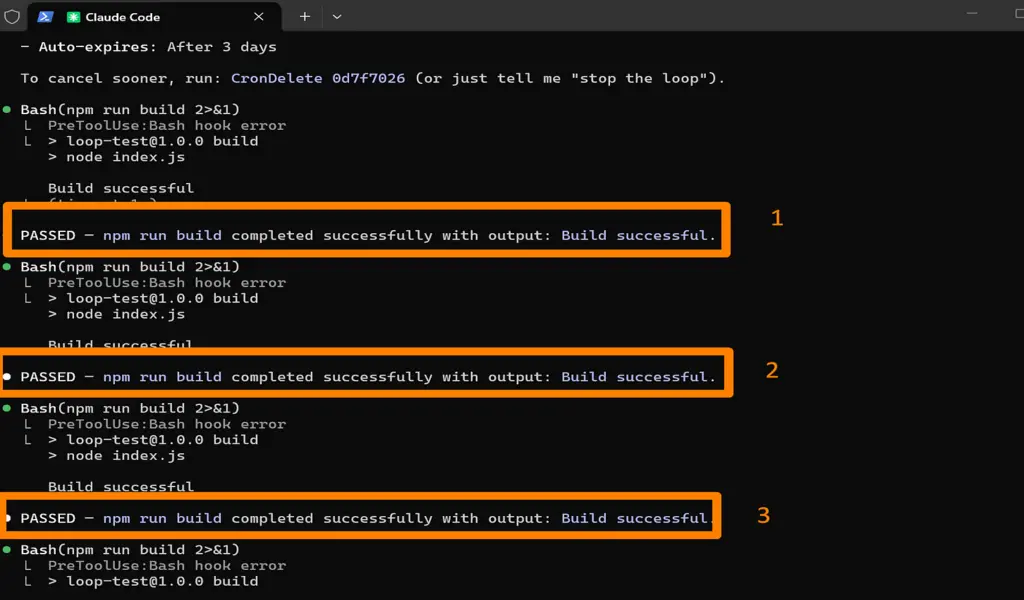
Home - AI - How to Build Loops With Claude Code: A Journalist’s Guide to Agentic Automation Build Loops With Claude Code: Developers are quietly changing how they work with AI coding tools. Instead of typing one prompt and waiting for a reply, many now build “loops” that let Claude Code run repeatedly on its own. This shift is turning a chat assistant into something closer to a self-managing teammate. The idea comes from a detailed guide published on gitconnected, which breaks down how to design these loops safely. Anthropic itself has also written about the concept, describing loop engineering as agents that repeat cycles of work until a stop condition is met, according to the Claude blog. Together, these sources paint a clear picture of where agentic automation is headed. Most people begin using Claude the same way. They write a prompt, wait for a response, review it, and decide what to ask next. This approach works fine for one-off questions. But it breaks down fast when work is repetitive or requires several rounds of checking. Writing the same instructions every day wastes time and invites mistakes. That is exactly the gap loops are designed to close. A Claude loop is not simply “ask the model again.” It is a structured system built around the model that decides how work continues over time. Claude still does the reasoning and takes the actions, but the loop controls the process around it. According to the guide, every loop breaks down into six core parts. Understanding these parts is the first step toward building one correctly. Each loop, no matter how advanced, relies on the same underlying structure. Here is what each part does: Skipping any of these steps tends to cause trouble later. A loop with no verification, for instance, will trust bad output just as easily as good output. Claude sessions are temporary by design. Once a session ends, the model forgets everything unless that information lives somewhere else. This is why persistent state sits at the center of every working loop. In the simplest setup, state lives in a plain markdown file called PROGRESS.md. This file carries information from one run into the next, so Claude does not start from zero every single time. Without it, a loop is just an expensive way to repeat the same prompt. Picture a project manager who wants a daily summary of what changed in a codebase. Each morning, Claude opens the project folder, reads TASK.md and PROGRESS.md, and checks what has changed since yesterday. It then writes a short report and updates its progress file before stopping. The manager never rewrites instructions each day. The loop gives Claude the same operating procedure, and the state file quietly carries memory forward. Before writing a single instruction file, it helps to ask whether the task actually deserves a loop. Loops add setup time, ongoing cost, and operational complexity that a single prompt does not require. The guide suggests five questions to test readiness. If a task fails most of these, a loop probably is not worth building yet. Run through this checklist honestly before automating anything: Tasks that fail these checks usually stay vague. “Improve the strategy document until it feels stronger” has no real stop condition, so it is a poor loop candidate. A better version limits scope, such as reviewing weekly changes and listing open questions in a separate report file. Not every automation idea is safe to try first. The safest loops read information, summarize it, and draft a result without touching anything important. Riskier loops try to do too much, too soon. These low-risk loop ideas make solid starting points for beginners: Each example is read-heavy and write-light. Claude inspects, summarizes, and drafts, but a human still approves anything with real consequences. By contrast, some automation ideas sound appealing but carry too much risk early on. Avoid loops that rewrite entire systems, touch payment code, or deploy to production without review. These tasks involve high judgment and unclear success criteria, making them poor fits for unattended automation. One of the more practical ideas from the guide is the permission ladder. Rather than granting full autonomy immediately, developers can increase Claude’s authority step by step as trust builds. The ladder generally moves through six stages, from read-only analysis to fully automated action with logging and rollback options. Most first loops should stay at the bottom two rungs. That is usually enough to prove whether the loop produces useful results at all. Staying at Level 1 or Level 2 lets you inspect every output before it affects real files or systems. You can catch repeated mistakes, refine instructions, and build confidence gradually. Only after a loop proves reliable across several runs should it move higher. This caution matters even more when a loop touches production code, customer data, or communication tools. Once a task passes the readiness check, the next step is building the smallest working version. This first version skips advanced features entirely, focusing only on proving the core pattern works. A minimum viable loop needs just five components: one task, one context file, one state file, one output location, and one verification step. Everything else can wait. Most practical guides, including the original walkthrough on gitconnected, recommend a simple folder layout to organize these pieces. It typically looks like this: This structure keeps everything predictable. Claude always knows where to look for context and where to save results, which makes debugging far easier. Once the basic loop runs reliably, verification becomes the next priority. A loop without verification simply trusts whatever Claude produces, which invites errors to compound over time. Verification can be as simple as a checklist or as strict as an automated test suite. Anthropic’s own documentation notes that developers can encode manual review steps into a SKILL.md file, letting Claude check more of its own work end-to-end, based on details from the Claude blog. The more measurable a verification step is, the easier it becomes for Claude to self-check accurately. Vague standards like “make it better” leave too much room for interpretation. Concrete standards work better. Examples include “all tests pass,” “the output file contains three required sections,” or “no linter errors remain.” These give Claude an objective target instead of a subjective judgment call. Once a loop proves reliable manually, developers can schedule it using Claude Code’s /loop command. This lets a prompt run automatically on a set interval without anyone triggering it by hand. Separate reporting from developers building similar systems highlights real production patterns already in use. One widely shared example, described in a guide from Developers Digest, runs an email agent that checks an inbox every fifteen minutes, classifies messages,

0

Original source

Chiang Rai Times

原文を読む