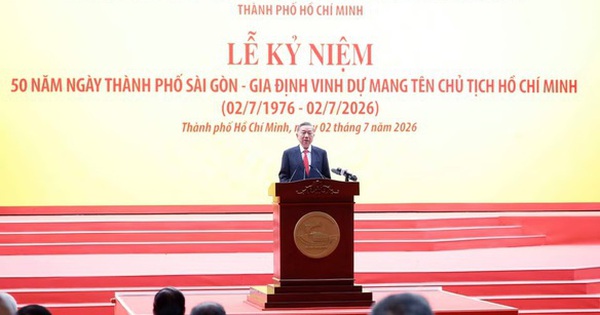
Ho Chi Minh City Celebrates 50 Years Under Its Name; General Secretary To Lam Delivers Speech
Health
2026年7月2日
5
Bao Chinh Phu

Ho Chi Minh City Celebrates 50 Years Under Its Name; General Secretary To Lam Delivers Speech

AI サマリー

General Secretary and President To Lam delivered a speech at the 50th anniversary of Ho Chi Minh City being named after President Ho Chi Minh. He praised the city's remarkable economic and social development, highlighting its role as a driving force for national progress.

General Secretary and President To Lam delivered remarks at the 50th anniversary of Saigon-Gia Dinh City being named after President Ho Chi Minh, in Ho Chi Minh City on July 2, 2026. The event was described as a political, historical, and cultural occasion of profound significance, serving to commemorate the monumental contributions of President Ho Chi Minh and express gratitude to past generations who sacrificed for national independence, reunification, and the city's development. President To Lam stated that the decision on July 2, 1976, to rename Saigon-Gia Dinh City as Ho Chi Minh City was not merely an administrative milestone but a crystallization of the people's sacred affection and profound gratitude towards President Ho Chi Minh. He highlighted it as a testament to the city's revolutionary tradition and contributions to national liberation and reunification, carrying the trust and responsibility for a strategically vital city. He characterized Ho Chi Minh City as a land rich in traditions of patriotism, revolution, solidarity, and creativity, noting its significance as the departure point for Nguyen Tat Thanh (later Ho Chi Minh) 115 years ago to find a path for national salvation. The name Ho Chi Minh City, he emphasized, is not just a historical pride but an imperative for the present and future, serving as a benchmark for continuous self-examination and elevation. Reflecting on the past half-century, President To Lam praised the city's immense and comprehensive achievements, overcoming war scars and hardships to restore production, stabilize livelihoods, build a strong administration, and ensure national defense and security. He particularly commended its pioneering role during the 40 years of the Doi Moi (Renovation) era, daring to pilot new models and enriching Party guidelines and state policies through practical success. Ho Chi Minh City has solidified its position as the nation's economic locomotive and a major hub for finance, commerce, services, science and technology, education, healthcare, culture, foreign affairs, and international integration. He cited its leading role in state budget revenue, projected to surpass 800,000 billion VND in 2025, as a testament to the collective effort of its people, enterprises, and cadres. Alongside economic progress, the city has seen robust urban development, with new urban areas, high-tech zones, industrial parks, and improved infrastructure, including the operationalization of Metro Line 1 (Ben Thanh - Suoi Tien), marking a milestone for public transit and smart urban development. President To Lam expressed expectations for Ho Chi Minh City to "spearhead innovation and creativity; be dynamic yet disciplined, modern yet humane, prosperous yet compassionate, and deeply integrated yet steadfast in preserving its identity and national interests." He concluded that its development must be rapid, sustainable, and inclusive, dedicated to the happiness of its people.

多角的分析

経済的影響

ホーチミン市の経済的牽引役としての役割は、ベトナム経済全体の成長戦略において極めて重要である。総書記の発言は、同市が国家予算歳入で80兆ベトナムドンを超えるという具体的な成果を挙げていることを示しており、これはベトナム経済の規模と成長率の高さ、特に都市部への経済的集積を裏付けている。ドイモイ政策以降、同市は外資導入や輸出加工区の設置などを通じて国際的な競争力を高めてきた。今後も、サービス業、金融、ハイテク産業へのシフトを加速させ、周辺地域への波及効果を最大化することが、ベトナム経済の持続的成長の鍵となる。しかし、都市化の進展に伴うインフラへの負荷、不動産価格の高騰、所得格差の拡大といった課題への対応も、経済の安定と包摂的成長のためには不可欠である。

投資家心理

ホーチミン市がベトナム経済の「ロコモティブ」であるという総書記の発言は、投資家にとって引き続き同市が主要な投資先であり続けることを示唆している。特に、インフラ開発(メトロ1号線開通など)、ハイテクゾーン、スマートシティ構想は、将来的な成長ポテンシャルを示唆する。しかし、ベトナムの一党体制下での政策決定の不確実性、法制度の整備状況、そして急速な経済成長に伴うインフレリスクや不動産バブルの可能性には注意が必要である。投資家は、製造業だけでなく、サービス業、テクノロジー、再生可能エネルギーといった分野での機会を探るべきだが、同時に地政学的なリスク(特に中国との関係)や、規制変更のリスクも考慮する必要がある。

社会的影響

ホーチミン市が「人々の幸福に全面的に捧げられるべき」という総書記の発言は、経済成長の恩恵が市民全体に行き渡ることの重要性を示唆している。しかし、急速な都市化と経済発展は、交通渋滞、環境汚染、住宅価格の高騰といった社会的な課題も生み出している。特に、地方からの移住者が増加する中で、手頃な価格の住宅や十分な雇用機会の確保は、社会的な安定に不可欠である。また、教育や医療といった公共サービスの質とアクセス改善も、市民の生活実感に直結する重要な課題となる。ホーチミン市が「ダイナミックでありながら規律を重んじ、近代的でありながら人間味にあふれ、豊かでありながら思いやりがある」都市となるためには、経済的豊かさと社会的な包摂性の両立が求められる。

市民の声

ホーチミン市民にとって、都市がホー・チ・ミン主席の名を冠して50周年を迎えたことは、歴史的な誇りと同時に、その名に恥じない発展を遂げることへの期待感を高めている。総書記が言及した経済成長やインフラ整備は、生活の利便性向上に繋がる可能性がある。しかし、多くの市民は、日々の生活において、依然として交通渋滞、物価上昇、そして将来への経済的不安に直面している。特に、若年層は、より良いキャリア機会と生活水準の向上を求めており、都市の発展が彼らの期待に応えられるかが問われている。ホーチミン市が「人々の幸福に全面的に捧げられるべき」という言葉通り、経済的成功だけでなく、市民一人ひとりの生活の質の向上に真に応えることが求められている。

背景・歴史的文脈

サイゴン・ザディン市がホーチミン市と改称されたのは、1975年のベトナム戦争終結と南北統一後の1976年7月2日である。これは、ベトナム共産党による統一国家の確立と、革命の指導者であったホー・チ・ミン主席への敬意を示す象徴的な措置であった。サイゴンは、フランス植民地時代から南ベトナムの政治・経済の中心であり、ベトナム戦争中は南ベトナム政府の首都であった。統一後、経済的・社会的な再建と開発が進められ、特に1986年のドイモイ(刷新)政策以降、市場経済化が進み、ホーチミン市はベトナム経済の最前線として急速な成長を遂げてきた。同市は、外資導入、製造業、サービス業、金融の中心地として、ベトナム全体の経済成長を牽引する役割を担ってきた。

原文ソース

Bao Chinh Phu

原文を読む