General articles are free for 24 hours after publish.
Siem Reap's Hope: Young Cambodians Shaping the Future Beyond Stone Temples
A visit to Siem Reap revealed that Cambodia's true wonder lies not just in its ancient temples, but in the hopeful determination of its youth. Through interactions with the social enterprise Heartprint, the author witnessed firsthand their passion for education and their drive to build a better future.
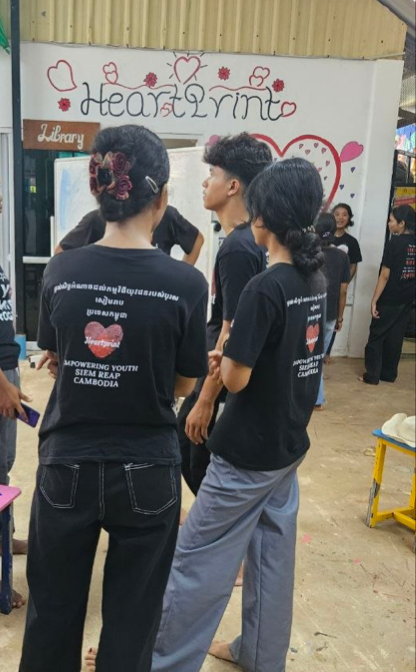
Every time I visit Siem Reap, I find myself standing in awe of Angkor once again. No matter how many times I see the temples, I’m still amazed by what the ancestors achieved. Every stone, every carving and every tower reminds me of Cambodia’s extraordinary history. It truly is one of the wonders of the world. But this trip, I wasn’t most excited about visiting the temples. I was looking forward to meeting a group of young Cambodians. I had been invited by Heartprint to spend half a day sharing my experience in communication — how to tell stories, communicate with confidence, and introduce Cambodia’s culture, traditions, food and destinations to visitors from around the world. To be honest, I thought I was going there to teach and share my experiences. I quickly realised I was the one learning. The room was filled with young people from different backgrounds. Some were naturally confident. Others were quiet at first. But as we started talking, asking questions and sharing ideas, something became very clear. They were eager to learn. Not because they had to. Because they genuinely wanted to build a better future for themselves and their families. That kind of determination is hard to ignore. One young man shared something that has stayed with me ever since. He told me that Heartprint had helped his family build their home. Not by simply building it for them, but by working alongside the family so they could build it with their own hands. Today, they have a safe place to live — a home they are proud to call their own. Heartprint also helped his parents find regular work, giving the family a more stable income. Through the programme, he has learned English and other practical skills that he hopes will open doors for his future. Listening to him, I realised that education is about so much more than classrooms. Sometimes it’s about giving someone the confidence to believe that tomorrow can be different from yesterday. As I spoke with more of the young people, I heard similar stories. Many came from communities where opportunities for education and employment had always been limited. Yet here they were, speaking English with confidence, asking thoughtful questions and sharing their dreams for the future. What struck me most wasn’t just their enthusiasm. It was the hope in their eyes. It wasn’t the kind of hope that comes from wishing for something. It was the hope that comes from believing that, with the right opportunities and a lot of hard work, life can be different. As I looked around the room, I couldn’t help but think that Cambodia’s future isn’t only preserved in its ancient temples. It’s being shaped every day by young people like these. At first glance, the Heartprint Hub looks like a cosy café where travellers can enjoy local favourites, healthy meals, vegetarian options and a good cup of coffee before or after exploring Siem Reap. But it is much more than that. As I looked around, I realised the young people serving customers weren’t simply working in a café. They were building confidence, gaining practical experience and learning skills that would prepare them for future careers. Every order taken, every coffee served and every conversation with a customer became part of their journey. Next to the café is a small shop filled with handcrafted gifts. I wandered in, expecting to browse for a few minutes. Instead, I stayed much longer than I had planned. Not because I couldn’t decide what to buy. But because every item carried a story. A woven bag. A hand-sewn toy. A piece of jewellery. Each one had been carefully made by local mothers who had learned new skills through the programme. These weren’t simply souvenirs on a shelf. They represented hours of patience, creativity and an opportunity to earn an income while supporting their families. As I held each piece in my hands, I couldn’t help but imagine the person who had made it, hoping someone would take it home. That simple thought changed the way I looked at souvenirs. I wasn’t just buying a gift for my family. I was taking home a story. When people visit Siem Reap, it’s easy to spend every day exploring temples. And I completely understand why. Angkor deserves every bit of its reputation. No matter how many times I visit, it continues to amaze me. But if you have an extra morning or afternoon, I hope you’ll spend some time meeting the people who are shaping Cambodia’s future too. Visit a local social enterprise. Enjoy a meal prepared with care. Buy a handcrafted gift directly from the people who made it. Talk to the young people. Ask them about their dreams. You may leave with more than just a souvenir. You may leave with a story. As I travelled home, I realised something. I had taken another beautiful photograph of Angkor Wat. But when I thought back on the trip, that wasn’t the image that stayed with me. What I remembered most were the young people I had met. I remembered their eyes. Eyes filled with curiosity. Eyes filled with hope. I remembered the young man proudly telling me about the home his family had helped build with Heartprint’s support. I remembered mothers creating beautiful handicrafts that now help support their families. I remembered a simple café filled with laughter, confidence and opportunity. Those are the moments I carried home. That’s why I believe in travelling with purpose. The world’s wonders tell us where we’ve come from. But the people we meet remind us where we’re going. And sometimes, the greatest wonder isn’t built in stone. It’s found in the hopes, dreams and quiet determination of people building a better future every single day. Originally from Myanmar, Michelle Htway now lives and works in Cambodia. She visited Heartprint in Siem Reap province last month. Source: Phnom Penh Post
Original source
Phnom Penh Post